Some famous - and some not so famous - names have used the finals as a springboard to their future careers.
With the inception of the new U21 format at the European Championships in 1978, Uefa also began bestowing the 'Golden Player' honour upon the tournament's star man.
Over the years some famous, and some not so famous, names have taken the prize, so here we take a look at how those stars that shone brightest for a few short weeks in summers gone by fared in the rest of their career.
1978 - Vahid Halihodzic
A fearsome striker in his playing days, Halihodzic was on the books of Bosnian outfit FK Velez when he illuminated the European stage in 1978. A hat-trick in a thrilling final against East Germany helped him take the Golden Player prize, and Yugoslavia claim their only international title under the current format. Halihodzic would go on to add a cutting edge to the strike forces of Nantes and Paris St Germain, but struggled to fulfil his early potential. He has since moved into management, taking on roles at the likes of Lille, Rennes, PSG and Trabzonspor, and is currently in charge of the Ivory Coast national side.
1980 - Anatoli Demianenko
The fleet-footed winger ensured his USSR side came out on top with a number of scintillating displays at the 1980 event. Having joined Dynamo Kiev a year before the finals, he was already highly regarded in the game and tipped to have a productive career. After his exploits with the USSR youngsters, he later won 80 full caps for his country and was a long-serving skipper at Kiev. He helped the club to five domestic titles, a Uefa Cup Winners' Cup success and countless other awards. He was also voted Ukrainian Footballer of the Year on two occasions and won a gold medal at the 1988 Olympics in Seoul.
1982 - Rudi Voller
After catching the eye of Europe's top scouts, Voller secured a switch to Werder Bremen after being named star man in 1982. He would win his first cap for the senior side in the same year, and would go on to win a further 89 over the course of a distinguished career. Only the legendary Gerd Muller has scored more goals for Germany then Voller, who can also boast Coppa Italia, Uefa Cup and UEFA Champions League winners' medals among an impressive haul of honours collected during his days at Bremen, Roma, Marseille and Bayer Leverkusen. He also won the World Cup with West Germany in 1990, while a successful managerial career has taken in spells with Germany, Roma and Leverkusen.
1984 - Mark Hateley
A commanding frontman with considerable physical presence, Hateley burst into the conscience of Europe's top clubs as he helped England to glory in 1984. Having endured a difficult time at Coventry, he moved on to Portsmouth during the European Championship campaign and swiftly bagged six goals to help the England through the group stages and keep them on course for back-to-back titles. He would later go on to turn out for some of Europe's most prestigious clubs, including AC Milan, Monaco and Rangers. Injuries plagued the latter stages of his career, but he will forever hold a place in the history books as the first non-Scotsman to be named Scottish Football Writers' Association Player of the Year - in 1991.
1986 - Manuel Sanchis
A Real Madrid legend, Sanchis was put on the road to stardom with his showings at the 1986 tournament. A product of the Santiago Bernabeu academy system, the centre-half was already an established member of the Madrid first-team squad before he helped Spain to international glory. He would spend his entire playing career, spanning 18 years, in the Spanish capital, making over 700 appearances for Los Blancos. He captained the side for 13 seasons and secured six league titles, two UEFA Champions League and two Uefa Cup triumphs during that time. He made 48 appearances for Spain and appeared at Euro 88 and the 1990 World Cup.
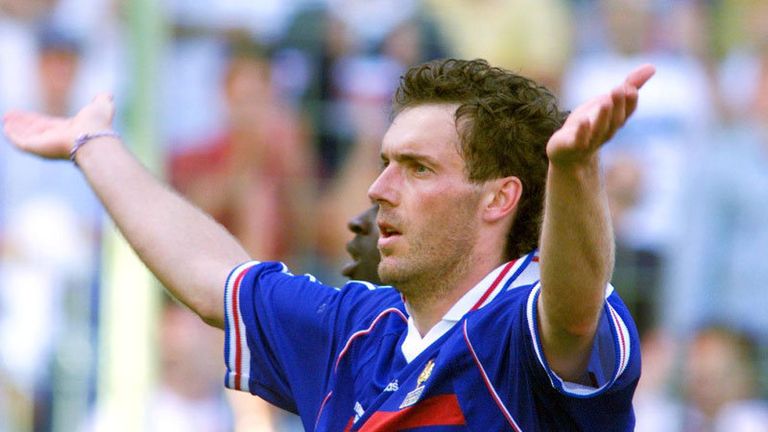
1988 - Laurent Blanc
Regarded as a talented youngster during his time at Montpellier, Blanc shot to prominence in 1988. His first experience of life abroad, at Napoli, came about three years later, but he was soon back in France with Nimes, St Etienne and Auxerre. His laid-back demeanour and casual approach to the game soon attracted interest from Barcelona, but he spent just one year in Spain before heading home once again to join Marseille. He sat atop of the world as France tasted World Cup glory on home soil in 1998, before trying his luck in Italy for a second time with Inter Milan. He announced his retirement from the game in 2003 while on the books of Manchester United and has since gone on to lead Bordeaux to the 2009 Ligue 1 title.
1990 - Davor Suker
Few who had the pleasure of watching Suker in action at the 1990 U21 European Championship will have been left in any doubt that he was destined for great things. Arguably the finest player to have ever emerged from Croatia, the deadly frontman enjoyed a goal-laden career. He found the target with unerring regularity for Osijek, Dinamo Zagreb, Sevilla and Real Madrid, before rounding off his playing days with short-lived spells at Arsenal and West Ham and 1860 Munich. Best remembered for his achievements at the 1998 World Cup, where he won the Golden Boot, his sublime lob over Denmark's legendary keeper Peter Schmeichel will live long in the memory of football fans everywhere.
1992 - Renato Buso
A fine player in his own right, Buso is not a name which will be widely recognisable to modern-day supporters. Anyone who graced the likes of Juventus, Lazio, Fiorentina and Sampdoria must have been a decent player, but he failed to set the world alight after bursting onto the scene a youngster. He did win a Serie A title during his days and Juve and an Italian Super Cup at Samp, but he will undoubtedly feel as though he should have achieved more. Since hanging up his boots he has tried his hand at coaching, and most recently worked with Fiorentina's youth side.
1994 - Luis Figo
The leader of the much-touted 'golden generation' of Portuguese football, Figo has come a long way since his humble beginnings at Sporting Lisbon. Unsurprisingly, having proven himself to be the best his age group had to offer, Figo did not stick around long in his homeland after shining at the 1994 Championships. Just 12 months later he was off to the bright lights of Barcelona, where he would spend five productive seasons. A record-breaking move to Real Madrid followed, before he landed the Ballon d'Or in 2000 and the Fifa World Player of the Year crown in 2001. He is Portugal's most-capped player of all-time, having made 127 appearances for his country, and can boast an envious medal collection. He recently decided to hang up his boots after seeing out his career at Inter Milan.
1996 - Fabio Cannavaro
Standing just 5feet 9inches tall, Cannavaro did not appear equipped to go on to become one the world's most distinguished defenders during his early years. That, though, is precisely what he has done, having risen to the summit of his profession. Promise was apparent during his time at Napoli and Parma, but it was not until he moved to Inter Milan and ultimately Juventus, in his late 20s and early 30s, that Cannavaro's career really began to take off. In the summer of 2006 he then achieved the ultimate goal, World Cup glory, as he skippered the Azzurri to the title in Germany. Fifa World Player of the Year and Ballon d'Or honours followed as he opted for a move to Real Madrid. The silverware continued to flow in Spain, but he will be heading back to his homeland this summer as he makes an emotional return to Juve.
1998 - Francesc Arnau
The first goalkeeper to take the 'Golden Player' award, Arnau never managed to build on his success of 1998. Being on the books of Barcelona should have seen him go on to become a legendary shot-stopper, but that progress never materialised. He saw first-team opportunities at Camp Nou hard to come by, with Ruud Hesp and Pepe Reina blocking his path, and made only a handful of appearances in five seasons. He then decided to try his luck elsewhere, moving to Malaga in 2001. Initially he suffered the same troubles as in Catalunya, as he played second-fiddle to Pedro Contreras. However, since 2003 he has made the No. 1 jersey his own and now holds the honour of club captain.
2000 - Andrea Pirlo
A brace in the 2000 final against Spain, including a sublime free-kick, announced Pirlo's arrival to the world. Having already been snapped up by Serie A giants Inter Milan, he appeared destined to become a legend with the Nerazzurri. As it happens, he is held in high regard at Giuseppe Meazza, but by supporters of AC Milan not Inter. A cross-city switch in 2001 allowed him the opportunity to fulfil his unquestionable potential, and he has not looked back since. A league title, two UEFA Champions League crowns and numerous other accolades have followed, while he is also an established member of the Italian national side. He played a key role in their 2006 World Cup-winning campaign and will be expected to shine again when the tournament heads to South Africa next summer.
2002 - Petr Cech
Having made a name for himself in his homeland with Sparta Prague, Cech was on the move to France, and Rennes, in the summer of 2002. It was also during that time that he shone brightest on the international stage with the Czech Republic youngsters. A number of outstanding performances, including penalty shoot-out heroics in the final, saw Cech help his country to Euro glory and earn global acclaim in the process. With his development having continued further at Rennes, it came as no surprise when Chelsea and Roman Abramovich's riches came calling in 2004. A move to Stamford Bridge duly followed and Cech is now widely regarded as one of, if not the best goalkeeper on the planet.
2004 - Alberto Gilardino
A slow start to his professional career gave no indication of what was to come, but the potent frontman soon found his shooting boots upon his arrival at Parma in 2002. He managed a strike rate of more than a goal every other game during his time at Stadio Ennio Tardini, while he also illuminated the U21 European Championships during the most productive spell of his career to date. A big-money move to AC Milan followed, but he failed to reproduce his electrifying form with the Rossoneri. He opted to join Fiorentina in 2008, having fallen out of favour at Milan, and has begun to show signs of his old self with Viola. A member of Italy's successful World Cup squad in 2006, he will be hoping to be awarded the opportunity to defend that title in 12 months time.
2006 - Klaas Jan Huntelaar
The worst kept secret in Dutch football for a number of years, Huntelaar was at the peak of his powers at the 2006 Championships. Having risen through the ranks, only to be passed over, at PSV Eindhoven, 'The Hunter' made a name for himself during a brief spell at Heerenveen before being snapped up by Eredivisie giants Ajax. A remarkable goalscoring record followed, while he quickly progressed out of the Dutch U21 side and into the senior set-up. He finally got his big move to a European superpower during the winter transfer window when Real Madrid brought him in as cover for the injured Ruud van Nistelrooy, and he made steady progress in Spain towards the end of the 2008/09 campaign.
2007 - Royston Drenthe
With the Dutch making light work of the defence of their U21 title in 2007, it came as no surprise when Drenthe was named star of the show. The flying winger was at his buccaneering best on home soil and just about edged out a number of his mightily-impressive team-mates. A Feyenoord player at the time, his exploits drew attention from Real Marid, who duly snapped him up in August 2007. He has struggled to make an impact at Santiago Bernabeu since then, with Real's galaxy of stars making it difficult for young talent to prosper. He recently went on a self-imposed exile from the side after being booed by his own supporters in a match against Deportivo La Coruna and could find himself on the move once again this summer.