
GAA suffers 'unprecedented' and 'very damaging' financial losses of €34.1m in 2020
"The past year has proved very damaging to the association from a financial point of view, with the likelihood that the after-effects will be felt for some years to come," wrote Tom Ryan, as the GAA announced a deficit of €34.1million for 2021.
Tuesday 16 February 2021 18:16, UK
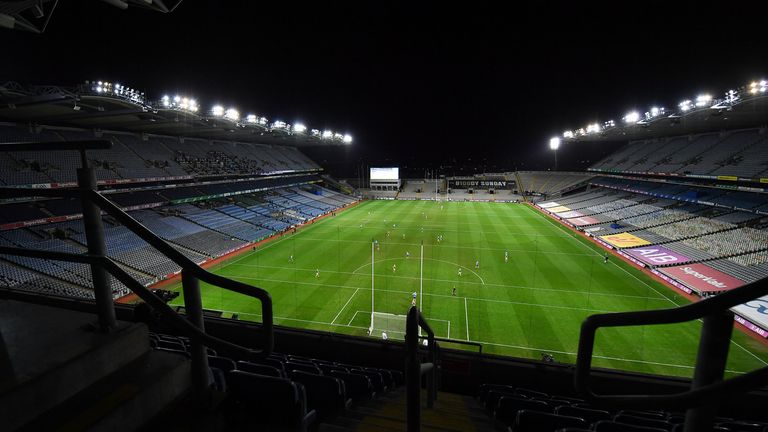
The GAA suffered 'unprecedented' and 'very damaging' financial losses in 2020, the association has revealed.
The GAA released its annual reports and financial statements for the year, ending 31 October 2020, on Tuesday morning.
Largely due to the impact of the Covid-19 pandemic, the GAA (including the Croke Park Stadium, provincial councils and county boards) recorded a deficit of €34.1million.
The loss of gate receipts was one of the dominant factors in the losses. These fell from €36,122,129 in 2019, to €3,675,456 in 2020.
However, given that the majority of the intercounty championships were held after October 31, many of the associated revenues were not reflected in this year's report.
"With no championship gate receipts or attendances to report on, and the majority of our 2020 championship games taking place after the financial year end of 31 October 2020, a significant portion of our 2020 revenues and related championship cost base have been deferred into the 2021 accounts," outlined Ger Mulryan, the association's director of finance.
"The primary income source in our 2020 accounts was direct government support of €18.5m, received through Sport Ireland.
"CLG was awarded €14m in direct government support to assist the staging of Championship 2020 and a further €9m from the €85m "Rescue Fund for Sport".
"In total, €13m of this €23m Covid support funding has been recorded in the 2020 accounts, with the balance deferred against the November and December cost base.
"The remaining €5.5m of income recognised is made up of a direct grant of €2.8m, for our inter-county players, along with our annual coaching and games grants of €2.3m, and €400k from the Department of Foreign Affairs.
"Our commercial and media contracts were renegotiated on a one-off basis to reflect the revised league and championship formats. Championship contracts saw an average reduction of 25% to their normal 2020 contract values while League contracts saw an average reduction of 10%."

Croke Park
The entity of the Croke Park Stadium was impacted financially.
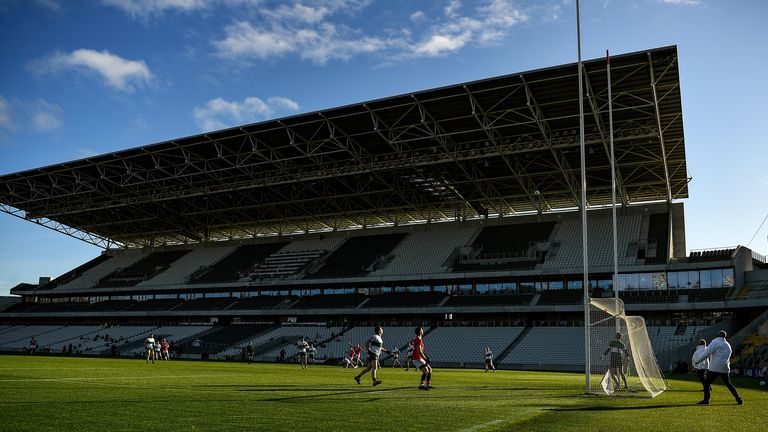
"Croke Park Stadium also sustained significant losses in 2020," noted Mulryan. "This was a direct result of limited matchday stadium rental income, a full year's deferral of premium and suite seat income, no championship match day catering or hospitality revenues, reduced conference centre activity, and no concerts. While operational cost savings were secured, the stadium's key cost line of depreciation remained fixed at €8m.
"The stadium company was unable to make a distribution back to CLG in the current year. This compared to a €10.5m distribution in 2019."
Infrastructure projects
With significant projects planned in Meath, Kildare, Waterford, Antrim, Louth and Roscommon, the association will be unable to offer central funds 'in the short to medium term'.
"The GAA at a central level is fully committed to the stadium projects in each of the above counties," wrote Mulryan.
"However, a level of realism will have to be maintained when it comes to financially supporting these large build costs. Centralised funding will not be available in the short to medium term to support these projects, or at least until the deficits of 2020 and 2021 have been replenished. These projects may have to be reviewed, rescaled, or re-phased to measure, and will be based on realistic and available resources."

Reduced training and team costs
One positive noted was the impact of restrictions introduced to reduce team costs.
"As part of the championship support packages introduced to underwrite the cost of team and player costs, I believe we may have landed on a formula that will serve us well when we return to a normal playing calendar," said Mulryan.
"The new requirement, that a panel size should be limited to 32, combined with a limit of three collective match or training sessions a week, will have a major direct cost saving impact for counties, while insuring consistency for all. Another welcome initiative is the limit placed on backroom team members permitted to attend matches. The setting of these boundaries and, more importantly, adhering to them will halt the ever-increasing team preparation costs that continues to undermine the financial viability of every county board."

Challenging 2021 ahead?
"2021 has begun with all the same challenges we experienced during the latter half of 2020 and will be another tough and extremely challenging year for our Association," he said.
"Losses at similar levels are currently forecasted and additional sources of funding to support these losses will be required. Contact has been made with Government regarding support for 2021 and the initial feedback is positive, separately our banking partners have indicated confidence in our ability to bounce back when our games resume and have committed a line of credit.
"We will however need to manage and be responsible for our own financial affairs and will need to reduce our core cost base further to guard the Association's long term health. There will be a requirement for continued flexibility to adapt to the ever-changing environment we now find ourselves in. The vaccination roll-out will directly influence when our games can fully return to normal and this is not forecasted to be complete until late 2021.
"Our ability to generate income will remain challenged and may not return to previous levels until Summer 2022 at the earliest."
'The past year has proved very damaging to the association from a financial point of view'
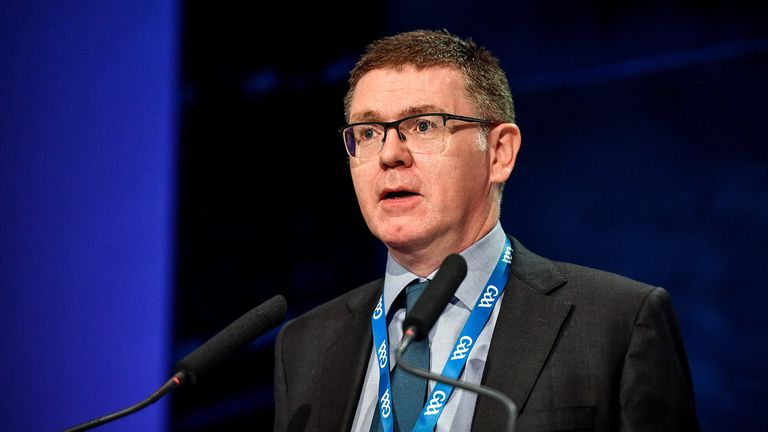
In his address, GAA director general Tom Ryan noted the positives from a challenging year, but acknowledged the potential lasting impact of the damage.
"Our success is not defined by financial performance, and nor should it be," GAA director general Tom Ryan wrote in his address.
"Nevertheless the past year has proved very damaging to the association from a financial point of view, with the likelihood that the after effects will be felt for some years to come.
Our success is not defined by financial performance, and nor should it be.
"We may not have had income, but we still had responsibilities. It was vital that we didn't fold the tent and give up. We still had a role to fulfil, a profile and reputation to maintain. So to the extent possible we played games, we promoted health initiatives, we made facilities available, we put our best foot forward. Ironically these came at a continued cost when we could least afford it.
"But the Association will flourish again long after this pandemic is over, and we need to maintain certain momentum in the meantime - albeit on a greatly reduced scale. With time, with the restoration of public health and the resumption of normality I have no doubt that we will recover."