
2015 World Cup: How T20 skills and innovation helped records tumble
With one year to go, what new ground will 2019 tournament break?

Thursday 31 May 2018 08:13, UK

Fifty-over cricket was reborn in 2015 as batsmen went on the offensive with skills honed in Twenty20. With exactly one year to go until the 2019 tournament, Sky Sports cricket statistician Benedict Bermange charts the evolution of the game...
More than a million spectators passed through the gates for the 11th edition of the ICC Cricket World Cup, which ended with worthy champions Australia winning for a record fifth time.
The tournament had the same structure as its predecessor on the subcontinent in 2011 but apart from that, much had changed.
Afghanistan made their welcome debut on the biggest stage of all, and achieved their first victory with a thrilling win over Scotland. Ireland again performed well, defeating the West Indies and Zimbabwe in exciting games, only to fall at the final hurdle and just fail to qualify for the quarter-finals.
There was a beautiful symmetry in that of the 48 completed matches, 24 were won batting first and 24 batting second. However, once split by country, a different tale emerges:
Matches | Won batting 1st | Won batting 2nd | |
Overall | 48 | 24 | 24 |
in Aus | 25 | 16 | 9 |
in NZ | 23 | 8 | 15 |
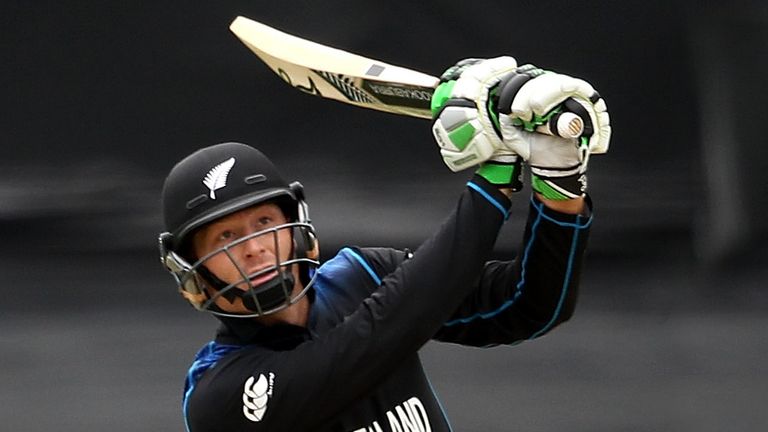
The big-hitters – who had honed their skills in the shortest format of the game, showed that improvised shots are no longer exclusively restricted to Twenty20 cricket.
Brendon McCullum, Chris Gayle, AB de Villiers, Glenn Maxwell and many others showed that there was no need to keep the ball on the ground, as nearly twice as many sixes were hit than four years ago – 463 to 258.
With 400 rapidly becoming the new 300, it is no surprise that six of the top ten World Cup totals of all-time were scored this year:
Score | Team | Against | Venue | Season |
417-6 | Australia | Afghanistan | Perth | 2015 |
413-5 | India | Bermuda | Port-of-Spain | 2007 |
411-4 | Sth Africa | Ireland | Canberra | 2015 |
408-5 | Sth Africa | West Indies | Sydney | 2015 |
398-5 | Sri Lanka | Kenya | Kandy | 1996 |
393-6 | New Zealand | West Indies | Wellington-W | 2015 |
377-6 | Australia | South Africa | Basseterre | 2007 |
376-9 | Australia | Sri Lanka | Sydney | 2015 |
373-6 | India | Sri Lanka | Taunton | 1999 |
372-2 | West Indies | Zimbabwe | Canberra | 2015 |
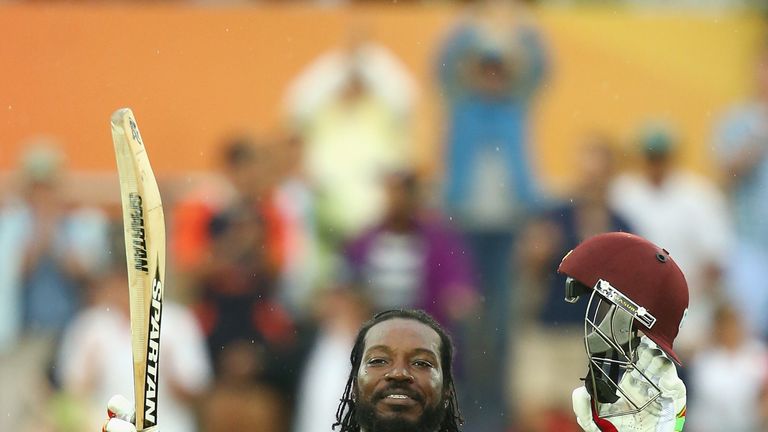
Three of the highest six World Cup innings of all time were also played this year, including the first two double-centuries to be scored in the tournament’s history:
Score | Name | Team | Against | Venue | Season |
237* | MJ Guptill | New Zealand | West Indies | Wellington-W | 2015 |
215 | CH Gayle | West Indies | Zimbabwe | Canberra | 2015 |
188* | G Kirsten | South Africa | UAE | Rawalpindi | 1996 |
183 | SC Ganguly | India | Sri Lanka | Taunton | 1999 |
181 | IVA Richards | West Indies | Sri Lanka | Karachi | 1987 |
178 | DA Warner | Australia | Afghanistan | Perth | 2015 |
When the World Cup was last held in Australia and New Zealand, back in 1992, the average score batting first was 213. This year, both Guptill and Gayle surpassed that by themselves.
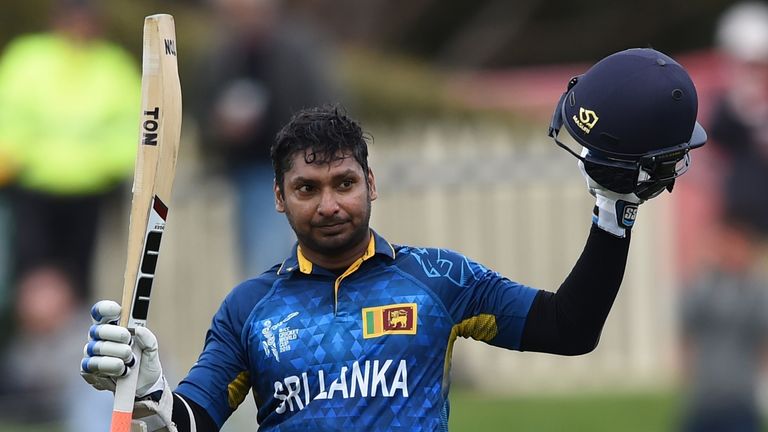
Thirty-eight centuries were scored in total, obliterating the previous record of 24 set four years ago. Four of those were scored by Kumar Sangakkara, who became the first man to score four centuries in successive ODIs. Bangladesh’s Mahmudullah also scored successive tons, as did Zimbabwe’s Brendan Taylor – in his final two ODIs.
Unsurprisingly, the average run rate over the course of the tournament increased for the fourth time in a row since 1999. The difference between the 1999 and 2015 figures equates to 59 runs over a 50-over innings.
Year | RPO |
1999 | 4.48 |
2003 | 4.76 |
2007 | 4.95 |
2011 | 5.03 |
2015 | 5.65 |
Again, perhaps unsurprisingly the percentage of the total runs scored in boundaries was also an all-time high, and reached nearly fifty percent for the first time:
Year | % boundaries |
1999 | 37.88% |
2003 | 42.89% |
2007 | 44.39% |
2011 | 42.92% |
2015 | 48.69% |
South Africa finally managed to win a World Cup knock-out match at the sixth time of asking, when they defeated Sri Lanka, but they fell at the semi-final stage thanks to a Grant Elliott-inspired New Zealand run-chase – the highest in a World Cup knockout match.
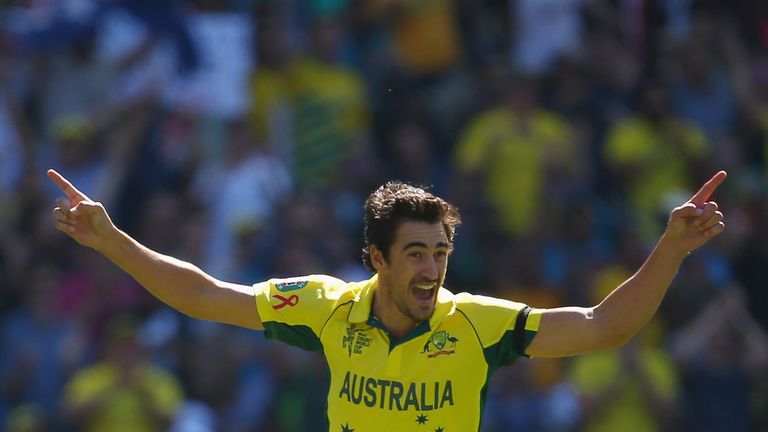
However, there was hope for the bowlers – some of whom proved that if you take wickets then you can keep the scoring rate down. Player of the tournament Mitchell Starc became just the second man to lead both the bowling average and economy rate tables in the same World Cup:
Name | M | Wkts | Avg | RPO | Year |
MA Starc | 8 | 22 | 10.18 | 3.50 | 2015 |
CA Walsh | 5 | 11 | 9.81 | 2.29 | 1999 |
No one epitomised how the game has changed better than the West Indies captain Jason Holder. Here is how he performed at different stages of the innings:
Period | Overs | Runs | Wkts | Avge | Econ |
Overs 1-10 | 33 | 118 | 7 | 16.86 | 3.58 |
Overs 11-40 | 20 | 115 | 2 | 57.50 | 5.75 |
Overs 41-50 | 5 | 118 | 0 | - | 23.60 |
The final ten over stage really was a launching pad this tournament. In the past the rough rule of thumb was that you should double your score at 30 overs to estimate your final total. The overall run rate in the final ten overs over the course of the tournament was 8.43 runs per over, with South Africa totally dominant:
Team | Run rate |
South Africa | 13.20 |
West Indies | 11.97 |
Australia | 10.88 |
New Zealand | 10.42 |
England | 9.00 |
India | 8.53 |
Sri Lanka | 8.01 |
Bangladesh | 7.67 |
Ireland | 7.10 |
Zimbabwe | 7.02 |
UAE | 6.60 |
Pakistan | 6.34 |
Scotland | 6.27 |
Afghanistan | 5.49 |
Three men were supreme in the final ten overs, averaging more than fifty and striking at more than 200:
Batsman | Runs | Balls | Wkts | Avg | SR |
GJ Maxwell | 172 | 84 | 3 | 57.33 | 204.76 |
DA Miller | 169 | 78 | 2 | 84.50 | 216.66 |
AB de Villiers | 130 | 50 | 2 | 65.00 | 260.00 |
The first ten overs were more sedate, with runs coming at just 4.83 per over as a whole. The one exception to that rule was Brendon McCullum.
Despite his failure in the final, he scored 308 runs in the first ten overs, more than a hundred more than his closest challenger – team-mate Martin Guptill. McCullum’s runs in that period came at a strike rate of 201.3. To put that in context, the only other player to score more than 40 runs in the first ten overs at better than a run a ball was David Warner, with 187 runs from 170 deliveries.
The rise of the left-arm seamer was much-documented and the stats bear witness to that:
Type | Wkts | Avge | RPO |
Left-arm seam | 137 | 21.07 | 4.99 |
Right-arm seam | 394 | 34.04 | 5.81 |
Leg-breaks | 22 | 55.13 | 5.33 |
Off-breaks | 72 | 48.15 | 5.33 |
Slow left-arm | 51 | 42.15 | 5.36 |
Spinners struggled on the whole, taking their wickets at 47.10 runs each.
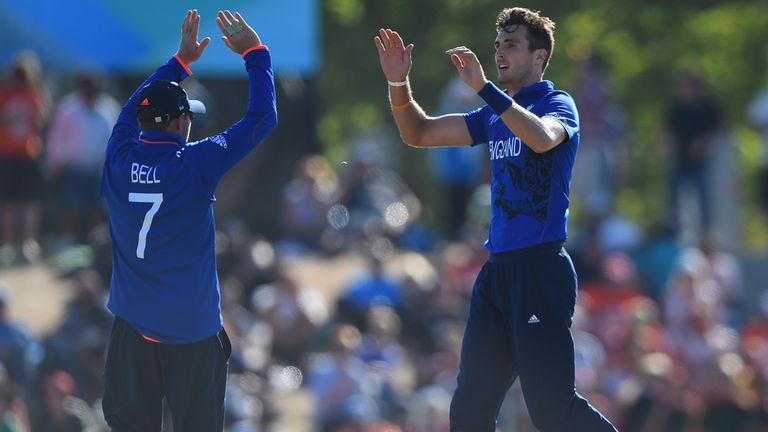
Two bowlers took hat-tricks – on both occasions the first for their country in the World Cup. Steven Finn’s came in figures of 5-71 against Australia – the most expensive figures to include a hat-trick in ODI history. JP Duminy was the other hat-trick hero, with three wickets in as many balls against Sri Lanka.
For Finn, he rapidly went from hero to zero. Against New Zealand, his two overs cost 49 runs, mainly thanks to Brendon McCullum, who took 44 of those runs from ten Finn deliveries. Those figures are the most expensive in ODI history for anyone entrusted to bowl more than one over.
Watch every ball of the 2019 ICC Cricket World Cup live on Sky Sports Cricket and follow the action across our digital platforms.