
The day I played the Afghanistan cricket team – and lost
The story of the World Cup side's game against a British Army team in 2006
Wednesday 18 February 2015 15:19, UK
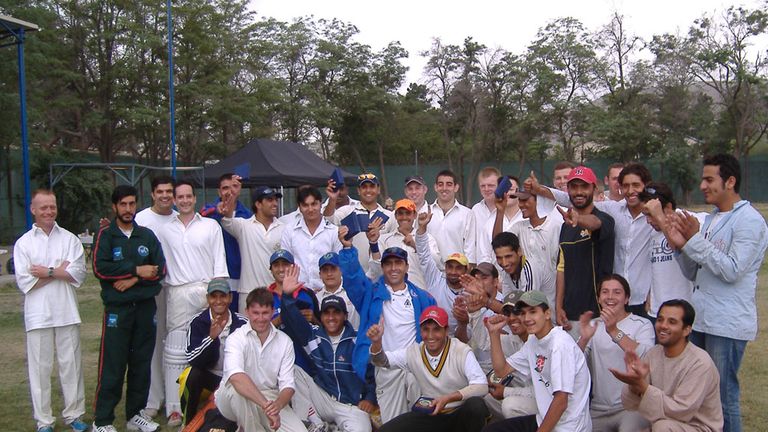
Ahead of Afghanistan's first match at the World Cup, Sky Sports journalist and Army reservist Paul Vinnell tells the story of the time he played against them in Kabul in 2006....
Afghanistan complete their astonishing journey to the top table of cricket tonight when they play Bangladesh in their first World Cup match.
It is one of the most remarkable stories in any sport in recent years, the rise and rise of a team that has climbed to the summit of the game in less than a decade.

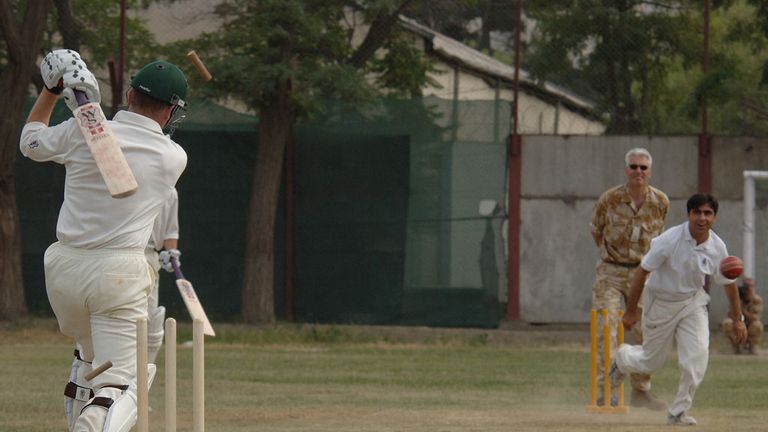
I played against them in a Twenty20 match in 2006, for a hastily cobbled-together British Army team in Kabul. We were hammered, and I have been following their progress ever since. Quite simply, these guys are my sporting heroes. Here’s why:
Many of the team grew up in the vast, sprawling refugee camps in Pakistan, a legacy of the Soviet occupation of Afghanistan.
They learned to play the game there, and after the Taliban were overthrown by a combination of western troops and the Northern Alliance in 2001, they brought cricket home with them.
The Taliban had initially banned cricket – in fact all sport, along with kite-flying, music, photography and quite frankly, fun in general. Though interestingly, they made cricket the only legal sport to play in 2000.
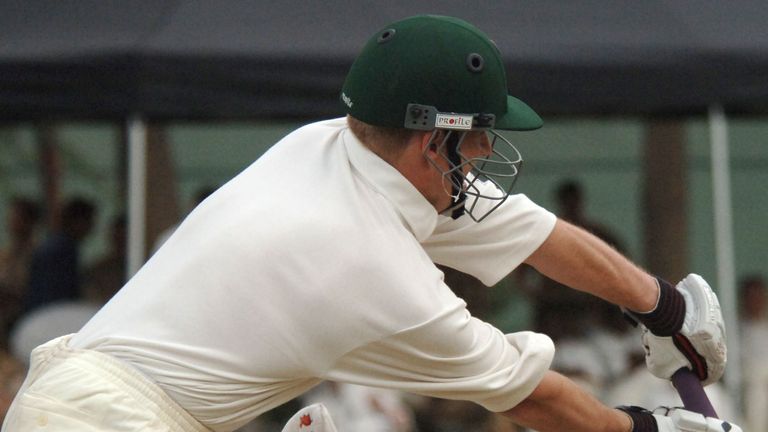
Afghanistan batted first. We took an early wicket, but their first 50 runs came up off four overs. Every single scoring shot in that first 50 runs was a six.
In 2006, former England captain Mike Gatting took a strong MCC team to Mumbai to play the nascent Afghan national team, and they were crushed by 171 runs. Gatting was dismissed for a duck and a young lad called Mohammad Nabi smashed 116.
A few weeks later, it was our turn to face them. As an Army reservist, I’d been called up for a six-month tour, so I left my desk at Sky Sports and departed for Kabul. There was very little free time, but one day a poster went up in the gym. ‘Cricketers wanted.’
The highlight of my cricket ‘career’ up to that point was a rollicking 30-odd for my Sky Sports department against, I think, Channel 4. Now I was to play an international team.
We had a handful of good club players, but most of us were no more than enthusiastic amateurs. We had a few practice sessions in the indoor gym, and had some whites, bats, pads and – most importantly – helmets and boxes sent over from the UK. We heard the Afghans had some seriously fast bowlers.
The match was to be played on a football pitch next to the main headquarters in Kabul. A few of the lads had found something akin to a roller, and spent most of their spare time in the preceding couple of weeks creating a pitch.
When we arrived at the ground, we were quickly given a stark reminder of why we were all in Afghanistan in the first place. The armed guards at the far end of the ground came running over and told us in no uncertain terms to leg it back to base.
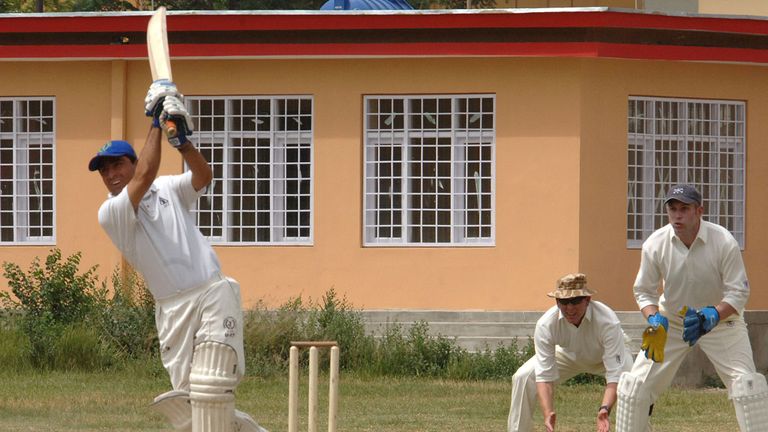
There had been a serious incident in Kabul, and we could hear the gunfire. And the gunfire was getting closer. And so back we went – at a steady jog - dragging our cricket bags and stumps behind us. The match was cancelled. We were devastated.
However, stiff upper lips on all sides. Calm in the capital was swiftly restored, and we played the match the following week in front of our commander, Lt Gen David Richards, some local dignitaries, and some off-duty troops.
What followed was something like this: Afghanistan batted first. We took an early wicket, but their first 50 runs came up off four overs. Every single scoring shot in that first 50 runs was a six.
I did not have to bowl, mercifully. To my shame I do remember avoiding the captain’s eye as he looked for willing volunteers to share the pain.
They smashed 270 runs in their 20 overs. One of their team scored a stunning century off about 30 balls. I checked his name on the scorecard afterwards: Mohammad Nabi. Well, at least I had now played a bloke who had scored a century against the MCC.
Our openers, somehow, put on 40-odd for the first wicket in reply, an astonishing effort given that their opening bowlers, in particular Hamid Hassan, were very fast, and bowling on a pitch which was no Taunton belter, I can tell you. One ball would balloon over the keeper. The next would hit the same spot and take out your ankles.
Once our openers departed, the wheels came off. They took their fast bowlers off, generously, and they bowled spin for the rest of the game. We were bundled out for 117. My contribution was three. I had planned on a dogged, backs-to-the-wall effort. I came in at about No 7, and immediately had the keeper in my ear. “Hit him for six! Go on – over his head, hit him for six!”
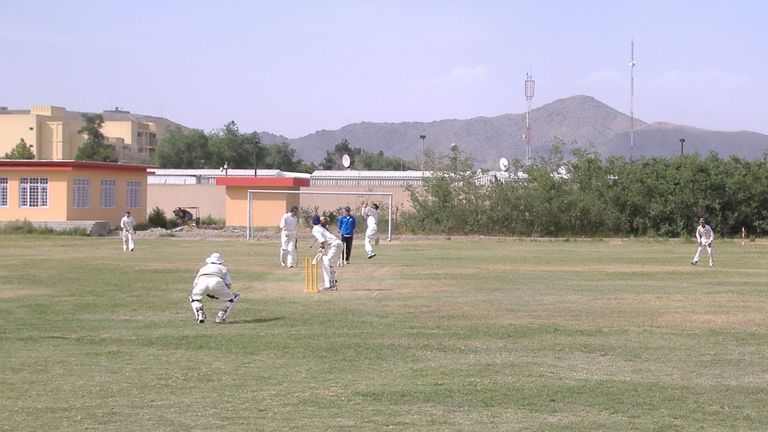
The first ball I faced was a full toss. I couldn’t help myself. I slogged it, going for a straight six, sliced it horribly to cover point, and was dropped. Two runs! The next ball came off my pad and down to fine leg, but the umpire didn’t signal a leg bye - so I’m taking the run.
My next ball – all I remember is dancing halfway down the track, swinging, missing, and not bothering to look back as I was stumped. My international career was over.
After the match, there was a great deal of bonhomie and backslapping. They were exceptionally generous in victory, and we posed for photos and drank tea. There was a lot of interest in the match around Asia, and in Afghanistan in particular.
The following week, the Afghans departed for a tour of the UK, playing seven matches, and winning six. They beat three county second XIs – Glamorgan, Essex and Leicestershire. We were in good company.
Nabi and fast bowler Hassan were offered contracts on the MCC staff, with the latter becoming the first Afghan to play at Lord’s.
In the next few years, the Afghans climbed rapidly through the World Cricket Leagues, from five, to the very top.
They have twice made it to the World T20 finals and they are now one of the best associate members – the best of the non-Test nations – along with Ireland, Scotland and the Netherlands.
Live Cricket World Cup 2015


They chalked up their first victories over Test nations – Bangladesh and Zimbabwe – in the past 12 months.
The impact in Afghanistan has been immense. The players are heroes in their homeland. Cricket is the fastest growing sport, with crowds of 15,000 attending big matches, something that would simply not have been possible in the days of Taliban rule. Thirty-two of the 34 provinces compete in domestic tournaments. Sport, whether it is playing on the international stage, or just cheering the team on from home – is back, and that represents a significant step forward for the country.
And cricket’s growth has attracted serious funding from the ICC. They have an experienced coach, Andy Moles, the former Warwickshire opener.
And now they have made it to the World Cup. The man who will captain them against Bangladesh is Mohammad Nabi, the man who slogged us all over Kabul nine years ago, and Hassan is still in the squad too.
They also face Sri Lanka, Scotland, hosts Australia – at the SCG – as well as New Zealand, and finally England.
Fittingly, they take on England on March 13, the same day as a National Service of Commemoration will be held at St Paul’s Cathedral to mark the end of UK combat operations in Afghanistan.