
2013 Japanese GP analysis: Where Sunday's race was won and lost
Did Red Bull need to pit Webber three times? How did Vettel make the difference? And how did Gutierrez at last arrive in the points?
Tuesday 15 October 2013 13:54, UK
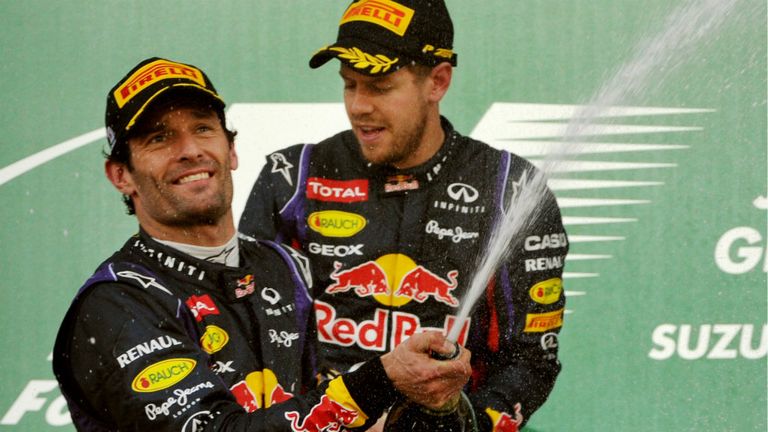
As Ted Kravitz mused in his post-race Notebook, it was the timing of that lap-25 stop that proved particularly puzzling given Webber's very consistent pace at the time.
Certainly the radio message to Vettel two laps later from his race engineer of "You're not racing Mark, you're racing Grosjean" would appear to suggest that, from the German's side of the garage at least, they considered the World Champion to now be in the box seat with Webber locked into a riskier three-stopper. Horner later insisted that it wasn't until the closing stages of the race - namely when Vettel dispensed with Grosjean at the first attempt but Webber, on fresh tyres, didn't clear the Lotus until the second last lap - which side of their split-strategy equation would win out, but none of those explanations could completely quell the lingering sense among some that Webber's progress had been unnecessarily checked.
Just how did Sebastian Vettel make the difference?
Sebastian Vettel ran a 23-lap middle stint between laps 14 and 37 - the longest of any driver at that stage of the race - and it was the consistent lap times that Vettel set throughout the stint that set up victory. The fight for the win was only ever between three men - Vettel, Romain Grosjean and Mark Webber - but neither the Frenchman nor the Aussie could match the German's tyre preservation whilst continuing to post competitive lap times. When Red Bull called in Webber for an early second stop, moving him to a three-stop strategy, he had completed just 14 laps on his second set of tyres, consistently lapping, as mentioned above, around the 1:37.8/1:37.9 mark. In the Lotus - a car famed for looking after its tyres - Grosjean's second stint lasted just 17 laps, but by that stage his times had dropped off by around half a second - going from a 1:37.6 on his first flying lap, to the low-1:38s when he was called into the pits. Compare those times with Vettel's at that stage and the German was in another league - his first lap after his stop was 1:37.445 and the final lap before his stop was 1:37.381, proving how well he was managing the durability of his Pirelli rubber. At some points during that period he even managed to dip into the 1:36s, yet still did not suffer excess degradation. This ability to run longer meant after the final round of stops, Vettel's tyres were eight laps fresher than Grosjean's and at the end of the race the Red Bull driver was lapping around 1.5 seconds per lap quicker than the Frenchman. How costly was Nico Rosberg's drive-through penalty?
Nico Rosberg could conceivably have finished fourth at the Japanese GP had his race not been ruined by a drive-through penalty on lap 16. Whilst unable to match the pace of Sebastian Vettel, Mark Webber and Romain Grosjean ahead of him up until the first round of stops, the German was able to maintain a comfortable gap of around 1.5 seconds over Felipe Massa and held a similar advantage over Nico Hulkenberg, who had found himself between the pair after stopping a lap earlier than Massa, when he rejoined on lap 13. However, issued with a penalty after Mercedes had released him into the path of the oncoming Sergio Perez at his pitstop, Rosberg dropped to 12th when he served the punishment three laps later. However, his pace was strong. Running in clear air some four seconds behind the McLarens, the German was able to lap faster than both Massa and Hulkenberg, albeit still slower than third-placed Vettel. The real impact of the penalty, though, would become apparent on lap 24 when Rosberg made the second of his two scheduled stops. He rejoined behind Daniel Ricciardo, who caused his own version of the infamous 'Trulli train' at various points of the race. The German would spend eight laps tucked up behind the Toro Rosso driver, unable to find a way past. When the Australian pitted on lap 32, Rosberg improved his lap time by two seconds, posting four times in the 1:36s in quick succession ahead of his own stop on lap 39, around half a second a lap quicker at that point than Fernando Alonso who would eventually take that fourth spot some 26 seconds up the road. How did Esteban Gutierrez make his big Sunday move?
Having appeared to be in danger of becoming the first Sauber driver since Pedro Diniz in 2000 to go through a full season without scoring a point, Esteban Gutierrez finally opened his F1 account with a fine drive to seventh in Japan. That the Mexican's top-ten breakthrough, at the 15th attempt, came on a circuit he had never driven prior to Friday's Practice One was all the more impressive, and highlights the increased competitiveness - and confidence - Gutierrez has displayed since F1 hit the road for the Far East flyaways. That lack of experience around Suzuka's acrobatic figure-of-eight layout had appeared to tell when the 22-year-old qualified 14th rather than achieving a Q3 hat-trick. However, after poor starts from the top ten in Singapore and Korea, it was Gutierrez's first few corners that laid the foundations for his strong race on this occasion as he passed five cars - including Jenson Button and Kimi Raikkonen - by the third corner. This ensured Gutierrez ran ninth to his opening lap-nine pitstop. On his return to the track he was then soon able to tag himself onto the back of the two Ferraris thanks to the traffic jam being caused by Daniel Ricciardo. Ninth became eighth when Nico Rosberg dropped down the order courtesy when the German served his drive-through, and although a bold overtaking attempt on Felipe Massa at the hairpin only ultimately served to allow Kimi Raikkonen to line him up and pass into 130R, Gutierrez stayed ahead of Sergio Perez until his second round of stops. Once things had shaken out by lap 41, the Mexican was up in seventh and that is where he would stay despite the recovering Rosberg catching him up during the closing stages and running within a second of his rear wing for the final six laps. That Gutierrez managed to soak up all the pressure underlined his growing maturity.
Sebastian Vettel ran a 23-lap middle stint between laps 14 and 37 - the longest of any driver at that stage of the race - and it was the consistent lap times that Vettel set throughout the stint that set up victory. The fight for the win was only ever between three men - Vettel, Romain Grosjean and Mark Webber - but neither the Frenchman nor the Aussie could match the German's tyre preservation whilst continuing to post competitive lap times. When Red Bull called in Webber for an early second stop, moving him to a three-stop strategy, he had completed just 14 laps on his second set of tyres, consistently lapping, as mentioned above, around the 1:37.8/1:37.9 mark. In the Lotus - a car famed for looking after its tyres - Grosjean's second stint lasted just 17 laps, but by that stage his times had dropped off by around half a second - going from a 1:37.6 on his first flying lap, to the low-1:38s when he was called into the pits. Compare those times with Vettel's at that stage and the German was in another league - his first lap after his stop was 1:37.445 and the final lap before his stop was 1:37.381, proving how well he was managing the durability of his Pirelli rubber. At some points during that period he even managed to dip into the 1:36s, yet still did not suffer excess degradation. This ability to run longer meant after the final round of stops, Vettel's tyres were eight laps fresher than Grosjean's and at the end of the race the Red Bull driver was lapping around 1.5 seconds per lap quicker than the Frenchman. How costly was Nico Rosberg's drive-through penalty?
Nico Rosberg could conceivably have finished fourth at the Japanese GP had his race not been ruined by a drive-through penalty on lap 16. Whilst unable to match the pace of Sebastian Vettel, Mark Webber and Romain Grosjean ahead of him up until the first round of stops, the German was able to maintain a comfortable gap of around 1.5 seconds over Felipe Massa and held a similar advantage over Nico Hulkenberg, who had found himself between the pair after stopping a lap earlier than Massa, when he rejoined on lap 13. However, issued with a penalty after Mercedes had released him into the path of the oncoming Sergio Perez at his pitstop, Rosberg dropped to 12th when he served the punishment three laps later. However, his pace was strong. Running in clear air some four seconds behind the McLarens, the German was able to lap faster than both Massa and Hulkenberg, albeit still slower than third-placed Vettel. The real impact of the penalty, though, would become apparent on lap 24 when Rosberg made the second of his two scheduled stops. He rejoined behind Daniel Ricciardo, who caused his own version of the infamous 'Trulli train' at various points of the race. The German would spend eight laps tucked up behind the Toro Rosso driver, unable to find a way past. When the Australian pitted on lap 32, Rosberg improved his lap time by two seconds, posting four times in the 1:36s in quick succession ahead of his own stop on lap 39, around half a second a lap quicker at that point than Fernando Alonso who would eventually take that fourth spot some 26 seconds up the road. How did Esteban Gutierrez make his big Sunday move?
Having appeared to be in danger of becoming the first Sauber driver since Pedro Diniz in 2000 to go through a full season without scoring a point, Esteban Gutierrez finally opened his F1 account with a fine drive to seventh in Japan. That the Mexican's top-ten breakthrough, at the 15th attempt, came on a circuit he had never driven prior to Friday's Practice One was all the more impressive, and highlights the increased competitiveness - and confidence - Gutierrez has displayed since F1 hit the road for the Far East flyaways. That lack of experience around Suzuka's acrobatic figure-of-eight layout had appeared to tell when the 22-year-old qualified 14th rather than achieving a Q3 hat-trick. However, after poor starts from the top ten in Singapore and Korea, it was Gutierrez's first few corners that laid the foundations for his strong race on this occasion as he passed five cars - including Jenson Button and Kimi Raikkonen - by the third corner. This ensured Gutierrez ran ninth to his opening lap-nine pitstop. On his return to the track he was then soon able to tag himself onto the back of the two Ferraris thanks to the traffic jam being caused by Daniel Ricciardo. Ninth became eighth when Nico Rosberg dropped down the order courtesy when the German served his drive-through, and although a bold overtaking attempt on Felipe Massa at the hairpin only ultimately served to allow Kimi Raikkonen to line him up and pass into 130R, Gutierrez stayed ahead of Sergio Perez until his second round of stops. Once things had shaken out by lap 41, the Mexican was up in seventh and that is where he would stay despite the recovering Rosberg catching him up during the closing stages and running within a second of his rear wing for the final six laps. That Gutierrez managed to soak up all the pressure underlined his growing maturity.