
2013 Bahrain Grand Prix analysis: Where Sunday's race was won and lost
Examining the difference in speed between the two Red Bulls, the split in Lewis Hamilton's race, and if it ought to have gone so badly for Fernando Alonso...
Tuesday 14 May 2013 17:23, UK
Did Fernando Alonso's second unscheduled stop cost him a podium?
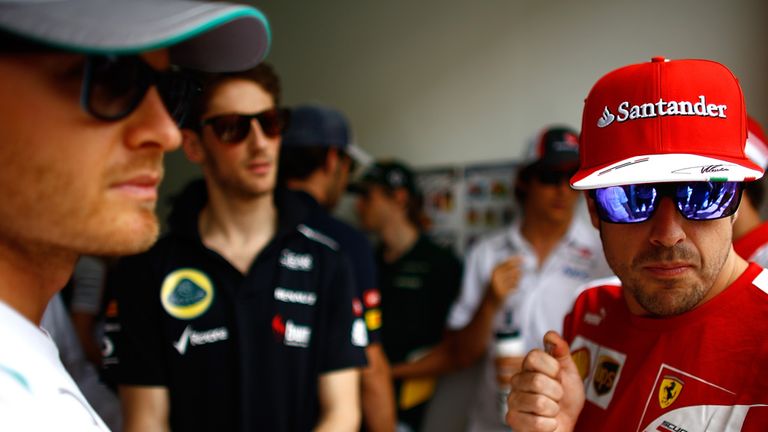
While Fernando Alonso's chances of claiming back-to-back victories effectively ended the moment his DRS flap jammed open on lap five, there's a strong argument to suggest it shouldn't have consigned the Spaniard to such a minor points finish. True, the timing of his lap seven pit-stop for the mechanics to briefly assess the wing, and manually wedge it shut, was out of kilter with Ferrari's strategy for the first stint, but it was probably only two or three laps ahead of his expected stop for new tyres anyway. Indeed, what really did for Alonso was his out-lap when he reactivated the faulty DRS when rounding the Marussia of Max Chilton for 17th. It's easy to be judge and jury in hindsight, but quite why the Ferrari pitwall hadn't already decided not to risk any further DRS malfunctions and instructed the Spaniard against reactivating it again straight away is anyone's guess, even if Stefano Domenicali did point to time pressures when quizzed on the matter after the race. Alas, the swift return to the pits cost Alonso an additional 21 seconds of wasted time and meant he stayed behind Romain Grosjean when the Lotus made his own earlier-than-planned debris-induced stop on the same lap. Furthermore, by the time the first round of pitstops had filtered out around lap 14, the Lotus had jumped a closely-bunched group four cars including Sergio Perez and Lewis Hamilton that Alonso now had to catch up. By the end of the race, Grosjean was up on the bottom step of the podium, whereas Alonso was some 18 seconds back in eighth place. That's approximately the net lost time for a pitstop at Sakhir, so did that ill-advised lap-eight DRS activation really cost the Ferrari man a podium? Well, given Alonso admitted his final set of tyres had gone off by the closing laps on Sunday - his mid 1:39 times over the final five laps compared with Grosjean's mid 1:38s certainly bear this out - it's perhaps a stretch to say he would have been able to hold off a charging Lotus. But fourth, and definitely fifth ahead of Lewis Hamilton, would have been within his grasp.
A tale of two races for Lewis Hamilton
Hamilton's Bahrain GP was a strange curiosity, shaped into two distinct halves. Having been, in his own words, "nowhere" in the first half of the race, Lewis' Mercedes was one of the fastest cars on the track for the final 35 laps. So what happened? Hamilton reported afterwards his car had simply started to react differently, with the team themselves pointing to a slight drop in track temperatures, but the lap charts simply suggest Mercedes erred in electing to run Hamilton on two stints on the difficult medium tyres. The 2008 World Champion was, in fact, the only leading driver to put on another set of the options at the first round of pit-stops, a particularly puzzling choice given that he had been so far off the pace over the first ten laps. His second stint proved no better with Hamilton never once lapping below the 1:41 mark before he finally put on the hards on lap 23. From that point onwards, Hamilton's Mercedes was an altogether different beast, both quick and consistent, with every lap in his third stint faster than any of those recorded in his first two. After stopping again on lap 39, Hamilton continued to set a searing pace, recording 12 consecutive laps between 1:38.
While Fernando Alonso's chances of claiming back-to-back victories effectively ended the moment his DRS flap jammed open on lap five, there's a strong argument to suggest it shouldn't have consigned the Spaniard to such a minor points finish. True, the timing of his lap seven pit-stop for the mechanics to briefly assess the wing, and manually wedge it shut, was out of kilter with Ferrari's strategy for the first stint, but it was probably only two or three laps ahead of his expected stop for new tyres anyway. Indeed, what really did for Alonso was his out-lap when he reactivated the faulty DRS when rounding the Marussia of Max Chilton for 17th. It's easy to be judge and jury in hindsight, but quite why the Ferrari pitwall hadn't already decided not to risk any further DRS malfunctions and instructed the Spaniard against reactivating it again straight away is anyone's guess, even if Stefano Domenicali did point to time pressures when quizzed on the matter after the race. Alas, the swift return to the pits cost Alonso an additional 21 seconds of wasted time and meant he stayed behind Romain Grosjean when the Lotus made his own earlier-than-planned debris-induced stop on the same lap. Furthermore, by the time the first round of pitstops had filtered out around lap 14, the Lotus had jumped a closely-bunched group four cars including Sergio Perez and Lewis Hamilton that Alonso now had to catch up. By the end of the race, Grosjean was up on the bottom step of the podium, whereas Alonso was some 18 seconds back in eighth place. That's approximately the net lost time for a pitstop at Sakhir, so did that ill-advised lap-eight DRS activation really cost the Ferrari man a podium? Well, given Alonso admitted his final set of tyres had gone off by the closing laps on Sunday - his mid 1:39 times over the final five laps compared with Grosjean's mid 1:38s certainly bear this out - it's perhaps a stretch to say he would have been able to hold off a charging Lotus. But fourth, and definitely fifth ahead of Lewis Hamilton, would have been within his grasp.
A tale of two races for Lewis Hamilton
Hamilton's Bahrain GP was a strange curiosity, shaped into two distinct halves. Having been, in his own words, "nowhere" in the first half of the race, Lewis' Mercedes was one of the fastest cars on the track for the final 35 laps. So what happened? Hamilton reported afterwards his car had simply started to react differently, with the team themselves pointing to a slight drop in track temperatures, but the lap charts simply suggest Mercedes erred in electing to run Hamilton on two stints on the difficult medium tyres. The 2008 World Champion was, in fact, the only leading driver to put on another set of the options at the first round of pit-stops, a particularly puzzling choice given that he had been so far off the pace over the first ten laps. His second stint proved no better with Hamilton never once lapping below the 1:41 mark before he finally put on the hards on lap 23. From that point onwards, Hamilton's Mercedes was an altogether different beast, both quick and consistent, with every lap in his third stint faster than any of those recorded in his first two. After stopping again on lap 39, Hamilton continued to set a searing pace, recording 12 consecutive laps between 1:38.