
Olympic Games must be delayed or moved due to Zika, says professor
Wednesday 11 May 2016 17:22, UK
This summer's Olympic and Paralympic Games in Rio could trigger a "full-blown global health disaster" and must be postponed or relocated, according to a professor writing in the Harvard Public Health Review.
Amir Attaran, professor of law and medicine at the University of Ottawa, says the outbreak of the Zika virus is more dangerous and extensive than previously thought and its "inevitable" spread worldwide may be accelerated when an estimated 500,000 foreign tourists visit Rio for the Games.
The current Zika outbreak was first identified in Brazil in April 2015 and has been linked to cases of microcephaly - when babies are born with below-average head sizes - across large parts of South and Central America.
Professor Attaran wrote: "Zika infection is more dangerous, and Brazil's outbreak more extensive, than scientists reckoned a short time ago. Which leads to a bitter truth: the 2016 Olympic and Paralympic Games must be postponed, moved, or both, as a precautionary concession.
"All it takes is one infected traveller. Analyses establish that Brazil's cataclysmic outbreak stems from a single viral introduction event likely between May and December 2013. A few viral introductions of that kind, in a few countries, or maybe continents, would make a full-blown global health disaster.

"Mass migration into the heart of an outbreak is a public health no-brainer. Putting sentimentality aside, clearly the Rio 2016 Games must not proceed."
Zika is carried and spread by mosquitoes, although there have also been reported cases of sexual transmission.
It was initially linked only to severe birth defects, but subsequent clinical studies have also shown health implications for adults, including the debilitating and sometimes fatal Guillain-Barré syndrome.
The outbreak has been declared a global public health emergency by the World Health Organisation (WHO), but the International Olympic Committee (IOC) stated earlier this year that Rio was only on the periphery of infected areas and that the Games could proceed safely.
However, Professor Attaran wrote: "Rio de Janeiro's suspected Zika cases are the highest of any state in Brazil (26,000), and its Zika incidence rate is the fourth worst (157 per 100,000). Or in other words: according to Brazil's official data, Rio is not on the fringes of the outbreak, but inside its heart.
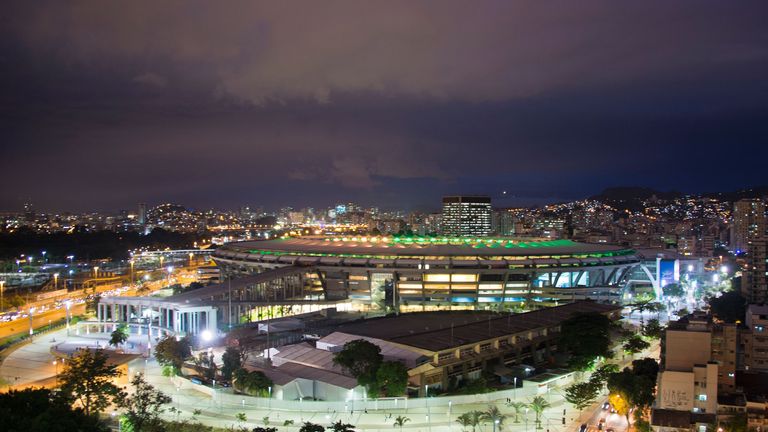
"Proceeding with the Games violates what the Olympics stand for. How socially responsible or ethical is it to spread disease?"
When contacted by Sky Sports, the IOC replied with a statement that read: "We are working with our partners in Rio on measures to deal with the pools of stagnant water around the Olympic venues, where the mosquitoes breed, to minimise the risk of visitors coming into contact with them.
"It is also important to note that the Rio 2016 Games will take place during the winter months of August and September, when the drier, cooler climate significantly reduces the presence of mosquitoes and therefore the risk of infection."
The Olympic Games take place from August 5-21, with the Paralympic Games following from September 7-18.