
Plastic found in world's remotest ocean by Volvo Ocean Race Science Programme
Thursday 17 May 2018 18:40, UK
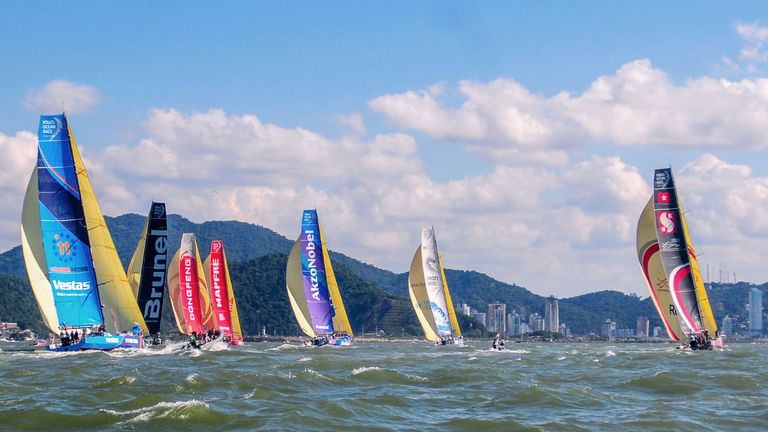
The Volvo Ocean Race Science Programme has found levels of plastic in areas of the Southern Ocean – the world's remotest ocean - that have never before been tested.
The groundbreaking data is set to be released on Friday at the Volvo Ocean Race Ocean Summit, which explores the issues and solutions to the plastic crisis, at the race stopover in Newport, USA.
The findings show that close to Point Nemo - the furthest point from land on Earth, where the nearest humans are on the International Space Station - there were between nine and 26 particles of microplastic per cubic metre.
As the boats sailed close to Cape Horn, off the tip of South America, measurements increased to 57 particles per cubic metre.
Levels of 45 particles per cubic metre were recorded 452km from Auckland, New Zealand, where the leg began, and only 12 particles per cubic metre were found 1000 km from the finish in stopover city Itajaí.
The difference in measurements could be explained by ocean currents carrying the microplastics great distances.
The highest levels of microplastic found so far, 357 particles per cubic metre were found in a sample taken in the South China Sea, east of Taiwan, an area that feeds into the Great Pacific Ocean Gyre.
Dr. Soren Gutekunst of GEOMAR Institute for Ocean Research Kiel, funded by the Cluster of Excellence Future Ocean, analysed the preliminary microplastics data at the laboratory in Kiel, Germany.
"This is the first ever data that the scientific community has been able to analyse from a relatively inaccessible part of our blue planet," he said.
"Unfortunately, it shows how far and wide microplastics have penetrated our vast oceans and that they are now present in what, until now, many have considered to be untouched, pristine waters."
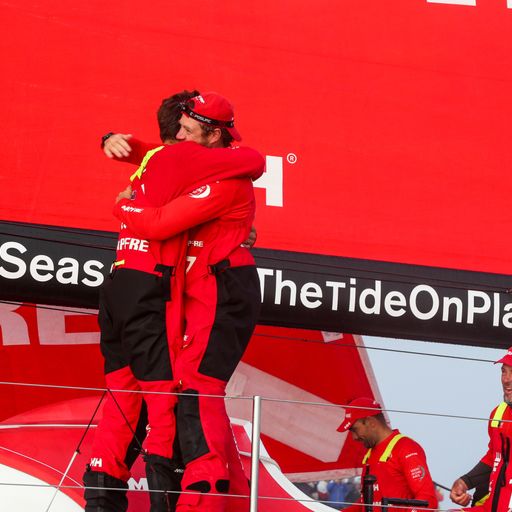
The measurements were collected on the 7,600 nautical mile leg, the longest in the race, from Auckland to Itajai on both the Turn the Tide on Plastic and AkzoNobel boats.
The boats also collect other oceanographic data measurements including temperature, CO2, salinity, algae content which gives an indication of levels of ocean acidification.
Anne-Cecile Turner, Sustainability Programme Leader for the Volvo Ocean Race, said: "Such information is extremely valuable as it helps fill in the large gaps in our understanding of how plastic breaks down over a number of years and is spread to the ends of the earth by ocean currents.
"It's also a stark reminder of the pressing need to tackle this plastic crisis head on and governments, businesses and individuals all have a role to play in addressing the problem."
Microplastics are often invisible to the naked eye and can take thousands of years to degrade. By collecting information on their levels, the mission is helping scientists gain insight into the scale of plastic pollution and its impact upon marine life.