
International rugby league is on the rise, says Phil Clarke

Wednesday 11 May 2016 16:20, UK
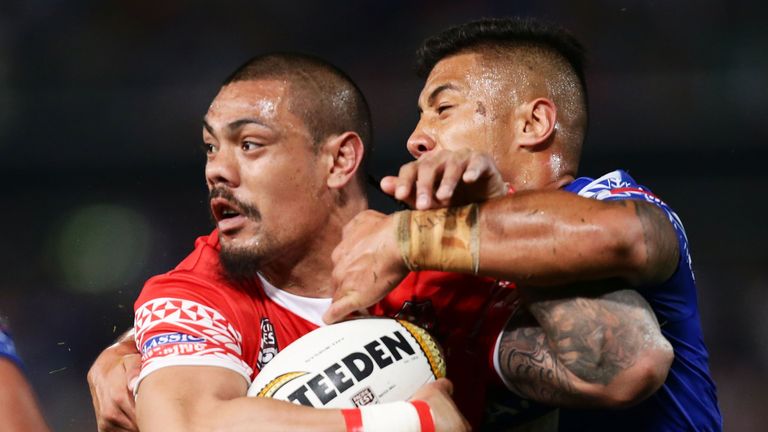
Ask any past player what was the highlight of their career and most of them, if they were lucky enough to experience it, will talk about an International game that they played in.
Club games, cup finals and Grand Finals are wonderful experiences but International matches seem to matter more. The crowds might not be as big, they are not always even televised, but the memories are massive in comparison. The fun, enjoyment and feeling are what you never forget.
It is fair to say that international rugby league has suffered in the past due to a lack of long-term planning. We have never quite had the blocks in place to build a programme that develops the global game.
There are a variety of reasons behind this, one being the selfish attitude of clubs. Understandably, they feel as the main employer of the player that they want him available for their club games and have found ways of preventing or discouraging their player from representing his country in the past.
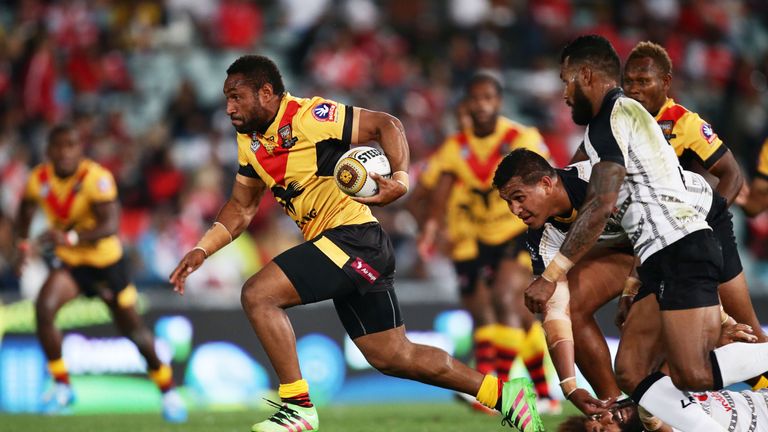
The presence of a Papua New Guinea-based team in the Queensland Cup is proof of the joined-up thinking that is taking place, as is a Test Match in Apia between Samoa and Fiji in October.
I must stress, it is not the only reason. We haven't had the organisational foundations in place to allow the sport to develop players, coaches and officials in countries which express a desire to play 13-a-side rugby.
However, in the last week, we have seen two positive steps which should help. Firstly, Hull FC made one of the most remarkable gestures to support the international game by actively encouraging two of their players, Frank Pritchard and Sika Manu, to fly to the other side of the world to play in a Test match.
It was a bold move by a club who faced a sudden death cup game, but they did the right thing and I hope that it is the catalyst for clubs both here and in the NRL that we are all involved in one big game, to make rugby league even stronger. The best way of doing that is through growing the international game.
It is pretty amazing when you look back at the history of the sport that we first attempted a global outreach programme in the 1950s. A World Cup was held in France in 1954, but we have never managed to capture the enthusiasm of people around the world and get it to grow.
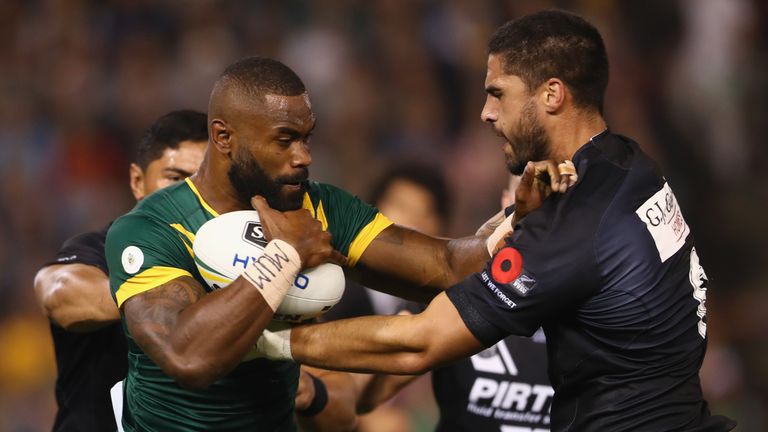
At last, it looks as though we have finally got our act together. Profits from the 2013 World Cup in this country have been reinvested and it feels as though they will make the next World Cup in 2017 even bigger. We have a plan which facilitates international competition and sensibly allows lesser nations a chance to grow and compete against the stronger ones.
There are now 68 member nations of the Rugby League International Federation and it is interesting to hear how social media and the internet have helped the growth of the game. It is easier to watch, follow and play than ever before. People communicate quicker and can set up and organise matches much easier than in the past. This is helping with participation for those who like the physicality and simplicity of the sport.
Not only are clubs like Hull FC showing their support by sending their player to the matches, both Super League and the NRL are actively involved in helping the game grow in the northern and southern hemisphere. It was great to see that Super League level referees officiated at the World Cup qualification games between Canada, the USA and Jamaica last year in Florida.
The European Federation have benefitted from a European grant which helps to provide the coaching courses to enable the game to grow. The NRL have 20 development officers in the Asia Pacific area assisting at grassroots level.
The presence of a Papua New Guinea-based team in the Queensland Cup is proof of the joined-up thinking that is taking place, as is a Test Match in Apia between Samoa and Fiji in October. It feels as though more people want to be part of the solution, not part of the problem.
By the end of October, we will know the 14th and last team to qualify for the 2017 World Cup Down Under. Following that, we will have an Intercontinental Cup alternating in between an expanded 16-team World Cup in 2021 and 2025. A 10-year-old can now set his sights on an international goal just like an Olympic runner does.

I accept we have still got some significant challenges. A review of the eligibility rules is essential and not easy, but there is a mood that indicates we are making progress.
I am not afraid to say I do not have the solution as to which players play for which countries, but it always appears to me that players seem to have more fun playing internationally than they do for their club team. The sport has become a very serious affair, even from a very young age, and enjoyment and pleasure need every chance to play their part in keeping players in love with the game.
Well done to Lee Radford, Adam Pearson and Hull FC for setting such a great example, and good luck to the people who are working in places like Burundi as they try to get the game off the ground. I hope to see you at the World Cup final in 2025.