Olympic sportswomen: Facts and figures behind growing number of female athletes
Last Updated: 09/08/16 10:20am

Female athletes made up 44 per cent of the London 2012 Games and this year's Olympics are set to break that record again. But it hasn't always been this way...
The Ancient Greek Olympics were male-only and only unmarried women were permitted to watch.
The first ever female Olympic winner was Kyniska at the 96th Olympiads in 396 B.C. Her chariot won the four-horse chariot race.
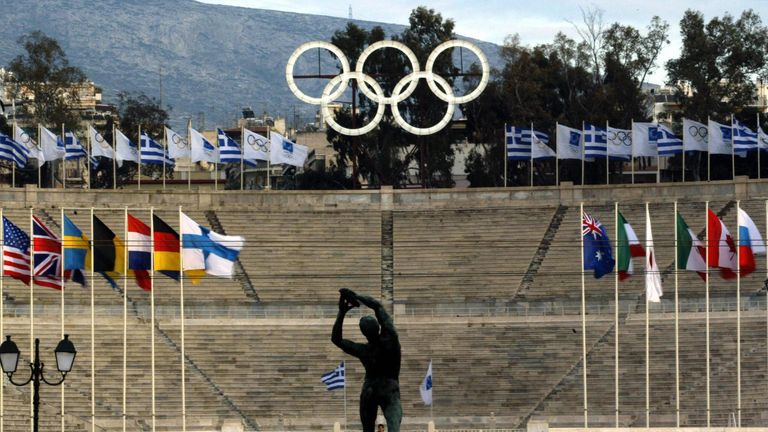
No female athletes took part in the first modern Olympics in Athens in 1896.
But things would slowly improve...
Women first competed at the 1900 Olympics in Paris. Twenty-two out of 997 athletes were female and they competed in tennis, sailing, croquet, equestrianism and golf.
Hélène de Pourtalès became the first female gold medal of the modern era when, in 1900, she won the mixed-gender sailing event.
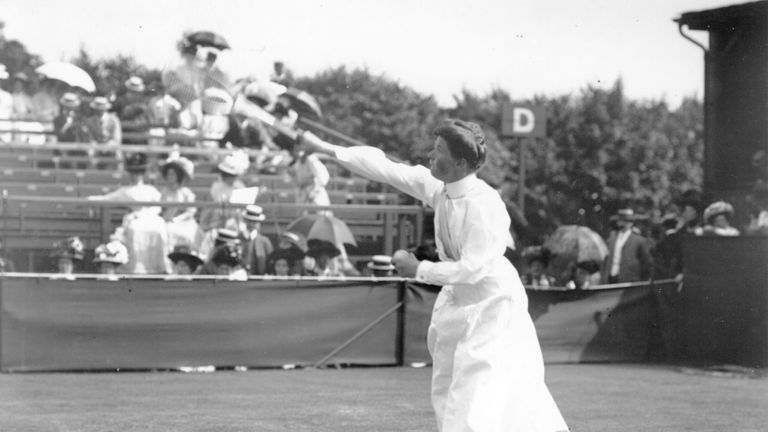
Charlotte Cooper of Britain became the first female to win a singles event in the modern era when she claimed a gold medal in tennis.
1900 Games in Paris
Larissa Latynina is the most successful female Olympian after nine golds, five silvers and four bronzes for the Soviet Union between 1956 and 1964.
In 1991, the International Olympic Committee ruled that any new sports applying to become part of the Games must accept male and female participants.
The 2012 Olympics in London were the first where every competing nation featured at least one female athlete.
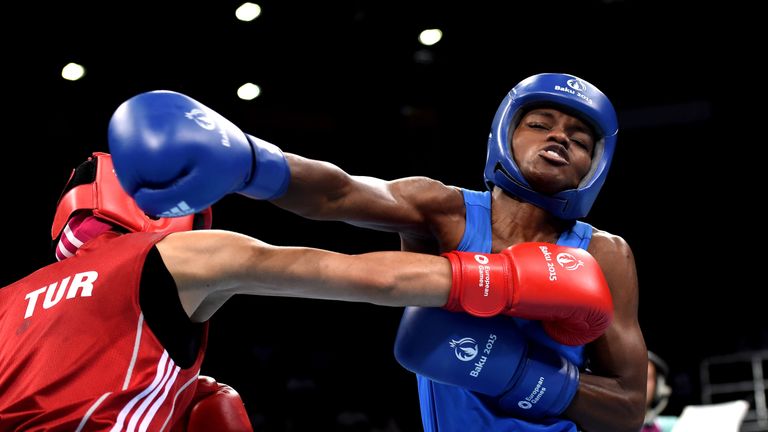
Female boxing was accepted into the Olympics for the first time for London 2012
Britain's Nicola Adams was the first gold medallist
Saudi Arabia will double its female representation for Rio 2016, taking four athletes (two runners, a fencer and a judoka). Qatar and Brunei are taking one female athlete each.
Rugby sevens is a new sport in 2016, meaning females will compete for the first time as well as males.
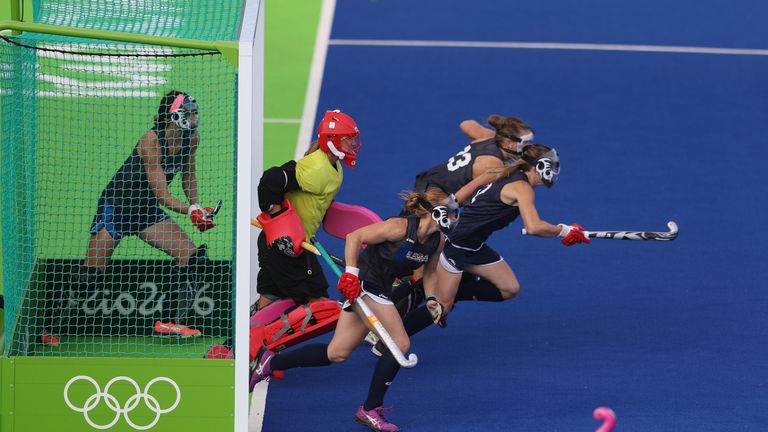
The United States will bring 292 female athletes to the 2016 Games.
The largest in Olympic history