
10 reasons why we love: Paris-Roubaix
Monday 11 April 2016 12:28, UK
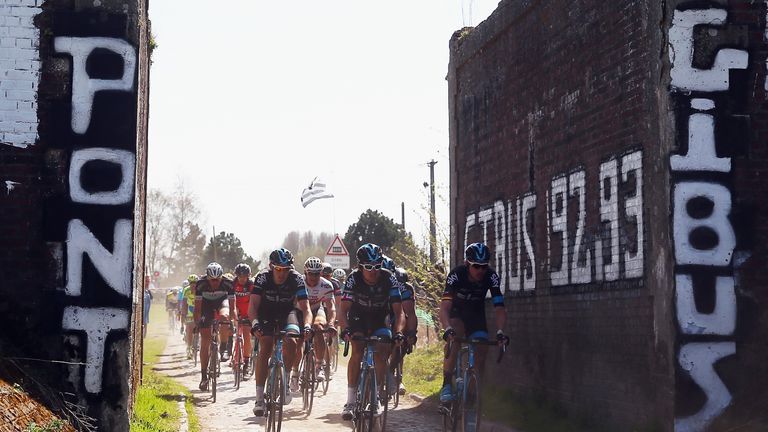
Paris-Roubaix is a race like no other and marks the third Monument Classic of the season. We look at what makes it so special.
Paris-Roubaix is the third Monument of the cycling season and one of the most unique and hotly-anticipated races in the cycling calendar. Here's what makes it so special:
1) It has a rich history
There aren't many races older than the 'Queen of the Classics'. It's been run 113 times since the inaugural edition in 1896 - stopping only for two World Wars. The race was born to attract cyclists to the newly-built velodrome and since then we've seen many memorable editions. There have been many controversies over the years, with tales of sabotage, beaurocracy and outright skullduggery only adding to the race's folklore. We've documented some of them in our photo gallery HERE.
2) It's end of the Cobbled Classics
For the hardened Cobbled Classics riders this race brings to a close the end of a hectic and hard-fought block of racing going right back to February. There's almost an end-of-term feel after Roubaix, and it's not uncommon to see riders crack open a beer as they take a brief break before their next set of objectives.
3) The pavé
This year's race features 52.8km of bone-jangling pavé, spread over 27 sectors which pepper the last 159km of this 257.5km test. These sectors are graded in their severity, with three sections (the Trouée d'Arenberg, Mons-en-Pévèle and Le Carrefour de l'Arbre) achieving the maximum five-star difficulty rating based on length, irregularity and condition.
The cobbled roads were in danger of disappearing altogether in the 1960s and 70s, but they were thankfully spared due to their cultural significance, and a group of volunteers called Les Amis de Paris-Roubaix (Friends of Paris-Roubaix) now look after them to ensure they'll survive for many years to come.
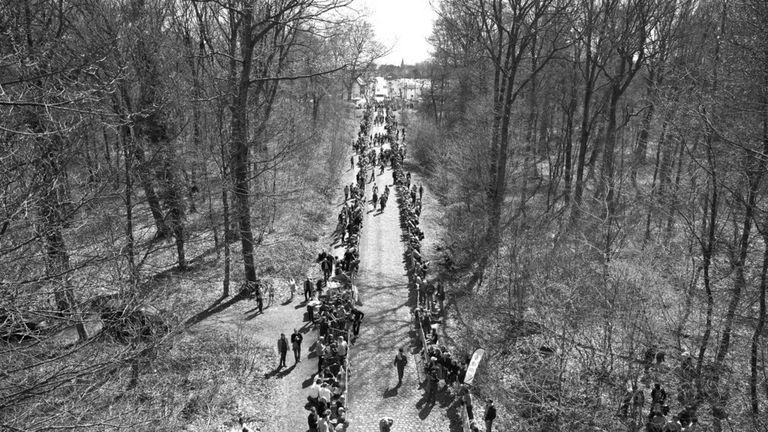
4) The Trench of Arenberg (Trouée d'Arenberg)
This is the most famous of all the cobbled sectors, and its position 162km into the race often signals the start of the chaos. This 2.4km stretch was first laid in the time of Napoleon, and the cobbles were deemed so dangerous in 2005 that it was cut from the race altogether. The stones have been restored since then, but positioning remains so important heading onto them that lead-out trains often form many kilometres before the race even hits them. The sight of the peloton hurtling onto this five-star sector at speeds of over 60km/h is one of the most exciting in all of cycling. We can't wait to see it again!
5) The equipment
The unique demands of the cobbles and the prestige of winning Paris-Roubaix means specialist bikes and components have been developed purely to cope with it. We will swap our regular Pinarello Dogma F8 bikes for the K8 model on Sunday, and our K8-S option even incorporates groundbreaking rear suspension. You can learn about all the modifications made to our bikes HERE.
6) It has a finish like no other
We often remark that races come down to grandstand finishes, but few can compete with the atmosphere of the final metres of Paris-Roubaix. The open air Roubaix Velodrome is the stage to celebrate the winners, and it also plays a significant tactical role in the finish. While a solo escapee may enjoy a lap of honour in front of a packed crowd, if the race comes down to a small group or bunch finish the excitement is ramped up significantly. Riders enter the track before riding around to receive the bell. After that a full lap of the track must be completed before the race is over.
7) The trophy
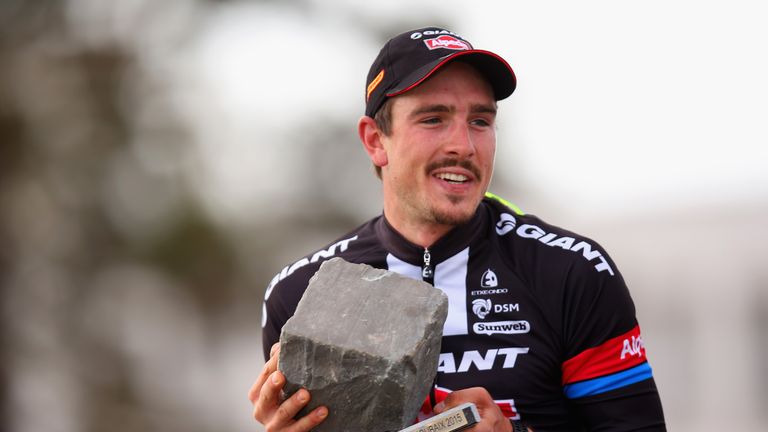
Everything about Paris-Roubaix is unique - even the trophy the winner receives! Since 1977 a cobblestone from the route has been carefully removed and crafted into one of the most recognizable prizes in the sport. These trophies weigh around 12kg, and hoisting them in the air is often an extra challenge for any weary cyclist who's pedaled the best part of six hours to win one.
8) The showers
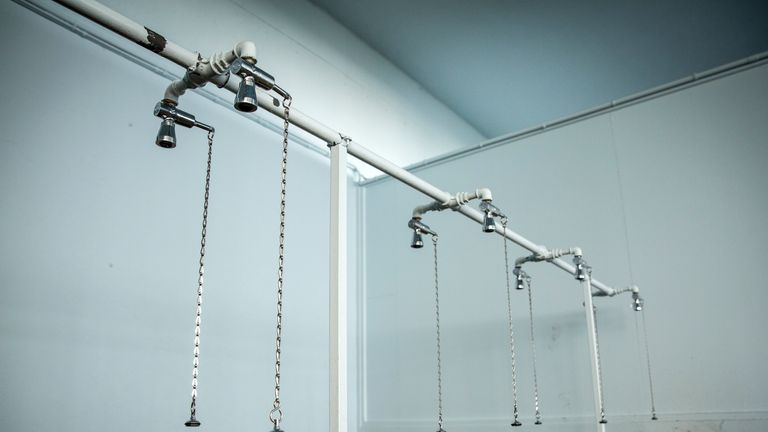
At 99% of bike races riders will quickly depart the event, showering on the team bus before heading home or on to the next stage. That's not the case at Roubaix, with the Velodrome showers taking on a special significance. Washing away the grit and grime of six hours in the saddle, each cubicle has a plaque attached, signifying a winner of the famous race. Our very own Servais Knaven has one after his 2001 win. It's all part of the Roubaix tradition.
9) The weather
In a race that is torturous even on the most beautiful of days - add in some inclement conditions and the challenge of Roubaix is increased exponentially. The weather gods have been kind to the race in recent years, and we've been more likely to see plumes of dust than anything resembling mud. That should change this year, and depending on the forecast we could see rain on race day. Thankfully we've had a number of opportunities to check out the Roubaix parcours in the wet over the last six months. Check out photos from our last recon ride HERE.
10) The zone hoppers
The team cars provide an essential service at bike races, but the layout, narrow roads and sheer chaos of Roubaix mean that extra help needs to be drafted in. Zone hoppers are distributed at key points across the route to ensure that a spare wheel, bottle or gel are readily available. To find out more about the art of zone hopping read our feature HERE.