Rule changes
Tuesday 24 March 2009 21:52, UK
An outline of the rule changes, both sporting and technical, which have been made this season.
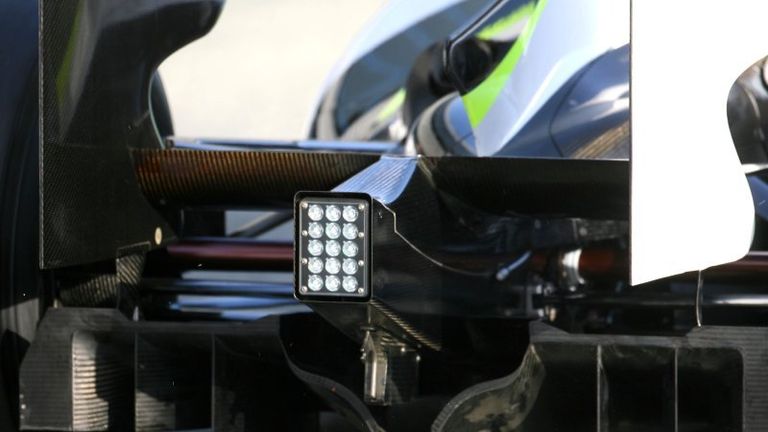
The coming season brings with it a whole series of rule changes, the most important of which are summarised below... Sporting Regulations: Controversially, the FIA announced last week that the World Champion would be the driver with the most number of wins, rather than the one who scored the most number of points. However, there subsequently came the revelation that world motorsport's governing body needs the unanimous backing of teams to make such a change at such short notice. With such backing not forthcoming from FOTA, the current points system (10-8-6-5-4-3-2-1) will in fact decide the Drivers' Championship after all. On the subject of cost-cutting, the FIA and FOTA did reach agreement on a number of measures to be introduced this season: Testing - No competitor may carry out more than 15,000km of track testing during a calendar year. - No track testing may take place between the start of the week preceding the first race of the season and 31 December of the same year. (With regard to the latter, however, three one-day 'young driver training tests' are allowed, as are eight one-day aerodynamic tests. The two 90-minute-long free practice sessions at each race meeting may also be used.) - No wind tunnel testing may be carried out using a scale model which is greater than 60 percent of full size. Engines Previously it was the case that engines had to last two races (Friday practice excepted). However, from 2009: - Each driver may use no more than eight engines during a season. Should a driver use more, he will drop ten places on the grid at the first race for which an additional engine is used. - Each driver must also use the same engine for Saturday morning practice, qualifying and the race. (An engine change may be allowed, however, if there is a proven problem with the original engine.) Safety Car The FIA has also changed the rule that ensured the pit lane closed as soon as the safety car was introduced during a race. The old rule was introduced to remove the incentive for cars to make a quick pit stop - the risk being that they might drive through the scene of an accident too quickly. However, this meant that cars in danger of running out of fuel were forced to break the rules and enter the pit lane regardless. Now, when a safety car is deployed, the pit lane will remain open but each car's ECU will calculate a minimum (safe) speed for it to return to the pits if necessary. Technical regulations: The new season brings arguably the most fundamental technical changes seen in Formula One since ground effects were abolished at the end of the 1982 season. They have been introduced for two reasons. Firstly, in an attempt to improve the chances of overtaking and secondly in order to try and promote F1 as a testbed for technology - particularly of the 'green' variety - applicable to road cars. Aerodynamics With regard to the former, the Overtaking Working Group was set up under the auspices of the FIA in order to come up with changes that might enable one car to follow another more closely. The downside of an F1 car becoming more aerodynamically efficient has been the turbulence it creates in its wake. This 'choppy airflow' causes a following car to lose its own aerodynamic effectiveness, making it more difficult for the driver to follow closely and overtake. Comprising of engineers from McLaren, Ferrari and Renault, the OWG recommended the following in order to try and lessen the problem: - a new front wing, which is wider, lower and placed further forward in an attempt to increase front-end grip. To that end, it also contains driver adjustable bodywork, allowing a central section to change by up to 6 degrees a maximum of two times per lap. - a new rear diffuser, which is now smaller. The interpretation of this rule is already causing controversy ahead of the new season, with Toyota, Williams and Brawn GP all designing diffusers which appear to exceed the minimum height allowed. - a new rear wing, which is now higher and narrower. The effect of both this and the diffuser change will be to reduce downforce generated at the rear of the car - but also lessen the turbulence affecting a following car. The regulations also severely restrict - but do not outlaw - the placing of devices such as winglets, turning vanes, bargeboards which have further improved aero efficiency in recent seasons. Sidepods have also been cut back. Slick tyres The OWG originally (and optimistically) hoped the above would reduce a car's downforce by 50 percent. However, some mechanical grip will be clawed back by the re-introduction of slick tyres, making a return to Formula One for the first time since 1997. KERS Probably the innovation that has grabbed the most attention has been the introduction of Kinetic Energy Recovery Systems, which store heat energy recovered from a car's brakes to use as a power boost. Ostensibly introduced as an attempt to show that F1 can develop technology applicable to the public highway (though it's arguably the case that road cars have stolen a march in this area), it is also hoped that KERS can increase the chances of overtaking. Teams have developed two different solutions to the KERS problem, with energy being stored either in a battery or via the use of a flywheel. There are advantages and disadvantages to either: batteries are heavier than flywheels and also more expensive. However, they are also easier to package and can be placed around the car to benefit weight distribution. The charge/release rate is limited to 60kW, which equates to an 80 bhp surge for a maximum of 6.7 seconds per lap. However, KERS is not mandatory in 2009. Teams opting not to use it will miss out on its obvious performance benefit; however, they will gain more freedom in terms of weight distribution in setting cars up to suit a particular track. Engine The specification of the 2.4-litre V8 engines used has been frozen until 2012. However, last year's rev limit of 19,000rpm has been reduced to 18,000rpm this season.