
Conor Lane says proposed new rules not a burden on referees
Tuesday 16 October 2018 15:49, UK
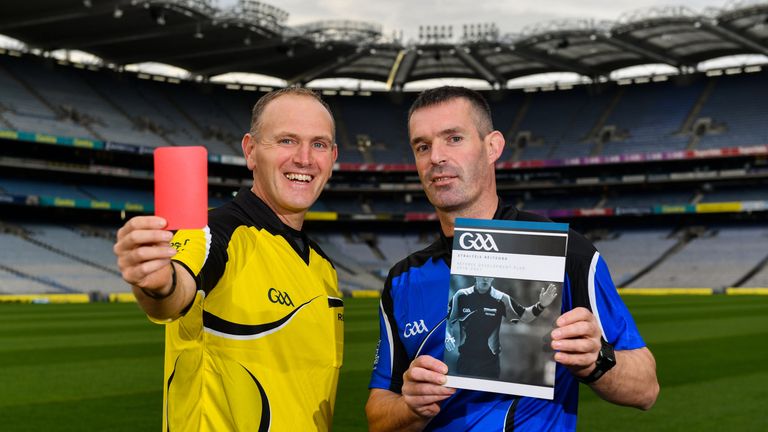
Conor Lane says the proposed new rules for Gaelic football will not make officiating games too difficult a task for referees.
The five proposed rules which look set to be trialled in the 2019 National Leagues have been subject to much debate. Many detractors have suggested that some of the rules, particularly the kick-out zones, will be too difficult for referees to officiate.
However, 2018 All-Ireland referee Conor Lane has suggested that it is manageable.
"We're not taking that much of a work-load on board," said the Cork native. "It's like every year, what we're given we'll just go out and perform and do what we're told to do. If it's hand-passes we'll do it, if it's an extra mark we'll just have to buy into it and do it.
"I'd be positive. Whatever we're told to do we'll just do it. It won't be an extra work-load for us, no. It's just another challenge that we'll embrace. I'm looking forward to it.
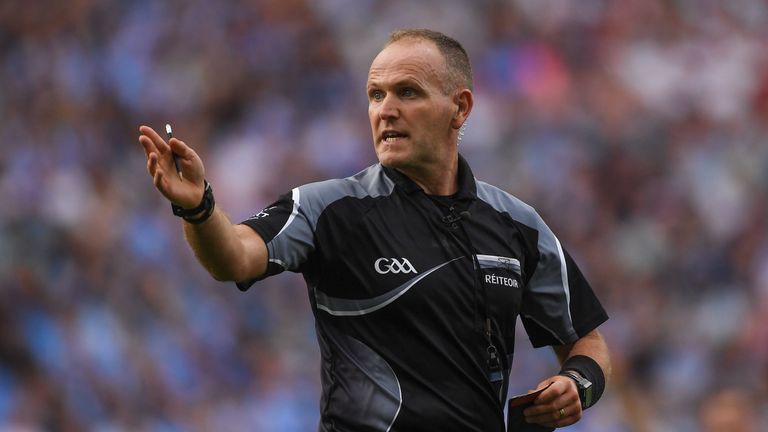
"I was involved in the (International) Rules last year and we had the six hand-passes rule in it. It was very easy to get it into it."
"It's all about the players buying into it as well. We can all be negative and moan about stuff, we just have to get on with life. It's all positive for us really, we love the extra work-load."
Lane suggested that the new rules could improve the sport.
"[They're] positive for me. I'm from Cork and hurling would be my first love. From refereeing hurling in Cork when the defender gets the ball he's trying to get it up the field as fast as he can.
"Football at the moment is just a bit slow, so for me, the quicker we get the ball up the field the more attractive it is for the fans and the more attractive it is for everyone."
Many are of the opinion that the introduction of a second referee to the field of play, but Lane is strongly against the notion.
"I think one referee is more than enough. I wouldn't be shouting for two referees at all, to be honest. I don't think our game is fast enough for it. The ball is going back and across a lot. One is plenty for us at the moment anyway."
Subject to approval, the rules will be trialled in the springtime, and will then be voted upon at the 2020 Congress.