
Flanders and Roubaix: Key sectors
Thursday 2 April 2015 15:32, UK
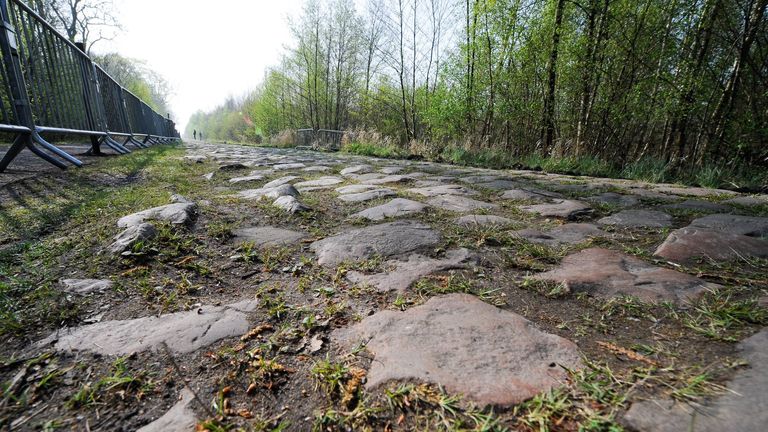
We take a closer look at some of the most famous sections of pavé and the places which characterise these two great races.
We take a closer look at some of the most famous sections of pavé and the places which characterise two great races - the Tour of Flanders and Paris-Roubaix.
Whether steep bergs or long, technical stretches of punishing cobbles, the classics feature a number of infamous pieces of road which have become part of cycling folklore.
Some sectors will decide the race. Others will decide who won't be there come the finish. These are the places which capture the imagination, with amateur riders flocking to ride them each year. Let's take a closer look.
Carrefour de l'Arbre (Paris-Roubaix)
Length: 2100m / Rating: Five stars
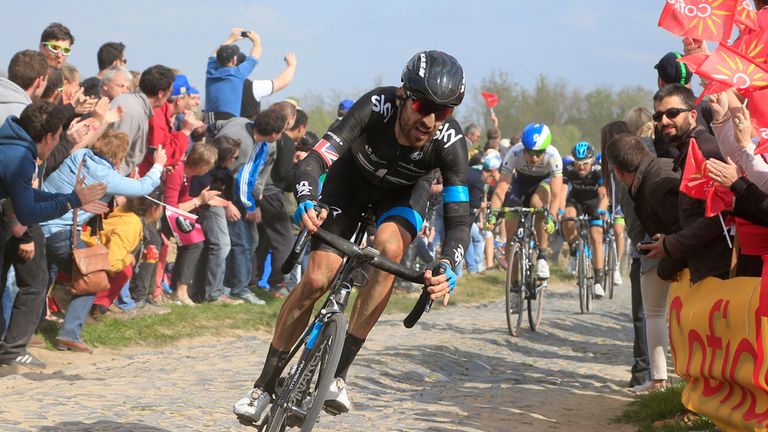
With Paris-Roubaix on the line, and 16.5km to go, one of the most feared sectors of pavé arrives. One of a select band of sectors to be awarded a five-star rating, the carrefour (meaning crossroads), has often seen the race won and lost. The combination of its difficulty and short distance to the finish mean that it has worked its way into the fabric of Roubaix since it was first introduced in 1980. Spectators realise the significance and flock to the sector – creating a wall of noise and significantly narrowing the surface area. With riders reluctant to ride on the crown on the road, crashes caused by collisions with spectators are relatively frequent.
Haaghoek (Tour of Flanders)
Length: 2000m
A feared section of road, the Haaghoek is a two-kilometre stretch of cobblestones which is often tackled at extremely high speed. Not categorised as a climb, the undulating section slopes gradually downhill before it initially ramps up. Starting out wide before narrowing with sections of drainage ditch on either side, crashes are frequent as riders try to move up. The road widens out again as houses appear on either side. The length of the section means it is difficult for the peloton to stay together once the hammer goes down. The Haaghoek also plays a significant role in other races, most prominently at Omloop Het Nieuwsbladwhere it acts as a central hub.
Koppenberg (Tour of Flanders)
Length: 600m / Average gradient: 11.6% / Maximum gradient: 22%
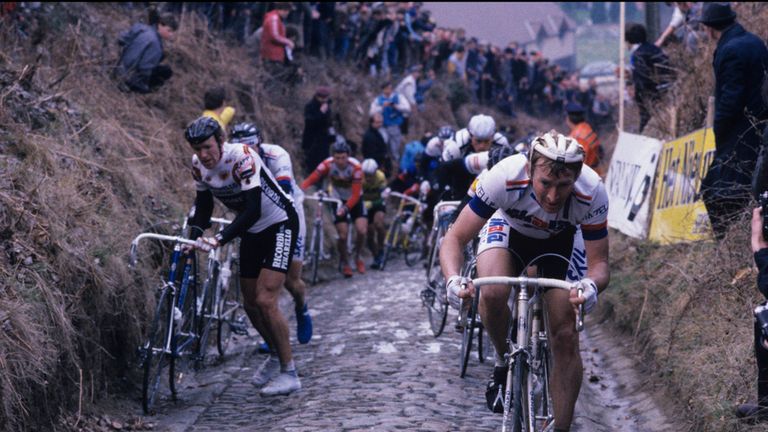
The most famous (and steepest) of the cobbled climbs, the Koppenberg has been striking fear into the peloton for many years. Only 600 metres long, the climb has worked its way into cycling folklore despite its relative lack of strategic importance. In wet weather riders scrabble for grip on the stones, and with such a narrow road the bunching effect and one small issue can cause the peloton to grind to a halt. High banks and trees on either side create a claustrophobic atmosphere. In 1987 Dane Jesper Skibby famously approached the Koppenberg solo, only to fall and have his bike run over by the commissaire’s car. The incident led to questions about the berg, and after a 15-year hiatus the climb returned with an improved surface in 2002.
Molenberg (Tour of Flanders)
Length: 463m / Average gradient: 7% / Maximum gradient: 14.2%
A narrow berg with space for no more than three riders abreast, the Molenberg is a great example of race organisers looking for the trickiest roads in the region. With the potential to split up the peloton, the climb has been moved up and down the race route over the years. Fabian Cancellara launched his first attack there in 2010, with positioning into the climb key. A tight entry, coupled with grass verges, walls and excited fans make it difficult to move up on the climb itself. Tarmac appears after the first 300m but by then the damage can already be done.
Mons-en-Pévèle (Paris-Roubaix)
Length: 3000m / Rating: Five stars
If the Paris-Roubaix peloton is not in pieces before it hits the Mons-en-Pévèle sector then it certainly will be afterwards. Racing between fields and across open ground, the cobbles get worse as the sector goes on, with a series of 90-degree turns punctuating the three kilometres. The length and severity of the sector means that the pack will quickly become stretched here.
Oude Kwaremont (Tour of Flanders)
Length: 2200m / Average gradient: 4% / Maximum gradient: 11.6%
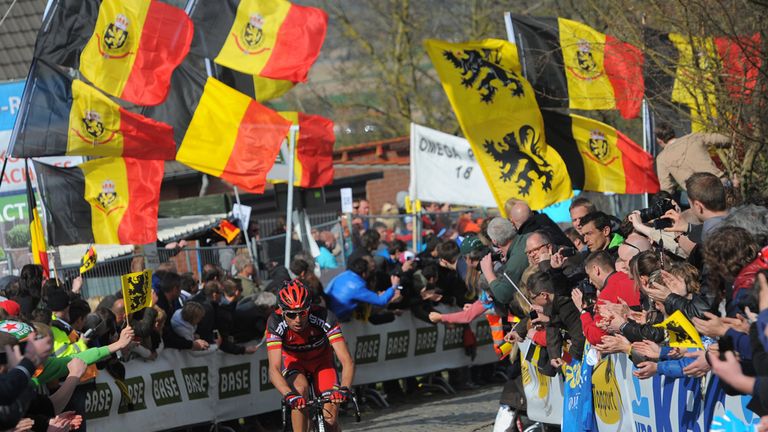
A mainstay since the seventies but now installed as one of the key climbs in Flanders, the Oude Kwaremont has been the scene of many race-splitting attacks. The longest of the cobbled climbs, this beast is tackled three times during Flanders, as well as being a prominent feature in the early spring races. Geraint Thomas’s acceleration to split the group in E3 Harelbeke came here. 1500m of the 2200m climb are covered in cobbles, and despite a relatively easy average, the gradient maxes out mid-way up the climb. This section is key as time can still be made once the climb itself is crested. The cobbles continue as the climb flattens out and advantages can be stretched on out the wide section of main carriageway which follows.
Paterberg (Tour of Flanders)
Length: 360m / Average gradient: 12.9% / Maximum gradient: 20.3%
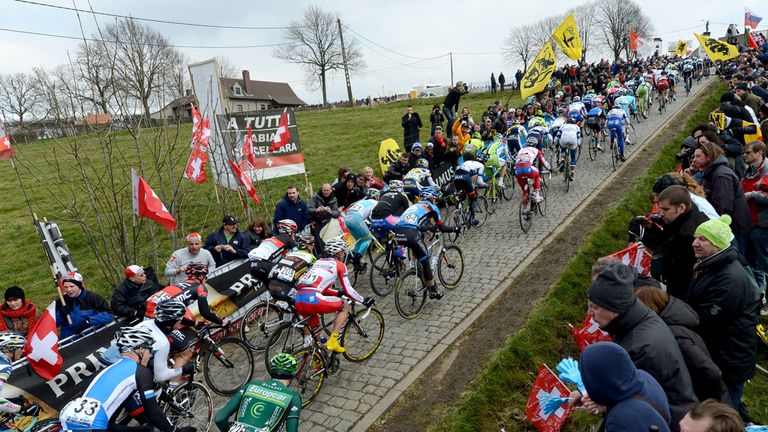
Now established as the final climb of Flanders, the Paterberg has come a long way. Initially cobbled by a local land-owning farmer who wanted the race to come passed his house, the climb is 360m of straight and steep cobbles. Averaging 12.9%, and maxing out at 20.3% towards the top, the climb routinely sees gaps open out. As with every climb, positioning is key into the tight 90-degree right at the bottom, with a fast entry and surface change causing a big crash as recently as 2012.
Taaienberg (Tour of Flanders)
Length: 530m / Average gradient: 6.6% / Maximum gradient: 15.8%
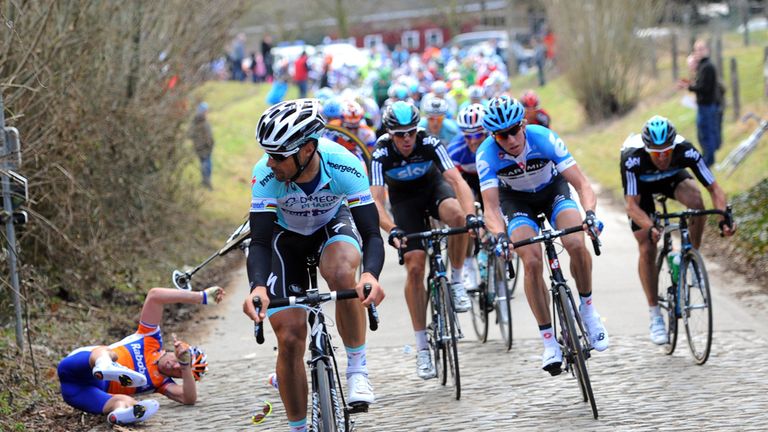
An explosive cobbled climb and a unique test. If you get your positioning and line right on the Taaienberg you barely have to touch a cobble on the way up! The climb has one preferred line as riders stick to the extreme right-hand side of the road in a smallstrip of gutter. Riding among dirt and leaves at times in a bid to find the smoothest line, it becomes clear that positioning is absolutely critical. The lined out nature of the climb means that small groups often forge clear over the top. The climb has picked up the nickname the ‘Boonenberg’ in recent years as it routinely sees leg-testing attacks from Tom Boonen.The only thing that stops the Taaienberg being a more decisive climb is its distance from the finish.
Trouée de Arenberg (Paris-Roubaix)
Length: 2400m / Rating: Five stars
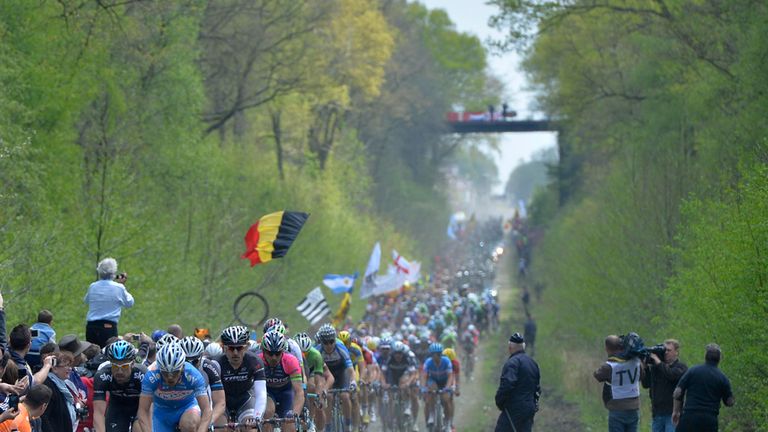
The 'Hell of the North' is perhaps best summed up by this brutal sector. Translating as the Trench of Arenberg, this arrow-straight piece of pavé is not a place you can win the race but many riders have seen their hopes dashed among the trees. The cobbles have an inconsistent surface, even by Roubaix standards, and locals often plough the verges at the side of the road, forcing riders onto the stones. An incredible high-speed entry off the main road sees the peloton touching 60km/h and has caused a number of spectacular crashes over the years. Punctures are also a constant threat. If you can make it out of Arenberg in the front group you've got half a chance.