The Monuments: A Beginner's guide
Saturday 19 March 2016 11:38, UK
Ahead of Milan-San Remo we explain what makes the five biggest one-day Classics in cycling so special.
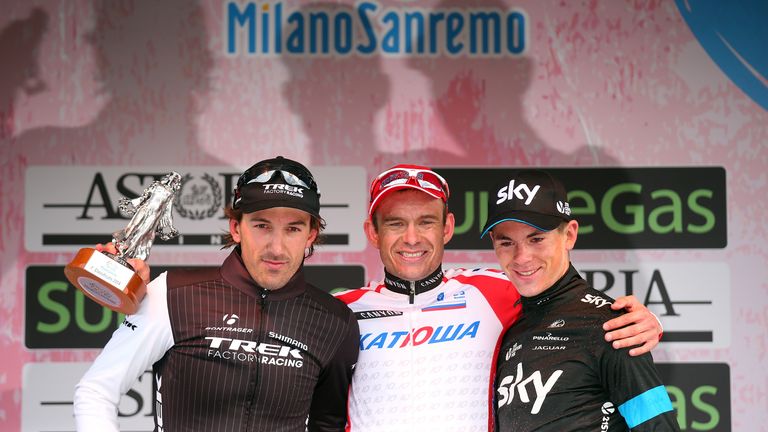
Saturday's Milan San-Remo marks the first Monument of the cycling season and a race cycling fans around the world have marked on their calendars. Ahead of the race we take a closer look at these magical events, what they're all about and why you should be getting excited.
What are the Monuments?
If the Classics are a selection of cycling's most famous and historic one-day races, then put simply, the Monuments are the five biggest Classics in the sport.
How big are we talking?
So big that having just one Monument win on a rider's palmares (a cyclist's list of achievements) can make their career. The list of victors in these races is highly prestigious, spanning the history of the sport and reading like a who's who of cycling talent.
As a result, riders will put it all on the line in a bid for victory. Once each race is over it's a long 12-month wait for another shot at glory!
Tell me more about the races
Milan-San Remo (Italy, 2016 date: 19 March)
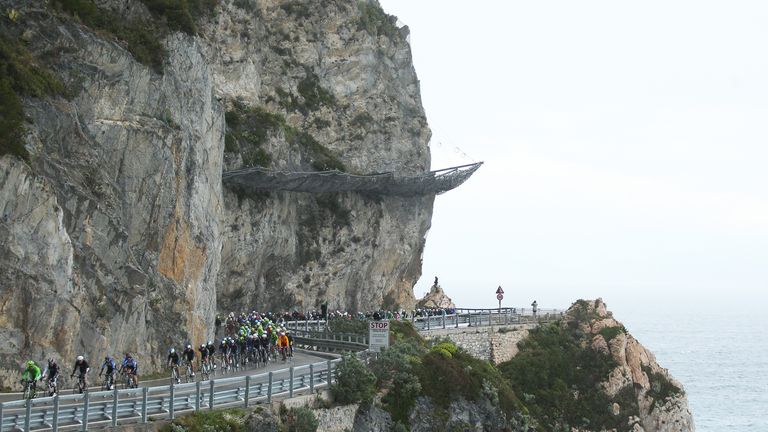
Known as La Primavera, this is the first Monument of the year and also the longest, weighing in just shy of 300 kilometres. The race features largely flat terrain and is traditionally seen as the sprinters' Classic - but with a barrage of late climbs it's always hard to pick a winner.
Tour of Flanders (Belgium, 2016 date: 3 April)
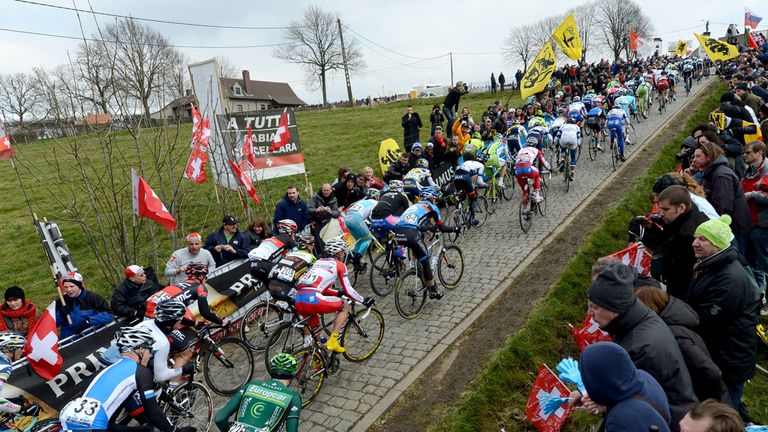
Famous for its short cobbled 'hellingen' climbs, 'De Ronde' criss-crosses this Belgian cycling heartland, traversing narrow, technical roads in front of a passionate Flandrian crowd. The fight for position is intense as the peloton is slowly thinned out to produce a winner.
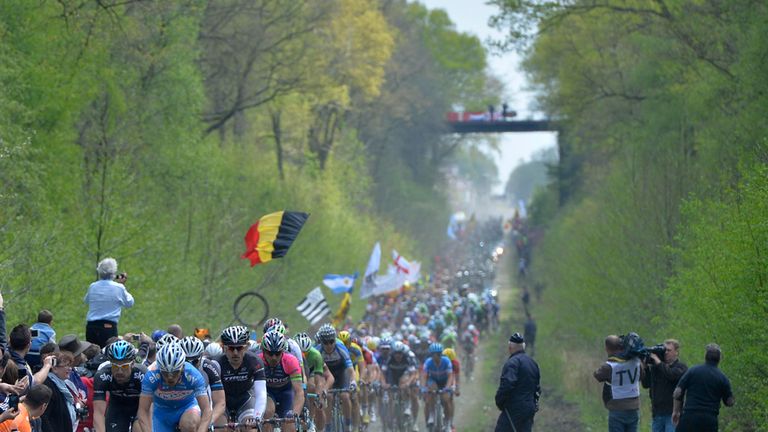
Paris-Roubaix (France, 2016 date: 10 April)
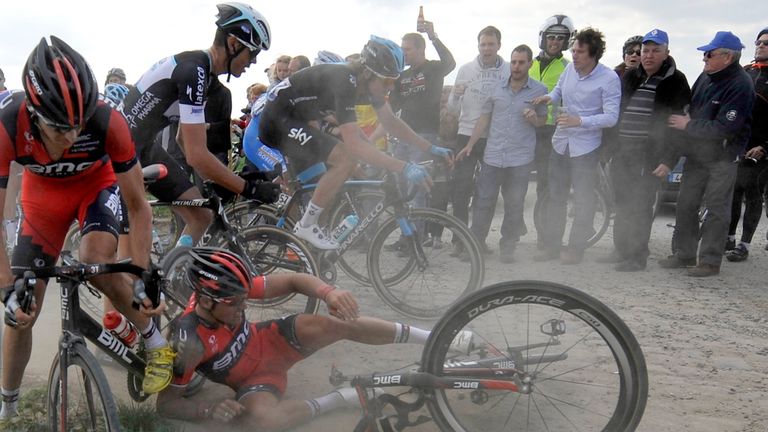
The 'Hell of the North' is also referred to as the Queen of the Classics. A wildly entertaining spectacle sees brave riders faced with relentless sectors of cobbled pavé, each graded by their severity. Only the strongest prevail on this brutal and bone-jangling parcours, with the race always finishing in the famous Roubaix Velodrome.
Liege-Bastogne-Liege (Belgium, 2016 date: 24 April)
'La Doyenne', meaning 'the oldest', sees the climbers come to the fore in what is the finale to the spring races. Played out across undulating and energy-sapping Ardennes roads, the final climb routinely decides the winner in Ans.
Il Lombardia (Italy, 2016 date: 1 October)
Moving into autumn, the 'Race of the Falling Leaves' provides another chance for the climbers. Leg-breaking gradients need to be overcome on the beautiful roads around Lake Como in the Monument that has moved around the calendar the most.

How old are the Monuments?
Like any great monument these events have stood the test of time, with all that rich history providing a foundation that ensures they are just as popular today as they always have been.
First editions:
1892 - Liege-Bastogne-Liege (Winner: Leon Houla, Belgium)
1896 - Paris-Roubaix (Winner: Josef Fischer, Germany)
1905 - Il Lombardia (Winner: Giovanni Gerbi, Italy)
1907 - Milan-San Remo (Winner: Lucien Petit-Breton, France)
1913 - Tour of Flanders (Winner: Paul Deman, Belgium)
As you can see these races all pre-date the World Wars, and as a result feature gaps in their editions due to the fighting.
What makes them so special?
If you're not already convinced - the combination of history, prestige and incredible, gruelling terrain evokes a passion among riders and fans. These events are box office - routinely providing thrilling action. While stage races like the Tour de France feature an element of controlled, rhythmic riding, it is much more difficult to control and predict the outcome of a single day spectacle. One crash, puncture or moment of indecision and it can all be over.
Due to their specialist nature, only an elite handful of riders head into a Grand Tour with a realistic chance of victory - with the Monuments however - so many more riders have a chance to come away with the win. The cream still rises to the top, but there are always plenty of surprises along the way.
It should not be understated - these races are seriously hard! Huge distances (between 240-300 kilometres) make them real wars of attrition. To finish a race like Paris-Roubaix is an achievement in itself. These races are the gift that keeps on giving for cycling fans.
Do Grand Tour riders get involved?
Yes they do to varying degrees, especially in the events that favour the climbers. The Monuments are largely the domain of strongmen Classics riders - one-day specialists who base their entire year around success in these races. That doesn't stop the likes of Chris Froome and Vincenzo Nibali getting involved though. Froome has raced Liege-Bastogne-Liege on four occasions and did so in his 2013 Tour de France-winning season. Nibali has a far greater affinity with the Monuments, podiuming in San Remo and Liege, and finally winning Il Lombardia last season.
With cobbled sections and dirt roads becoming increasingly popular additions to Grand Tour courses, there is a need for the skinny climbers to be comfortable when the going gets rough!

So who are the best Classics riders?
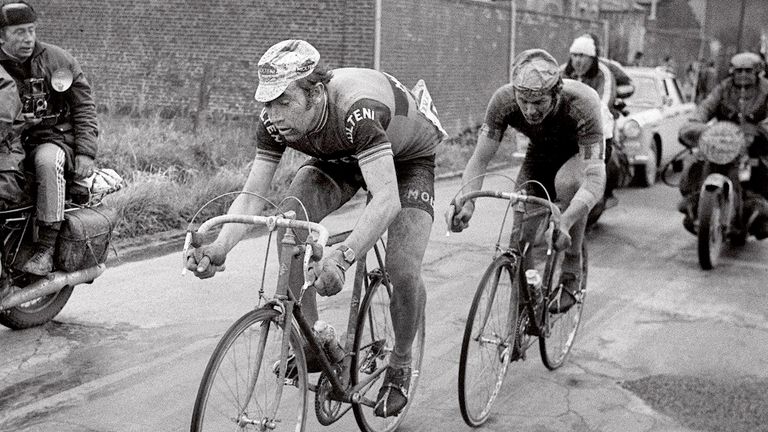
As is the case with so much of cycling - the Monument record books are dominated by one name: Eddy Merckx. The Belgian secured an awe-inspiring 19 Monument titles (7 Milan-San Remo, 2 Tour of Flanders, 3 Paris-Roubaix, 5 Liege-Bastogne-Liege and 2 Il Lombardia) in a feat that is unlikely to ever be topped.
In addition to Merckx, only compatriots Roger De Vlaeminck and Rik Van Looy have ever won all five - the definition of elite company. The modern day Monuments men are Fabian Cancellara and Tom Boonen, both on seven victories apiece, with the pair nearing the end of their careers.
When it comes to the Brits, just how difficult it is to win a Monument is further put into perspective by the fact that GB's win total sits at just four. Tom Simpson won Flanders (1961), Milan-San Remo (1964) and Lombardy (1965), while Mark Cavendish took an emotional victory in San Remo in 2009.
How have Team Sky got on?
It's fair to say the Monuments have proved elusive for Team Sky since our debut season on the road in 2010.
Team Sky's best results:
Milan-San Remo: 3rd - Ben Swift (2014)
Tour of Flanders: 8th - Geraint Thomas (2014)
Paris-Roubaix: 3rd - Juan Antonio Flecha (2010)
Liege-Bastogne-Liege: 5th - Rigoberto Uran (2011)
Il Lombardia: 3rd - Rigoberto Uran (2012)
There's been plenty of promise and epic rides, coupled with some bad luck, disappointment and crashes along the way. These are the toughest one-day races in the sport and missing out on the top step of the podium to date has certainly not been through a lack of trying.
During the season, ahead of each Monument check out TeamSky.com as we detail our history in each race so far.