We take a look at the undulating route that makes up the prestigious five-day Tour de Luxembourg.
Preview of the 71st edition
At the beginning of June many of the best stage racers in the world will descend on Luxembourg for a pre-Tour tune-up and the chance to add their name to a highly prestigious list of winners.
The five-day race utilises a route spanning the length and breadth of a tiny nation that is highly passionate about cycling and can now boast its own WorldTour team.
Last year the elements threw up a challenge of their own with the final stage having to be cut short due to storms, a scenario the riders will hope to avoid this year.
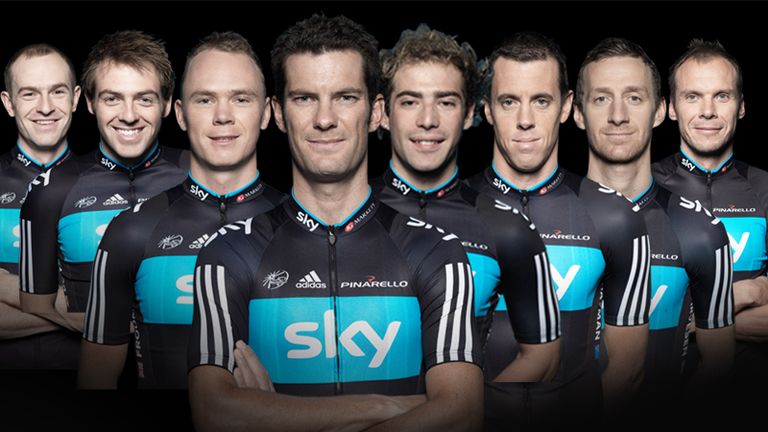
Team Sky will again look to utilise the experience of a former winner in their ranks in the form of Sports Director Marcus Ljungqvist, with the Swede marshalling a strong squad who will hope to better Juan Antonio Flecha’s fourth place last year.
The team’s well-rounded line-up sees many riders returning to action after a successful stint in California, with Chris Froome joined by Greg Henderson, Davide Appollonio, Kurt-Asle Arvesen, Alex Dowsett, Mathew Hayman, Jeremy Hunt and Ian Stannard.
Wednesday 1 June – Prologue: Luxembourg-Ville – 2.7km
The race gets under way with a quick evening dash around the city streets taking in the old quarter of the nation’s capital. The riders begin at the start point of the Rue de l’Ancien Athenee and a run down to a tight right hander, followed by a slow left before a blast down Pont Adolphe through a left-right kink. The riders must negotiate a tight dead turn before moving briefly onto the Rue Mathias Hardt ahead of a hairpin section. Every corner and apex will be crucial to riders with designs on an early race lead. The second half of the course opens out into a technical left hander before a brief but sharp 260m cobbled climb at Breedewee that looks likely to be the determining factor in the stage. From there just a few twists remain past the market square and on to the finish.
Thursday 2 June – Stage one: Luxembourg to Bascharage – 192.8km
The day begins with an undulating start to the stage with a brief climb immediately greeting the peloton before a descent down to the foot of another sharp ramp up to Echternach. Heading north-east out of the centre of Luxembourg the route straddles the German border briefly before a categorised climb at Michelsberg (43.7km). The riders then turn sharply south and again run parallel to the border as they hit the Wormeldange-Haut climb (78.8km). The route then crosses the width of the country’s southern tip with the half-way mark of the stage culminating in a sprint point into Scheierbierg (97.6km). The peloton arrives into Bascharage for the first of three undulating finishing laps en route to a likely sprint finish.
Friday 3 June – Stage two: Schifflange to Differdange – 200.7km
An out-and-back route sees the riders head north in the morning over gently undulating roads through Kehlen and Mertzig ahead of an opening categorised climb at Eschdof (74.7km). The peloton then returns south along twisty roads, taking in another climb at Goelt (94.3km). The route meanders away from the French border to take in two quick-fire climbs in the space of 8km at Ehner and Roodt. Attention then turns to three finishing circuits nestled in the bottom left-hand corner of the country. The laps are notable for containing the Col de l’Europe, possibly the most decisive climb in the race. At a near 8% average the climb should thin out the bunch and could provide the springboard for a lone attacker to prosper in Differdange.
Saturday 4 June – Stage three: Eschweiler to Roost – 185km
The most northerly stage of the race heads out on a loop from the start town of Eschweiler. A brief climb at Marnach (25.5km) greets the riders before the peloton again come within touching distance of German soil ahead of a kick up at Mont St-Nicolas (56.8km). The race passes back through Eschweiler for a second time and a sprint point (97.8km) before the action in the Moselle Valley comes to a head with a painful ramp at Um Knupp, averaging in excess of 9%. Two more bergs disrupt the run to the finish at Lepschter Dellt (128.8km) and Broderbour (140.6km) as the peloton sweep south into three laps of a gently undulating circuit around Roost.
Sunday 5 June – Stage four: Mersch to Luxembourg – 152.1km
The final day of racing begins with a clockwise loop taking in the tricky 10% ramps of the Cote de Steinsel (15.9km). The peloton descend into Schoenfels ahead of a return through Mersch. The riders then head east for a loop taking in the Cote de Lintgen (40km) and Cote de Fischbach (47.9km) in quick succession before an undulating yet untaxing run south-east towards the capital. Only the slopes of the races final categorised climb, Senningerberg (102.8km) stand between the leaders and the finale. The tired field will take in five laps of the 10km circuit around Luxembourg City with a small climb unlikely to prevent a final bunch finish.