The spring Classics kick off in style with an action-packed opening weekend featuring the historic Omloop Het Nieuwsblad on Saturday and then Kuurne-Bruxelles-Kuurne on Sunday.
After the riders arrive on the Haaghoek, the racing kicks off with the first of two ascents of the Leberg, the first arriving after 60km, before Berendries makes a return to the race just 4km later.
Four further climbs pack out the first loop around Geraardsbergen, including the famous Tenbosse, Eikenmolen and the Valkenburg.
Then the riders head back to Haaghoek before a pivotal loop taking in Ronse and the most selective climbs of the race. Explosive attacks are traditional on the Taaienberg, with the Eikenberg and Varent ascents likely to push things further apart.
The final section sees the riders power back north towards the finish with a run for home punctuated by sections of cobblestones. The Paddestraat, Lippenhovestraat and Lange Munte sections must all be negotiated before a grandstand finish in Ghent.
Kuurne-Bruxelles-Kuurne - Sunday, February 24
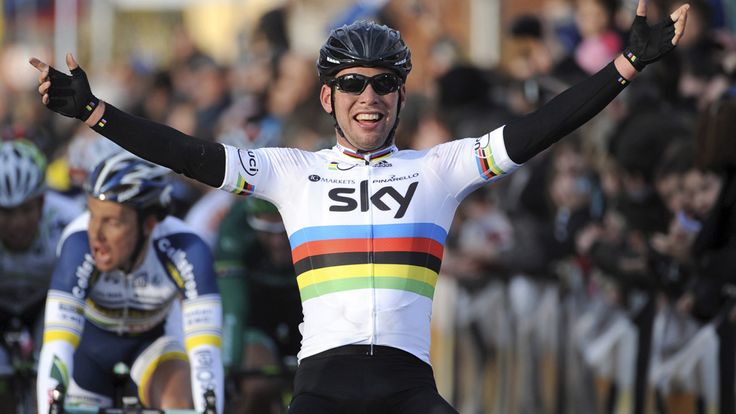
Kuurne-Bruxelles-Kuurne completes the weekend double-header - and Team Sky will be going all out to complete a hat-trick of victories in one of Belgium's biggest races.
Like most of the high-profile one-day races from late-February to early-April, it is held in the Flemish-speaking part of the country and takes in some of the region's most famous "hellingen".
At 196km, it is not the longest of the Classics and usually ends in a bunch or reduced-field sprint, but the selective climbs and cobbles often ensure only the true hard men will be able to battle it out for the victory.
Route
The race starts and finishes in Kuurne, but, contrary to its name, it does not actually pass through the Belgian capital of Brussels at any point.
After the start, the peloton will head east to Ninove, but before it reaches Brussels, the route turns south and heads back towards to the west of the country, taking in a number of key climbs along the way.
The last of the "hellingen" - the Nokereberg - lies just over 50km from the finish, with the final battle then set to take place on the 16km loop around Kuurne that marks the end of the race.
Key section
When the riders hit La Houppe (87km) before the halfway point of the race, it marks the first of seven short but painfully tough climbs in the space of 56km.
The field will go on to tackle the Kanarieberg (95km), Kruisberg (100km), Oude Kwaremont (106km), Cote du Trieu (120km), Tiegemberg (132km) and Nokereberg (143km), a stretch of terrain that is sure to split up the field. The all-important factor will be whether those gaps will stick to the end or whether a larger group will come back together during the run-in.
The Nokereberg is not the steepest of Flandrian climbs, but its length is entirely covered in cobblestones and its placement in the race is sure to encourage attacks.
It is mainly flat to the finish thereafter, which could allow those dropped on the climbs to regain contact. But there are sure to be more attacks in the closing stages, the strongest of which may prevent a bunch sprint.