Cycling book reviews
With Christmas nearing, we look at 2013's most prominent releases
Tuesday 17 December 2013 09:10, UK
Christmas is just around the corner and shoppers are no doubt looking for books to buy for their cycling-fanatic family and friends.
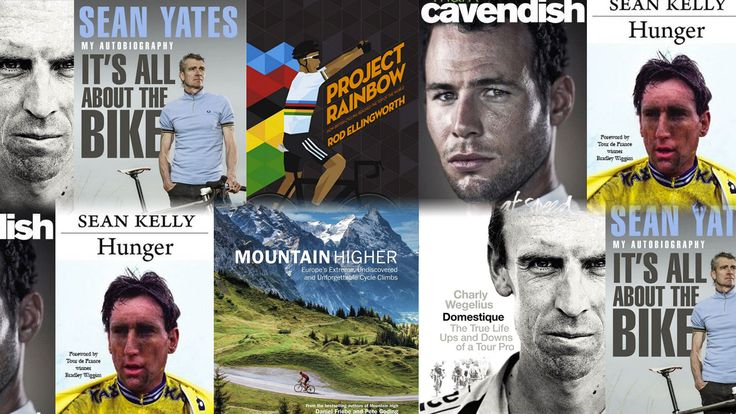
Project Rainbow: How British Cycling Reached the Top of the World, by Rod Ellingworth
 Publisher: Faber & Faber. RRP: £18.99 (hardback).
With the profile of cycling in the UK the highest it has ever been, it is interesting to ponder what that landscape may have looked like without the input of Rod Ellingworth.
Co-written with established cycling journalist and author William Fotheringham, Project Rainbow is part-autobiography, part-motivational manual and coaching guidebook from the man seen by many as an unsung hero of the British Cycling revolution.
Ellingworth's rise is intrinsically linked with that of the organisation - through his work identifying up-and-coming riders on the Talent Team, to his now-famous work with the Under-23 Academy. That initial group of riders became a golden generation for Britain, both on the road and the track. Geraint Thomas, Ed Clancy, Ben Swift and Ian Stannard - to name a few - all came through the academy, but much of the book is dedicated to the rider with which Ellingworth's relationship runs deepest, Mark Cavendish.
Now established as the fastest sprinter in the world, Ellingworth helps chart the sometimes bumpy rise from a young and slightly chubby teenager to cycling megastar. The book zips back and forth, including anecdotes from Ellingworth's own stalled cycling career, but through its core runs the quest to turn Great Britain into world champions on the road.
The passion for his country shines through as he sets about putting together a long-term plan to claim the rainbow jersey, with a belief in Cavendish's sprint the catalyst. As anyone who heard his scathing interview after the 2013 world championship men's road race (in which all of the British team abandoned) will attest, Ellingworth doesn't mince his words, with Project Rainbow proving an honest and down-to-earth account of a high-pressure work environment - nowhere more so than detail and an insight into a troubled first season for Team Sky on the road in 2010.
There are lessons here that, as Ellingworth admits himself, can be applied to other jobs and walks of life: how to get the best out of people, how to intricately prepare and sticking to your guns. The biggest message that comes through is one that the coach demands of his riders: hard graft.
Rating: 3.5/5
Review by Richard Simpson
Publisher: Faber & Faber. RRP: £18.99 (hardback).
With the profile of cycling in the UK the highest it has ever been, it is interesting to ponder what that landscape may have looked like without the input of Rod Ellingworth.
Co-written with established cycling journalist and author William Fotheringham, Project Rainbow is part-autobiography, part-motivational manual and coaching guidebook from the man seen by many as an unsung hero of the British Cycling revolution.
Ellingworth's rise is intrinsically linked with that of the organisation - through his work identifying up-and-coming riders on the Talent Team, to his now-famous work with the Under-23 Academy. That initial group of riders became a golden generation for Britain, both on the road and the track. Geraint Thomas, Ed Clancy, Ben Swift and Ian Stannard - to name a few - all came through the academy, but much of the book is dedicated to the rider with which Ellingworth's relationship runs deepest, Mark Cavendish.
Now established as the fastest sprinter in the world, Ellingworth helps chart the sometimes bumpy rise from a young and slightly chubby teenager to cycling megastar. The book zips back and forth, including anecdotes from Ellingworth's own stalled cycling career, but through its core runs the quest to turn Great Britain into world champions on the road.
The passion for his country shines through as he sets about putting together a long-term plan to claim the rainbow jersey, with a belief in Cavendish's sprint the catalyst. As anyone who heard his scathing interview after the 2013 world championship men's road race (in which all of the British team abandoned) will attest, Ellingworth doesn't mince his words, with Project Rainbow proving an honest and down-to-earth account of a high-pressure work environment - nowhere more so than detail and an insight into a troubled first season for Team Sky on the road in 2010.
There are lessons here that, as Ellingworth admits himself, can be applied to other jobs and walks of life: how to get the best out of people, how to intricately prepare and sticking to your guns. The biggest message that comes through is one that the coach demands of his riders: hard graft.
Rating: 3.5/5
Review by Richard Simpson
Mountain Higher: Europe's Extreme, Undiscovered and Unforgettable Cycle Climbs, by Daniel Friebe and Pete Goding
 Publisher: Quercus Publishing. RRP: £25.00 (hardback).
When Mountain High: Europe's 50 Greatest Cycle Climbs was released in October 2011, its instant appeal to cyclists was such that I received not one, but two copies that Christmas, and then had to send out a group e-mail to friends and family warning no one else to buy me it for my following birthday. Two years on and I have had to send the same e-mail again, because Friebe and Goding are back with a sequel that is not so much long-awaited, but nonetheless warmly welcome.
While the original has swiftly become regarded as the premier reference point for planning trips to professional cycling's most famous climbs, the second instalment ventures up lesser-known passes and peaks and is more suited to connoisseurs than amateur riders hoping to pedal in the shadows of Chris Froome and Sir Bradley Wiggins.
You won't find long lists of climbs from the Tour de France or Giro d'Italia here, rather the ascents the world's biggest races have seldom, if ever, visited. And it is littered with what appear to be gems from as close to home as the Scottish Highlands (the epic Bealach na Ba) to as far away as Norway, eastern Czech Republic and northern Slovenia. Few, if any, seem token entries, with each being painstakingly researched to give historical context and an in-depth description of the climb, including profiles, maps, distances and maximum and average gradients.
The pictures in the original were a touch underwhelming and had the feel of a photographer scampering around Europe to snap cols as quickly as possible before deadline. This time, though, there is a vast leap in quality, with each image capturing the majesty of the climb and hinting at why it is worthy of a visit. Indeed, the book's cover photo, which shows Switzerland's Grosse Scheidegg with the legendary North Face of the Eiger in the background, is a strong contender for the finest cycling photograph of the year.
Mountain High adorns any half-respectable cycling bookshelf and while the lesser-known stature of Mountain Higher's featured climbs means it might not earn the same "essential ownership" status, it worthiness of delving into your wallet and adding it to your collection is undiminished.
Rating: 4/5
Review by Matt Westby
Publisher: Quercus Publishing. RRP: £25.00 (hardback).
When Mountain High: Europe's 50 Greatest Cycle Climbs was released in October 2011, its instant appeal to cyclists was such that I received not one, but two copies that Christmas, and then had to send out a group e-mail to friends and family warning no one else to buy me it for my following birthday. Two years on and I have had to send the same e-mail again, because Friebe and Goding are back with a sequel that is not so much long-awaited, but nonetheless warmly welcome.
While the original has swiftly become regarded as the premier reference point for planning trips to professional cycling's most famous climbs, the second instalment ventures up lesser-known passes and peaks and is more suited to connoisseurs than amateur riders hoping to pedal in the shadows of Chris Froome and Sir Bradley Wiggins.
You won't find long lists of climbs from the Tour de France or Giro d'Italia here, rather the ascents the world's biggest races have seldom, if ever, visited. And it is littered with what appear to be gems from as close to home as the Scottish Highlands (the epic Bealach na Ba) to as far away as Norway, eastern Czech Republic and northern Slovenia. Few, if any, seem token entries, with each being painstakingly researched to give historical context and an in-depth description of the climb, including profiles, maps, distances and maximum and average gradients.
The pictures in the original were a touch underwhelming and had the feel of a photographer scampering around Europe to snap cols as quickly as possible before deadline. This time, though, there is a vast leap in quality, with each image capturing the majesty of the climb and hinting at why it is worthy of a visit. Indeed, the book's cover photo, which shows Switzerland's Grosse Scheidegg with the legendary North Face of the Eiger in the background, is a strong contender for the finest cycling photograph of the year.
Mountain High adorns any half-respectable cycling bookshelf and while the lesser-known stature of Mountain Higher's featured climbs means it might not earn the same "essential ownership" status, it worthiness of delving into your wallet and adding it to your collection is undiminished.
Rating: 4/5
Review by Matt Westby
Hunger, by Sean Kelly
 Publisher: Peloton Publishing. RRP: £18.99 (hardback).
Sean Kelly has never been one for dramatics and his autobiography, Hunger, documents his journey through professional cycling in a typically no-nonsense style.
At his peak the Irishman's victories in sprints, Classics, stage races and time trials were achieved with a metronomic consistency, but he reveals himself as a cyclist who was not quite the machine many view him as.
Kelly had an insatiable appetite for victory from the first day of the season to the last, even if he did not take on such a punishing workload by choice.
The driving force behind his intense training and race schedule turns out to be long-time mentor and directeur sportif Jean de Gribaldy, a revolutionary trainer who gives a whole new meaning to the phrase "tough taskmaster".
De Gribaldy features prominently throughout the book and, bar Kelly, is probably its main protagonist. After leaving De Gribaldy, a young Kelly would take it easy in training on the flat roads of Belgium and his potential was not fully realised until he was back under the guidance of the Frenchman.
The book takes a methodical journey through Kelly's racing career and deals with each of his biggest successes and disappointments in detail, but one of its main pleasures is the information and anecdotes he gives out on his contemporaries in the peloton: his uneasy relationship with compatriot Stephen Roche, for example, or his contempt for arch-rival Eric Vanderaerden, which at times seemed to border on pure hatred.
His career was not without some controversy and Kelly should be applauded for attempting to address issues he may have got away with ignoring completely.
He does not seem overly remorseful for deciding to race in apartheid-era South Africa after the idea was pitched to him by Pat McQuaid (yes, that Pat McQuaid), while the dismissive way he discusses two positive drug tests for seemingly minor substances reflects the attitude of the time.
Although he gives a good insight into life in rural Ireland during his early years, those wanting a warts-and-all look at the man away from the bike will be disappointed. Kelly's marriage, the birth of his children and the death of his brother are all mentioned, but only briefly.
However, any cycling fan who is familiar with Kelly's exploits on the road and wants to know more about how he achieved them should definitely pick the book up.
Rating: 3.5/5
Review by Alex Williams
Publisher: Peloton Publishing. RRP: £18.99 (hardback).
Sean Kelly has never been one for dramatics and his autobiography, Hunger, documents his journey through professional cycling in a typically no-nonsense style.
At his peak the Irishman's victories in sprints, Classics, stage races and time trials were achieved with a metronomic consistency, but he reveals himself as a cyclist who was not quite the machine many view him as.
Kelly had an insatiable appetite for victory from the first day of the season to the last, even if he did not take on such a punishing workload by choice.
The driving force behind his intense training and race schedule turns out to be long-time mentor and directeur sportif Jean de Gribaldy, a revolutionary trainer who gives a whole new meaning to the phrase "tough taskmaster".
De Gribaldy features prominently throughout the book and, bar Kelly, is probably its main protagonist. After leaving De Gribaldy, a young Kelly would take it easy in training on the flat roads of Belgium and his potential was not fully realised until he was back under the guidance of the Frenchman.
The book takes a methodical journey through Kelly's racing career and deals with each of his biggest successes and disappointments in detail, but one of its main pleasures is the information and anecdotes he gives out on his contemporaries in the peloton: his uneasy relationship with compatriot Stephen Roche, for example, or his contempt for arch-rival Eric Vanderaerden, which at times seemed to border on pure hatred.
His career was not without some controversy and Kelly should be applauded for attempting to address issues he may have got away with ignoring completely.
He does not seem overly remorseful for deciding to race in apartheid-era South Africa after the idea was pitched to him by Pat McQuaid (yes, that Pat McQuaid), while the dismissive way he discusses two positive drug tests for seemingly minor substances reflects the attitude of the time.
Although he gives a good insight into life in rural Ireland during his early years, those wanting a warts-and-all look at the man away from the bike will be disappointed. Kelly's marriage, the birth of his children and the death of his brother are all mentioned, but only briefly.
However, any cycling fan who is familiar with Kelly's exploits on the road and wants to know more about how he achieved them should definitely pick the book up.
Rating: 3.5/5
Review by Alex Williams
Domestique: The True Life Ups and Downs of a Tour Pro, by Charly Wegelius
 Publisher: Ebury Press. RRP: £16.99 (hardback).
The majority of cycling biographies are tales of success and champagne, but not this one. Domestique is the story of cycling's engine room, the less celebrated of side of a sport that awards winners iconic status but all too swiftly disregards everyone else. And Charly Wegelius leaves nothing to the imagination in a frank and at times startling assessment of his time as one of cycling's forgotten men.
Although he talks fondly of successes at amateur level, the tone of the book dips when he moves on to the professional ranks and begins to shed light on the realities of a life defined by low wages, loneliness, a lack of substance at home, insecurity, physical danger and perennial sacrifice for others. Wegelius is quick to acknowledge that he is as responsible as anyone else for the path that he ended up taking, but equally, he pulls no punches when lamenting his predicament.
Don't be put off, though. While the negative opinions of cycling and its protagonists mount, this is far from a dark and depressing book. Wegelius talks fondly of his more successful races and speaks frequently of his deep pride at executing his work well, arguing that helping a team-mate to win is as deserving of celebration and satisfaction as the win itself.
As a rider whose career lasted from 2000 to 2011, Wegelius rode in an era in which doping was prevalent and while he acknowledges an awareness that it was happening all around him, he refrains from probing deeper into the issue and, consequently, drugs are a peripheral theme. That is all good and well, but his praise and affection for one-time team-mate Danilo Di Luca appears strange given that the Italian committed three doping offences during his career.
The book is ghostwritten by Tom Southam, a former cyclist himself and an ex-Great Britain team-mate of Wegelius's. That connection is evident as Southam more than adequately reflects the strength of Wegelius's feelings, with swearing being a persistent tool used to vent frustrations.
Ultimately, Domestique, which was long-listed for the 2013 William Hill Sports Book of the Year, is not a read that will have you crooning at the romance of cycling, but if it's the dirtier underbelly or another aspect of the sport that you are hoping to explore, it is quintessential reading.
Rating: 3/5
Review by Matt Westby
Publisher: Ebury Press. RRP: £16.99 (hardback).
The majority of cycling biographies are tales of success and champagne, but not this one. Domestique is the story of cycling's engine room, the less celebrated of side of a sport that awards winners iconic status but all too swiftly disregards everyone else. And Charly Wegelius leaves nothing to the imagination in a frank and at times startling assessment of his time as one of cycling's forgotten men.
Although he talks fondly of successes at amateur level, the tone of the book dips when he moves on to the professional ranks and begins to shed light on the realities of a life defined by low wages, loneliness, a lack of substance at home, insecurity, physical danger and perennial sacrifice for others. Wegelius is quick to acknowledge that he is as responsible as anyone else for the path that he ended up taking, but equally, he pulls no punches when lamenting his predicament.
Don't be put off, though. While the negative opinions of cycling and its protagonists mount, this is far from a dark and depressing book. Wegelius talks fondly of his more successful races and speaks frequently of his deep pride at executing his work well, arguing that helping a team-mate to win is as deserving of celebration and satisfaction as the win itself.
As a rider whose career lasted from 2000 to 2011, Wegelius rode in an era in which doping was prevalent and while he acknowledges an awareness that it was happening all around him, he refrains from probing deeper into the issue and, consequently, drugs are a peripheral theme. That is all good and well, but his praise and affection for one-time team-mate Danilo Di Luca appears strange given that the Italian committed three doping offences during his career.
The book is ghostwritten by Tom Southam, a former cyclist himself and an ex-Great Britain team-mate of Wegelius's. That connection is evident as Southam more than adequately reflects the strength of Wegelius's feelings, with swearing being a persistent tool used to vent frustrations.
Ultimately, Domestique, which was long-listed for the 2013 William Hill Sports Book of the Year, is not a read that will have you crooning at the romance of cycling, but if it's the dirtier underbelly or another aspect of the sport that you are hoping to explore, it is quintessential reading.
Rating: 3/5
Review by Matt Westby
It's All About The Bike: My Autobiography, by Sean Yates
 Publisher: Bantam Press. RRP: £18.99 (hardback).
Before British cycling boomed in the mid-Noughties, hardened souls like Sean Yates were among a rare breed of riders who flourished almost unaided on the European scene. Yates made history in 1994 when he became only the third British cyclist to wear the Tour de France's yellow jersey, and his stage win in 1988 still ranks as the race's fastest-ever time trial on a regular road bike.
Once he had hung up his lycra in 1996, Yates went on to become one of the best sports directors in the business and helped Sir Bradley Wiggins to Tour de France and Olympics success in 2012 before parting company with Team Sky in somewhat acrimonious circumstances.
Yates gives honest views on that departure towards the end of the easily readable book, but it is his unwavering support of Lance Armstrong that has courted the most controversy. Yates is unequivocal when he refers to Armstrong's seven Tour de France wins as "the greatest achievement our sport has ever seen", and that steadfast defence of his former team-mate will polarise opinions many people now have of him.
Yates is not afraid to pull punches throughout this autobiography and you have to admire his honesty, no matter how misguided that seems at times. Ghostwriter John Deering has kept things straight from the horse's mouth, and that unpolished prose is refreshingly far removed from what we have grown used to in many similar releases.
The concluding chapter is now outdated given that Yates has just signed up as sports director of the new NFTO team, but this remains a candid and unflinching account of his three decades in the sport, and will be of interest to anyone who has followed his long and fruitful career.
Rating: 3/5
Review by Nick Howes
Publisher: Bantam Press. RRP: £18.99 (hardback).
Before British cycling boomed in the mid-Noughties, hardened souls like Sean Yates were among a rare breed of riders who flourished almost unaided on the European scene. Yates made history in 1994 when he became only the third British cyclist to wear the Tour de France's yellow jersey, and his stage win in 1988 still ranks as the race's fastest-ever time trial on a regular road bike.
Once he had hung up his lycra in 1996, Yates went on to become one of the best sports directors in the business and helped Sir Bradley Wiggins to Tour de France and Olympics success in 2012 before parting company with Team Sky in somewhat acrimonious circumstances.
Yates gives honest views on that departure towards the end of the easily readable book, but it is his unwavering support of Lance Armstrong that has courted the most controversy. Yates is unequivocal when he refers to Armstrong's seven Tour de France wins as "the greatest achievement our sport has ever seen", and that steadfast defence of his former team-mate will polarise opinions many people now have of him.
Yates is not afraid to pull punches throughout this autobiography and you have to admire his honesty, no matter how misguided that seems at times. Ghostwriter John Deering has kept things straight from the horse's mouth, and that unpolished prose is refreshingly far removed from what we have grown used to in many similar releases.
The concluding chapter is now outdated given that Yates has just signed up as sports director of the new NFTO team, but this remains a candid and unflinching account of his three decades in the sport, and will be of interest to anyone who has followed his long and fruitful career.
Rating: 3/5
Review by Nick Howes