
Paris-Roubaix: What is so special about the 'Hell of the North'?
Why Bradley Wiggins is targeting the prestigious one-day race
Friday 10 April 2015 14:17, UK
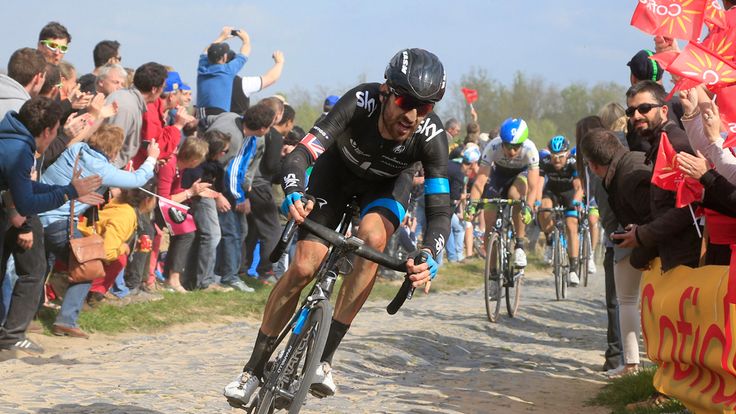
Sir Bradley Wiggins will look to end his Team Sky career with victory at Paris-Roubaix on Sunday.
It will be the 2012 Tour de France winner's final race for the British squad before leaving to start his preparations for the 2016 Olympic Games with his new team, WIGGINS.
But what is Paris-Roubaix and why is it so special to him?
Here is everything you need to know about the race known as the "Hell of the North"…
THE BASICS
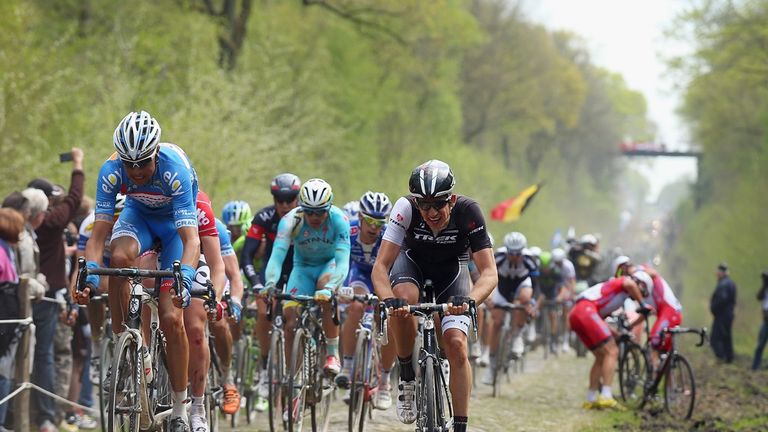
Paris-Roubaix is an annual one-day race taking place in northern France and is one of the most action-packed and enthralling events in cycling. It starts in Compiegne, 50 miles north of Paris, and ends close to the Belgian border in Roubaix, a town just outside Lille.
Paris-Roubaix is one of cycling’s five Monument classics (the others are Milan-San Remo, the Tour of Flanders, Liege-Bastogne-Liege and Il Lombardia) but is arguably the most prestigious. Tens of thousands of fans line the roadsides irrespective of the weather, roaring on the riders as they wrestle their way along the brutal route.
This year’s edition is 253km long and is flat from start to finish, but it contains 52.7km of bone-rattling cobbled roads, which the French call pavé.
The cobbles present an immense challenge to the peloton given that they are hugely energy-sapping and painful to ride, with no part of the body being spared the agony. Punctures, mechanical problems and crashes are also an ever-present danger.
In the dry the cobbles kick up a choking cloud of dust when the peloton rides over them, while in the wet they become treacherously slippery. It is the cobbles that have earned Paris-Roubaix its "Hell of the North" nickname.
Paris-Roubaix takes anything from 5hr 45min to 6hr 30min to complete and was won last year by the Netherlands' Niki Terpstra in a time of 6hr 9min.
THE HISTORY
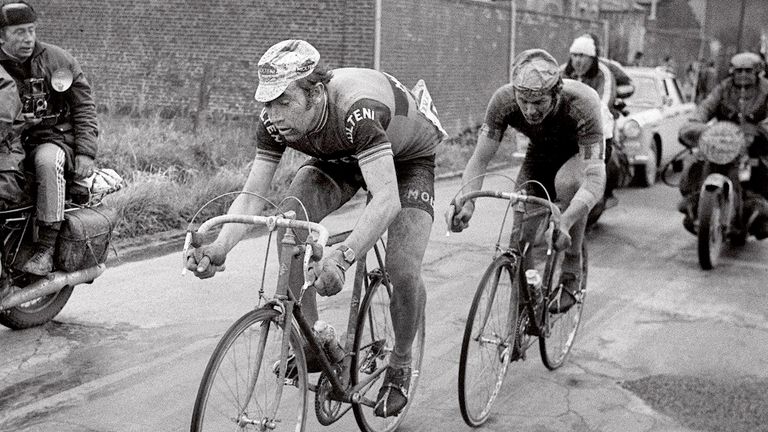
Paris-Roubaix is to one-day racing what the Tour de France is to stage racing, and although it may not be as well known to the British public, it is held in just as high esteem on the continent.
It was first held in 1896 and the only years it has not been raced since were due to the First and Second World Wars. This year’s race will be the 113th edition.
Some of the greatest names in cycling are among its previous winners, including Eddy Merckx, Roger de Vlaeminck, Francesco Moser, Johan Museeuw, Fabian Cancellara and Tom Boonen.
De Vlaeminck has the best record with four wins, four second places and one third, but current rider Boonen also has four wins. The Belgian will not have the chance to claim a fifth win this time around, however, as he has been ruled out through injury.
Should Wiggins triumph, he would become the first British winner.
THE TRADITIONS
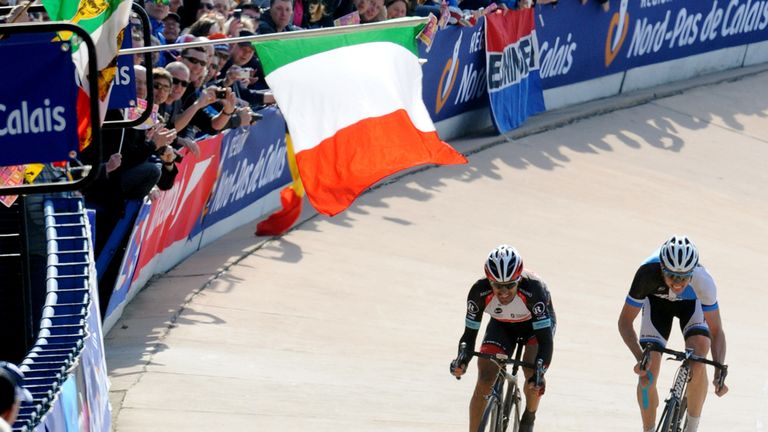
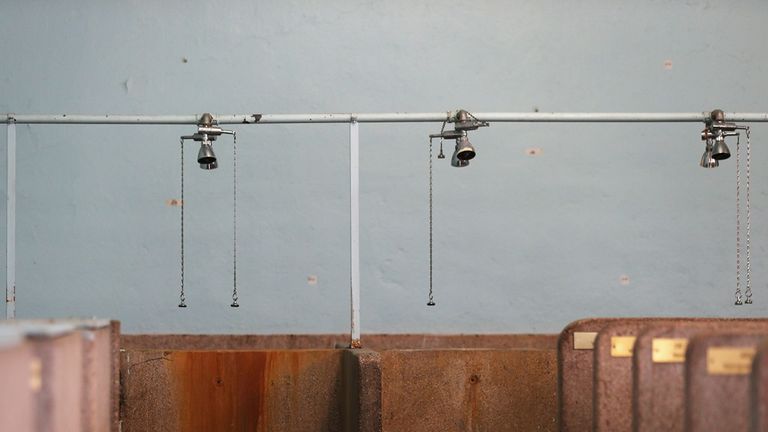
Aside from the cobbles, Paris-Roubaix has several characteristics that stand it out from other races and add to its allure.
Firstly, it ends with one-and-a-half laps of the Roubaix Velodrome, which is a unique finale in road cycling. Then, after the race, riders clean off the layers of dust and mud that have accumulated on them during the day in the velodrome’s shower room, the booths of which carry plaques of all the previous race winners. Although a crumbling old structure, the velodrome is a shrine of cycling history.
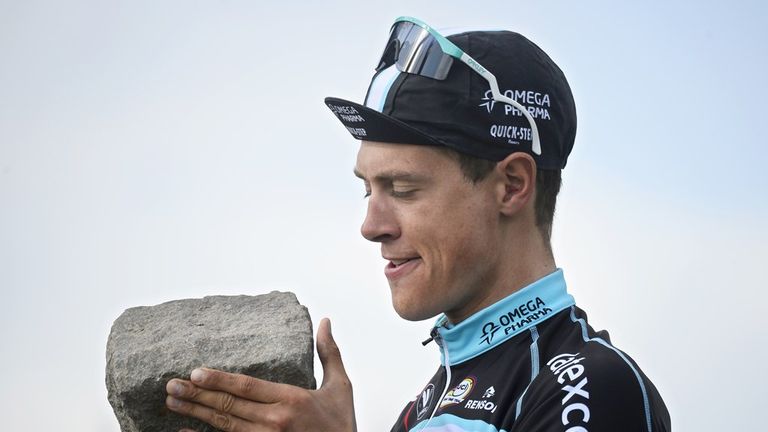
As well as a plaque, each winner also receives the race’s coveted trophy, which is a cobblestone taken from the route.
THE COBBLESTONES
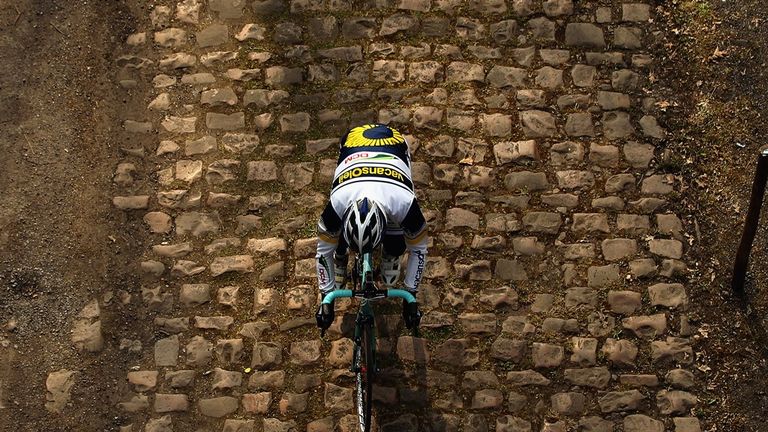
The cobbles are broken up into “sectors” of varying length and difficulty. This year’s race will contain 27 sectors, the longest of which is 3.7km and the shortest just 300m. Difficulty is rated from one to five stars, with five being the most challenging.
The first sector arrives this year after 98.5km of the 253km race distance, while the last comes in the final 1km in Roubaix.
This year’s race will contain three five-star sectors: the legendary Trouee d’Arenberg, Mons-en-Pevele and Carrefour de l’Arbre.
Conquer these and you may just make it to the finish.
Follow Sunday's race with our live blog from 12pm BST.