
Vuelta a Burgos Race Guide
Saturday 10 August 2013 16:21, UK
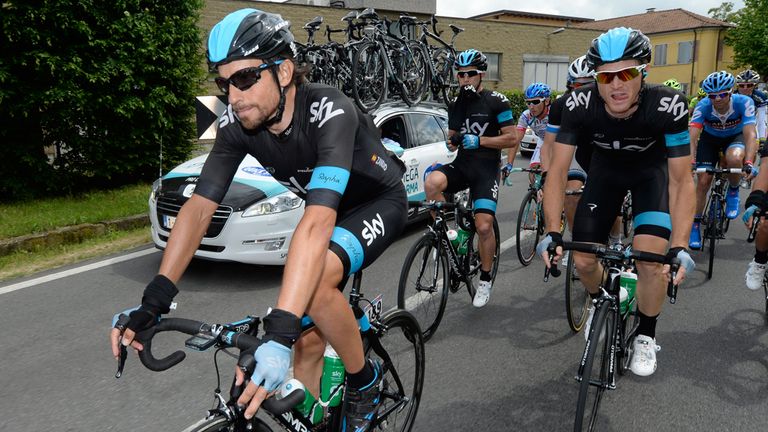
We take a closer look at the 35th edition of the Vuelta a Burgos in northern Spain.
Preview of the 35th edition
With their post-Tour de France breaks done and dusted, many of the world's top cyclists are now turning their attentions towards the Vuelta a España - which commences in Galicia on 24 August – and what better preparation could there be than this five-day stage race around the province of Burgos in northern Spain? The event is now regarded as one of the highest-profile contests on the Spanish cycling calendar and has been run 34 times since it's inauguration in 1946. The route for 2013 comprises 803km of rolling roads and here we take a closer look at what each stage will offer:Stages
Wednesday 7 August – Stage one: Burgos to Burgos - 139km The opening stage is a relatively short, rolling route that reaches its climax with two laps of a circuit around Burgos city centre, each one ending with an ascent of the category-three climb to El Castillo. An early uncategorised climb should allow a breakaway to escape, but with only 139km to cover, they are unlikely to be given too much of a lead and can expect to be swallowed up on the run back into Burgos. From there, there will be attacks aplenty on the first climb to El Castillo as punchy climbers look to thin down the peloton ahead of the final rise to the finish line. The climb has a maximum gradient of 13.5% and also carries a 200m section of cobbles, so conserving energy and timing any late moves well will be key.
Thursday 9 August – Stage two: Roa de Duero to Ciudad Romana de Clunia - 157km
The opening stage is a relatively short, rolling route that reaches its climax with two laps of a circuit around Burgos city centre, each one ending with an ascent of the category-three climb to El Castillo. An early uncategorised climb should allow a breakaway to escape, but with only 139km to cover, they are unlikely to be given too much of a lead and can expect to be swallowed up on the run back into Burgos. From there, there will be attacks aplenty on the first climb to El Castillo as punchy climbers look to thin down the peloton ahead of the final rise to the finish line. The climb has a maximum gradient of 13.5% and also carries a 200m section of cobbles, so conserving energy and timing any late moves well will be key.
Thursday 9 August – Stage two: Roa de Duero to Ciudad Romana de Clunia - 157km
 Another rolling day, but this time without categorised climbs and a strong chance of a sprint finish. Again, a breakaway will go clear early in the day, but the road after the intermediate sprint at 109km is largely downhill and the pace in the peloton will be too high for them to stay away. The finish itself is slightly uphill, so it is more likely to be a slightly-reduced bunch sprint rather than the full field.
Friday 9 August – Stage three: Cuatro Villas de Amaya Villadiego to Complejo Karstico de Ojo Guarena - 175km
Another rolling day, but this time without categorised climbs and a strong chance of a sprint finish. Again, a breakaway will go clear early in the day, but the road after the intermediate sprint at 109km is largely downhill and the pace in the peloton will be too high for them to stay away. The finish itself is slightly uphill, so it is more likely to be a slightly-reduced bunch sprint rather than the full field.
Friday 9 August – Stage three: Cuatro Villas de Amaya Villadiego to Complejo Karstico de Ojo Guarena - 175km
 The longest stage of the race has the potential to give the general classification its first shake-up. The route contains no fewer than six category-three climbs, all spread out evenly across the stage, meaning there is little time to relax, and also that the descents will be a big feature of the day. The stage also throws up the first summit finish of the race, providing an ample opportunity to mount a late attack and gain time on rivals. Breakaway riders will have a good chance of staying away should they be able to escape on the first climb, the Alto de Coculina, and then open up a healthy advantage to carry into the remaining ascents.
Saturday 10 August – Stage four: Burpellet Dona Santos to Santo Domingo de Silos - 162km
The longest stage of the race has the potential to give the general classification its first shake-up. The route contains no fewer than six category-three climbs, all spread out evenly across the stage, meaning there is little time to relax, and also that the descents will be a big feature of the day. The stage also throws up the first summit finish of the race, providing an ample opportunity to mount a late attack and gain time on rivals. Breakaway riders will have a good chance of staying away should they be able to escape on the first climb, the Alto de Coculina, and then open up a healthy advantage to carry into the remaining ascents.
Saturday 10 August – Stage four: Burpellet Dona Santos to Santo Domingo de Silos - 162km
 The penultimate stage is another that could favour a breakaway. The day’s only categorised climb, the category-three Alto del Cerro, arrives early and provides an ideal launchpad for an escape. The route is then downhill and flat for the best part of 85km, before rearing back up for two laps of a circuit around the finish town of Santo Domingo de Silos. The stage ends with a downhill run in to the finish line that should make for a fast and frantic finale.
Sunday 11 August – Stage five: Comarca Pinares Comunero de Revenga to Lagunas de Neila - 170km
The penultimate stage is another that could favour a breakaway. The day’s only categorised climb, the category-three Alto del Cerro, arrives early and provides an ideal launchpad for an escape. The route is then downhill and flat for the best part of 85km, before rearing back up for two laps of a circuit around the finish town of Santo Domingo de Silos. The stage ends with a downhill run in to the finish line that should make for a fast and frantic finale.
Sunday 11 August – Stage five: Comarca Pinares Comunero de Revenga to Lagunas de Neila - 170km
 The final stage of the race is also the most taxing and is almost certain to decide who takes overall victory. It boasts a punishing six categorised climbs, including one category three, four category twos, one category one - and a hors-categorie summit finish at Lagunas de Neila. The breakaway has plenty of early flat road on which to build up a lead, but with four of the seven climbs coming in the final 60km, they will need a huge gap to avoid being caught. In the peloton, the field is likely to be thinned down on the category-one Pasil de Rozavientos, which comes 30km out, before the contenders for victory start launching their attacks on the final climb, which summits at over 1,800m. The first man to the top could well seal overall victory in the process.