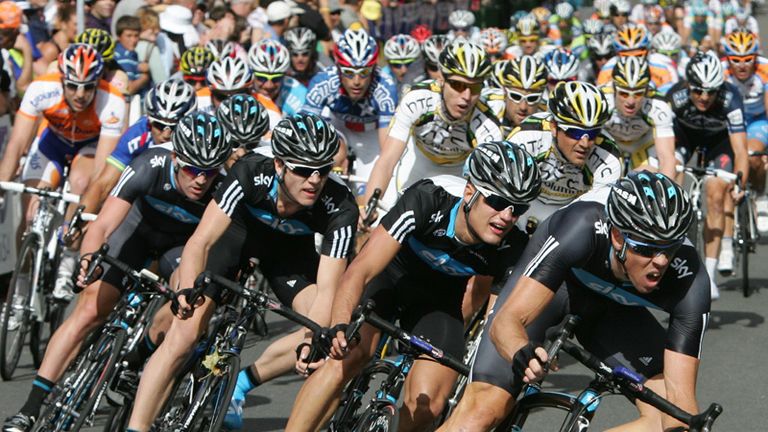
We take a closer look at one of the most important tools in any sprinters arsenal - the lead-out train.
A lead-out train explained
A key cog in the machine of any sprinting team, the lead-out train has become an essential part of a modern-day sprint finish.
As a peloton rolls under the ‘10 kilometre to go’ banner in any sprint stage business picks up as the bunch descends on the finish. Creating a sprint train is a means of controlling the finish as 180 riders jockey for position. As sprinters, it is essential that the fast men are well positioned so that they are able to contest the finish. Having to expend unnecessary energy through having to re-position themselves can destroy a sprinter’s chances when it comes to that final burst of energy. A lead-out train ensures they don’t.
The sole aim of a lead-out man is to bury themselves for the cause and deliver their chosen sprinter to the finish line in the best possible position and at the fastest speed. They shoulder the workload until the final few hundred metres where the sprinter is let off the leash on the run to the line.
The lead-out begins a long way out from the finish with riders coming together in a line or a ‘train’ with their protected rider at the rear out of the wind. The idea being that the man on the front puts in an effort and drives along the peloton. The faster each rides, the more difficult it is for another rival sprint train to come around and seize the initiative. Being at the front is also very beneficial in technical finishes as a team can take the preferred line through the corners and keep their man out of trouble.
Final kick
The final lead-out man must fight his way into position and open out the sprint for his team leader. These riders are often very accomplished sprinters in their own right, and will often contest the sprint themselves if their leader is caught up in a crash or loses the wheel during the finale. Their job is made more difficult by the fact that there are always teams willing to come around and open up sprints earlier in a bid to get a jump on their rivals. This means a lead-out train cannot be afraid to throw their weight around, as it is commonplace for rival riders to try and disrupt trains and fight for the wheel of the fastest sprinter.
When a rider has done his work he will pull off sharply and will be consumed by the peloton. Braver lead-out men will even throttle off and cause other rivals teams to make their way around them in a bid to break their momentum in the closing stages. It is normal that a lead-out man in the latter stages will finish anywhere between 30 seconds and a couple of minutes down on the winning time, as they are content to roll in having emptied the tank for their team, but will have played an integral part in the win.