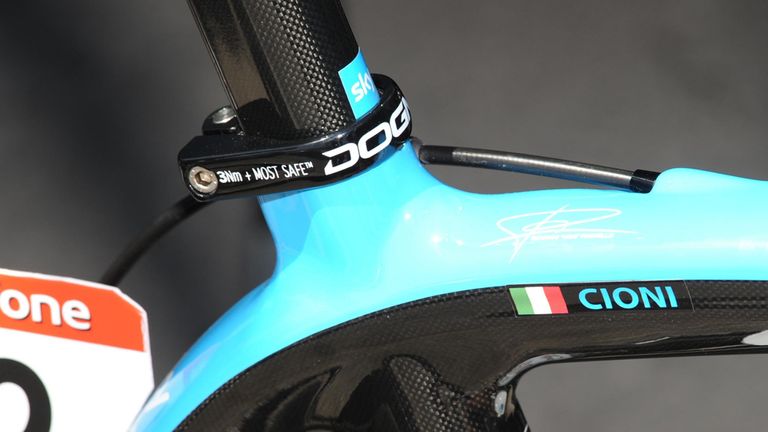
In the first of a series of introductory tech primers we take a look at the biggest, most important component of the bike.
Frame technology explained
In the first of a series of introductory tech primers we take a look at the biggest, most important component of the bike.
What is it?
The frame is the skeleton of the bike, the structure that supports all the other components. You'll sometimes see the term 'frameset' which is the combination of frame and fork. The frame and fork are connected by a steering bearing – the headset – so they work together and are often designed to match both visually and mechanically.
Click here for accompanying photo gallery
What does it do?
Your bike's main structural component and largest single part, the frame supports the rider, and provides attachment points for the other components. It has to be light so that as little as possible of the rider's effort is used propelling the bike, and stiff, so that energy is not wasted in flex.
The frame's design, construction and materials determine how the bike will ride and handle. Bike manufacturers are really frame manufacturers, building up the rest of the bike with components from companies such as Shimano, so they spend a lot of time and money designing and developing their frames.
What's it made from?
Bicycle frames can be made from a variety of materials and bike geeks love to argue about which is best.
Most high-performance frames today are made from carbon fibre. The term describes a whole category of materials that consist of very fine, strong strands of carbon held together by a plastic, usually epoxy resin. The fibres and resin are moulded into shape under pressure and heat. Some frames are made from a small number of large pieces (the front and rear sections of the frame, for example), which are then bonded together. In others each tube is moulded separately and the frame is then bonded together.
The advantage of carbon fibre is that it can be tailored to the loads on each part of the frame. This efficiency, and the high strength of the carbon fibres, means bike makers can create very light frames. For example, the bare frame of one of Team Sky's Pinarello Dogma 2 bikes – made from Torayca carbon fibre – weighs just 920g.
Aluminium is also a very common material for frames. Aluminium tubes are welded together to make a frame. This is a relatively inexpensive process as costly moulds are not needed, so aluminium frames are often very good value for money. Aluminium frames tend to be very stiff because of their large-diameter tubes.
Steel tubing was the material used for almost all bike frames until the 1980s. Steel has a slightly poor reputation now because cheap steel tubes make for heavy, unpleasant frames, but high-strength steels can be made into light, extremely durable frames. Fans of steel frames praise their comfortable feel and 'springy' response.
What is frame geometry?
The frame geometry is the collection of measurements that describe the shape of a frame. The geometry determines your position on the bike and how it will handle – for example, whether it will require more or less effort to turn a corner.
Frame jargon
Frames were once all made by joining tubes. Much of the jargon used to describe them talks about tubes, even though many modern frames are moulded in large pieces.
Seat tube: The upright tube that connects the crank and pedal area (the bottom bracket shell) with the seat post, which in turn provides the attachment point for the saddle. Seat tube length is the most common way of describing the size of a frame.
Head tube: The tube at the very front of the frame. Holds the headset (steering bearing) which in turn mounts the fork.
Top tube: The tube connecting the top of the head tube and the top of the seat tube. Top tube length determines the reach to the handlebar, a critical part of bike fit.
Down tube: The diagonal tube joining the bottom of the head tube to the bottom bracket shell. Its size and shape has a significant effect on the frame's stiffness and handling.
Drop-outs: The end points of the frame and fork which hold the wheels in place.
Chainstays: The two tubes from the bottom bracket to the rear drop-outs.
Seatstays: The two tubes from the top of the seat tube the rear drop-outs.
Bottom bracket shell: The frame section that holds the cranks which turn on a bearing called a bottom bracket.
Wheelbase: The length of a frame from front to rear drop-outs.
Head angle: The angle between the head tube and a horizontal line projected forward from the tube. Along with the fork offset, head angle is a major factor in how a bike handles.
Seat angle: The angle between the seat tube and a horizontal line projected forward from the tube. Determines the rider's position over the pedals and therefore is a factor in how the bike fits.
Fork offset: The perpendicular distance between the front drop-outs and a line through the centre of the fork's steerer tube. Affects the stability and handling of the bike.
Steerer: The tube at the top of the fork that fits inside the head tube.