David Connolly followed hurling father's Wembley footsteps

Thursday 25 June 2015 20:46, UK
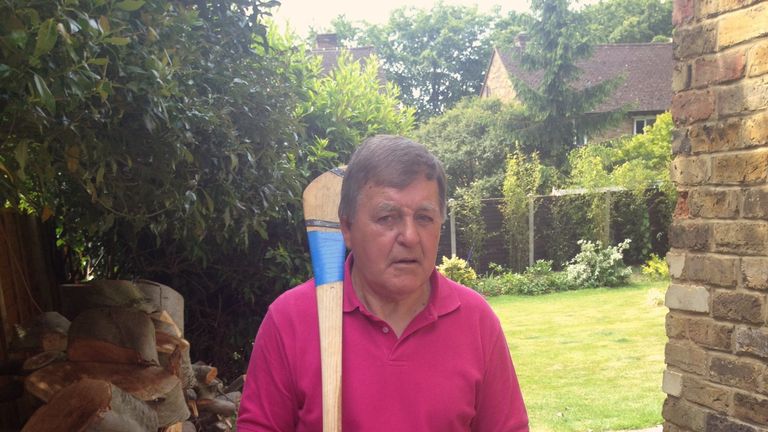
Tom Connolly has a hurl in one hand and a Republic of Ireland jersey belonging to his son in the other.
Three photographs of his boy hang behind him on the wall of his home near Farnham Common, Buckinghamshire.
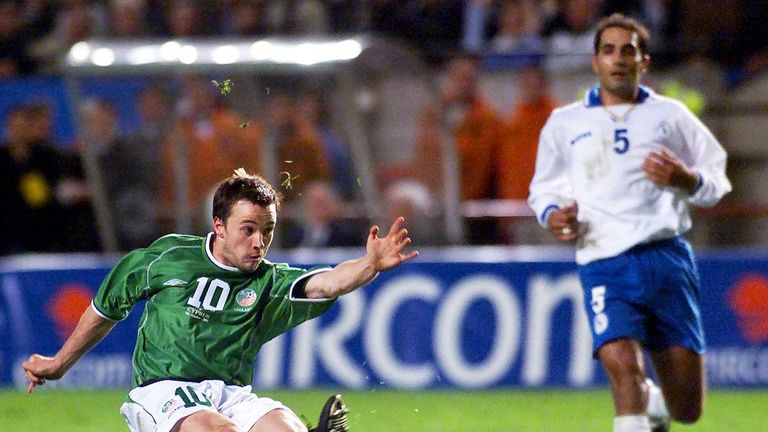
Three goals. Three photographs, taken the night David scored a hat-trick for Ireland in a World Cup qualifier in Lansdowne Road.
Tom was there that night in 1997. He rates it as the proudest moment in both their sporting lives.
Because both father and son enjoyed long and successful playing careers and significantly, they both played in Wembley. Only David played football and Tom, hurling.
Today, Tom remains one of the most decorated club players of his generation, winning 11 hurling club titles through a 27-year career and two in Gaelic football.
His journey to London and Wembley hurling had unlikely roots in Abbeyknockmoy, Galway. Growing up between Tuam and Athenry, Tom Connolly was “baptised” in Gaelic games, he says.
Not long after he came to England in the 1960s the annual GAA exhibition was set to be played in Wembley and someone organised a ticket.
Seated in front of him that afternoon was the secretary of the now defunct Brian Boru club, a club then on the cusp of great things.
Paging through the programme that evening, Connolly noted that the secretary’s home address was just three streets over from his lodgings in Kilburn. He called around and the door opened up a conversation that started a remarkable club career featuring Wembley cameos.
Privilege
Beneath the old towers is where his time in London really began; where he lined out against the greats of the game; where years later he’d watch his son David win the Football League Trophy with Southampton in front of over 73,000 fans.
On that day in 2010 he was seated near the Royal Box, a privilege often afforded to ex-players.
“In sport,” he declares, “Wembley was where it all started and where it all finished with me.”
On this lazy summer’s morning Tom is wearing an old pair of David’s Republic of Ireland training shorts and a pink polo shirt.
Aged 71, he still travels with a hurl in the boot of his blue BMW and will puck about in the GAA grounds in Ruislip when he gets the chance.
He walks across the kitchen and carefully removes a black and white photograph from the wall. It’s the London team he played with in Wembley in 1967.

When England won, everyone invaded the pitch and people were nicking lumps of the turf. My father cut out a sod with a pen-knife, somehow got it home and planted it in the garden in Abbeyknockmoy.
He rests it flat on the counter in the kitchen, plants a hand either side and starts putting names to faces.
“Fonze Condon, Dick Collins, Mick Loughnane... They were all there for that one,” he says. “Sometimes you wouldn’t have a full turnout for games with injuries and that, but I remember everyone being there that day. No one would miss it.”
Tom Connolly lived in Willesden Junction then. He owned an old Aston Martin A10, put his best suit on and drove down to the stadium for the game.
“I parked it up right outside,” he says. “There was no meeting in hotels before the game. You were told a time to be in Wembley and that was it.”
Inside the dressing room they wondered about all the great teams that togged out and played before them. Just a year previous it was the scene of England’s greatest footballing triumph - victory in the World Cup.
“The thing I remember about that is that my father came across from Galway and got a ticket for that final,” he says.
“When England won, everyone invaded the pitch and people were nicking lumps of the turf. He cut out a sod with a pen-knife, somehow got it home and planted it in the garden in Abbeyknockmoy.”
Generation
Connolly shared his Wembley debut with brother Martin, who played centre-back for London and ‘the Brian's’. With Tom lining out at centre-forward, they bookended a golden generation of London hurlers and stellar names like Patsy O’Neill, Roger Cashin and Johnny Barrett.
Tom had played at under-age level for his club in Galway but he left before the opportunity to play county minor presented.
“They said I had potential,” he says. “But I was gone out of the place at 15, had made the Brian Boru senior team at 17 and then London after that.
“Galway came back looking a few years later, said they’d fly me home for games, but I was making my living here and London was my team.”
In 1973, the Wembley influence tolled heavy on his home county when London, under the stewardship of Paddy Ryan, knocked Galway out of the All Ireland SHC quarter-final in Ballinasloe.
“There was no problem,” he says. “No conflict. I took great enjoyment out of that victory.”
London and Connolly played Limerick in an historic semi-final in Ennis. Tom was marking Richie Bennis, who goaled late on from a free to win the game. A month later Limerick were crowned All Ireland champions.
London were backboned by players from the Brian's and their great rivals St Gabriels, who traded titles and heavy blows through a generation of fiercely contested battles in the capital.
“We were among the best club sides around,” he says. “Anywhere, with the players we had over here.”
Dedication

Only time could derail their rivalry, and for Tom, David’s arrival as a footballer.
“I retired and dedicated my life to my kids,” he says. “David was only nine but already he was attracting interest from top clubs. It was all he wanted to do - become a footballer, nothing else.
“David was only small, but if there is one thing that went from father to son then it’s that he always gave one hundred per cent.”
And if there is one thing they share in sports it’s that iconic and very unlikely overlap - Wembley Stadium.
On the wall of the sitting room in Farnham there’s a picture of the Brian Boru senior hurling champions from 1980. On the end a three-year-old boy is stood.
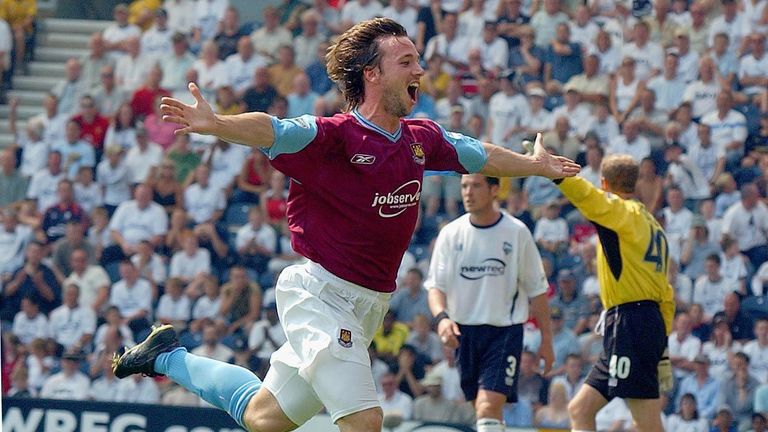
David was only small, but if there is one thing that went from father to son then it’s that he always gave 100 per cent.
“He used to play a bit of hurling with me. But football was always his game,” says Tom.
“At 13 he was club captain at Watford and Kenny Jacket was involved. When he was 16, there were 18 of them offered a development contract. From that 18, I think he was the only one to go and make a career out of it.
“There are so many moments that stick out. The hat-trick was the highlight, but then Roy Keane took him from Wigan to Sunderland and his goals got them up that year, and then with Southampton in Wembley in 2010.”
It was an amazing squaring of the circle. Fifty years after his first visit as a spectator.
“I was nearly sat in the same place that I watched my first GAA game there,” he says. “I was right beside the steps when they walked up to collect the trophy. It was a wonderful thing and a wonderful place.
“Bill Treacy, a Kilkenny man from Bennettsbridge used to say to me: ‘Tom, I don’t care what my sons do in hurling because I can tell them I hurled in Wembley.'"
For a generation of London greats that truism can’t be matched, but out in the quiet of Farnham Common and in the Connolly house, there’s a notable exception.