
What Riot's new franchising model means for the LCS
Thursday 3 August 2017 20:48, UK
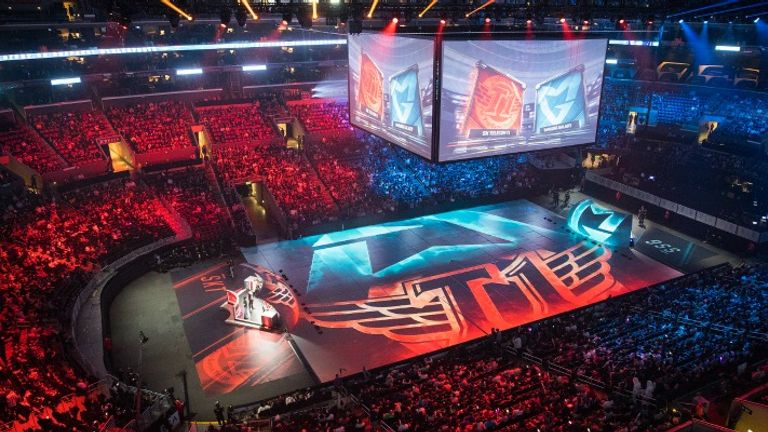
Riot Games, developer and publisher of League of Legends, has revealed details regarding the upcoming team franchising model for its North American Championship Series (NA LCS).
The model includes new revenue sharing, player associations, and an Academy League - all wrapped up in a stringent application process.
Bloomberg reports a spot will cost a flat $10million, with newcomers having to pay an additional $3million to compensate teams not selected to the group of 10 for the 2018 season.
With the reported cost of an Overwatch League spot being as high as $20million, a spot into the already more established league at a cheaper price does seem like good value.
Spots have historically gone in the non-franchised league for around $1million, so it is a step up from what team owners have experienced.
The newly minted tournament will lose the promotion-relegation system in hopes for boosting revenue for both the teams and the players.
Many teams have been struggling to secure long-term sponsorships, as sponsors were not willing to support a team that potentially wouldn't survive beyond a season. This change is intended to give teams a long-term plan, letting them develop home-grown talent and build team cohesion, two things that NA LCS is usually criticised for lacking.

Another way Riot hopes to foster talent is the remodelling of the Challenger series into an Academy League.
Teams will be able to develop rising talent in this league, and not rely so heavily on EU and Korean imports; hopefully increasing the strength of both Leagues.
The Academy League will feature more teams (one for each LCS team) and more games than the previous Challenger Series.
The loss of the relegation system has raised a few eyebrows at the lack of a drawback for teams that finish bottom of the league.
Riot aims to combat this by showing that poorly performing teams will not be defended, even in the new franchise system.
Riot will be implementing financial incentives dependent on league standing. Consistently poorly performing teams will also be punished with an alternative relegation model - if a team finishes in the bottom two of the standings five times over an eight-split span, their spot in the LCS will be revoked.
Teams will have to go through a strict vetting process, and none of the current teams are guaranteed a spot.
Flagship teams such as TSM, Cloud9 and CLG will have a good shot of meeting the requirements since they've been around since the inception of the league and are households names.
For the rest of the teams, each holds their respective positives and negatives, and it's entirely possible every team will retain their spot, or that a completely new group will come in to occupy those positions. We will likely not know until October.
Another interesting note is that the European LCS does not plan to move to a similar model at this point, Riot announced.
Riot cited a 'uniquely diverse region' as a reason for the decision and mentioned that more information on the future of the EU LCS would come later this year.