
10 greatest athletes
Friday 11 July 2008 09:32, UK
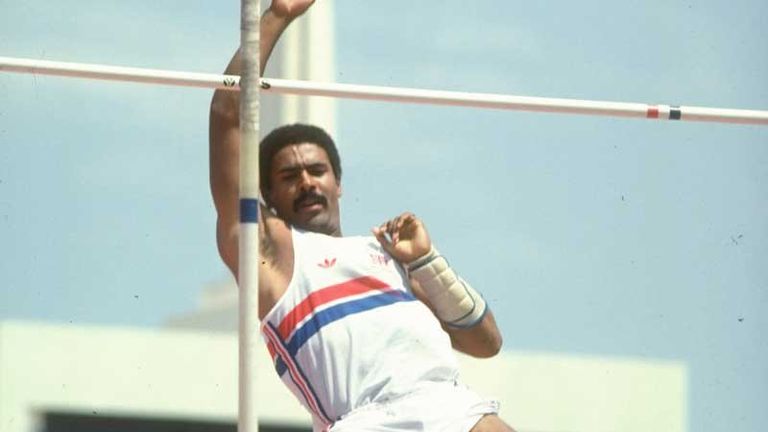
Stars of track and field from Olympic Games past.
Stars of track and field from Olympic Games past. Carl Lewis (100m, 4x100m, Long jump) An American sprinter and long jumper whose place in history as one of the greatest ever Olympians is assured. Lewis won 10 Olympic medals - nine golds and one silver - between 1984 and 1996. At his first Games in Los Angeles he won four golds at 100m, 200m, long jump and sprint relay. He won the 100m and long jump in 1988 and in 1992, after suffering a viral infection at the US trials, added another long jump and relay gold. The last Olympic medal of Lewis' glittering career came in the long jump in Atlanta in 1996 - his fourth successive title at the event - after which he hung up his spikes. Fanny Blankers-Koen (100m, 200m, 80m hurdles, 4x100m) 'The Flying Housewife' from Holland was the heroine of the 1948 Olympics in London with four golds and was voted female athlete of the last century. After showing immense all-round sporting promise as a youngster, Blankers-Koen opted to pursue athletics above swimming and reaped the rewards in the English capital. As a 30-year-old mother of two, she faced pressure in some quarters from those who thought she should be at home with her children rather than competing at the Olympics. Blankers-Koen ignored such talk and decided to drop the high jump and long jump competitions in order to concentrate on the 100m, 200m, 80m hurdles and 4x100m - and duly triumphed in all four. Michael Johnson (200m, 400m, 4x400m) Noted for his unique, leant-back - and laid-back - style, Johnson was in a class of his own as he cruised to three individual Olympic gold medals. His first taste of Olympic glory came in the 1992 relay, but Johnson's Barcelona Games were tinged with disappointment as he failed to make the individual final due to a virus. Undeterred, he came back stronger in Atlanta four years later and put on his golden spikes to become the first man to claim gold in both the 200m and 400m. His victory in the former saw him shatter his own world record while the triumph in the latter was by the massive margin of almost a second. The Texas-born phenomenon retained his 400m crown in Sydney four years later. Jesse Owens (100m, 200m, 4x100m, Long jump) Known as Jesse after being given the name by a Cleveland teacher who misunderstood his accent when he said he was called JC (James Cleveland Owens), the Alabama-born athlete won four gold medals at the 1936 Olympics in Berlin. His achievements cannot be underestimated as he opened the door for generations of black athletes. In the presence of Adolf Hitler, who espoused views on the supremacy of the blue-eyed, blond-haired 'Aryan' people, Owens prevailed in the 100m, 200m, 4x100m relay and long jump. Affectionately known as the 'Buckeye Bullet', Owens' long jump world record stood for more than 25 years. Florence Griffith-Joyner (100m, 200m, 4x100m) The flamboyant American sprinter was the star of the 1988 Seoul Olympics with golds over 100m, 200m and in the sprint relay. The wife of triple jumper Al Joyner and sister-in-law of heptathlete Jackie Joyner-Kersee, 'Flo-Jo' - famed for her long and colourful fingernails - stunned the world with her rise to prominence in South Korea. Her times of 10.49s in the 100m US trials and 21.34s in the 200m quarter-finals in Seoul still stand. She attributed her change in physique and consequent rapid improvement to new health and fitness programmes and, although doubts were cast on her achievements, she always strenuously denied allegations of drug use and never failed a test throughout her career before her tragically-early death at the age of 38. Sebastian Coe (1500m) The only man ever to defend a 1500m Olympic title, Lord Coe finished his career with two golds (1980 and 1984 1500m) and two silver medals (1980 and 1984 800m). He led home fellow Brit Steve Cram in the 1984 final with Steve Ovett having collapsed in the heat. The rivalry between the trio dominated middle-distance running in the 1980s with Coe's graceful victories over the longer event in Moscow and Los Angeles giving him the edge. Coe became a member of parliament after retiring from the track but remains heavily involved in the Olympics as the head of London's bid to host the 2012 Games and subsequent chairman of the London Organising Committee. Bob Beamon (Long jump) The aftermath of Beamon's world-record leap of 8.90metres at the 1968 Mexico City Olympics proved one of the most enduring images of the last 40 years. Beamon had to be helped to his feet by his rivals after the distance was announced. His amazement at having jumped over 29 feet to surpass the previous mark - which was less than 28 feet - was clear for all to see. Beamon never regained those heights, in fact he never again passed the 27-feet mark. But his record stood for 23 years until it was broken at the 1991 World Championships by fellow American Mike Powell. Daley Thompson (Decathlon) A natural showman and hugely popular among the British public, charismatic all-rounder Thompson was the first man since Bob Mathias in 1952 to successfully defend the Olympic decathlon title. Thompson, of Nigerian and Scottish heritage, was also the first man to simultaneously hold Olympic, Commonwealth, European and world titles in the same event. Often in the limelight for his irreverent behaviour, Thompson went on to compete at a third Olympics in Seoul but could only finish fourth due to injury. However, he goes down as one of the sport's finest. Abebe Bikila (Marathon) Bikila was a last-minute replacement in the 1960 Ethiopian Olympic team and stunned the world when he won the marathon - only his third race at the distance - in a world record time while running barefoot. Four years later in Tokyo he became the first man to successfully defend the marathon crown when he set another world best - this time wearing shoes but less than two months after having his appendix removed. Dropped out of the 1968 event through injury and a year later suffered severe paralysis in a car accident. He died four years later at the age of 41. Ed Moses (400m hurdles) Ohio-born Moses dominated the 400m hurdles for a decade, going unbeaten in the event between August 1977 and June 1987. A two-time world champion and four-time setter of world records, Moses became Olympic Champion in Montreal 1976 and then regained the crown in Los Angeles 1984 after missing the 1980 Games in Moscow due to the United States' boycott. In the 1988 final in Seoul he suffered his first-ever loss in a championship race when he had to settle for bronze.