WADA expect progress on Russia investigation within six weeks
Last Updated: 06/03/19 7:30pm

The World Anti-Doping Agency believes it will be able to tell if Russia has tried to destroy or withhold data from the Moscow laboratory at the heart of its state-run doping programme within six weeks.
The testing data, which sports federations need if they are to pursue anti-doping cases against hundreds of suspected Russian drugs cheats, was retrieved from the Russian Anti-Doping Agency's lab in January.
That was a condition of RUSADA being reinstated last September after almost three years, although the original retrieval deadline of December 31 was missed when the Russian authorities objected to the independent team's technical equipment.
With athletes and anti-doping experts calling for RUSADA's reinstatement to be reversed, a smaller team of experts were allowed to return to Moscow a fortnight later and complete their mission using equipment bought and certified in Russia.
Now, six weeks later, its director of intelligence and investigations, Gunter Younger, has issued a statement to say the first part of the data authentication process is over. Approximately 24 terabytes of information have been uploaded, indexed and paired - comparable to 400,000 hours of music or the space available on about 5,200 DVDs.
"This is a huge undertaking involving more than 1.5 million files, but we continue to make good progress," said Younger.
"Essentially, what we have done is to recreate the Moscow Laboratory in a virtual sense, allowing us to pair the various data with their respective instruments so that we can ensure what we have is complete, accurate and has not been tampered with."
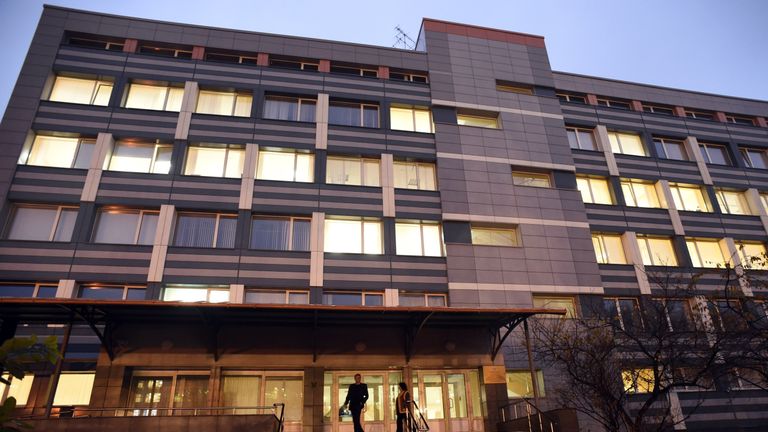
With this work completed, WADA's experts, with the help of external forensic specialists, will be able to assess if the data is complete and authentic. The Montreal-based agency initially said the whole process would take two to three months and that is still their goal.
"Although this is a massive challenge, we are confident we will be able to tell if anything is missing or not as it should be," said Younger.
"Once we are satisfied that the data is authentic, we will be in a position to proceed to the next phase and support the various sports and other anti-doping organisations to bring cases against those who cheated."