
Hallucinations, fishing, and repairing pipes with knickers: How two Brits made history rowing across Pacific Ocean
Jess Rowe and Miriam Payne became the first female crew to row non-stop and unaided across the Pacific, spending 165 days at sea and encountering obstacles including burst pipes, water shortages, and sleep deprivation
Sunday 26 October 2025 14:20, UK
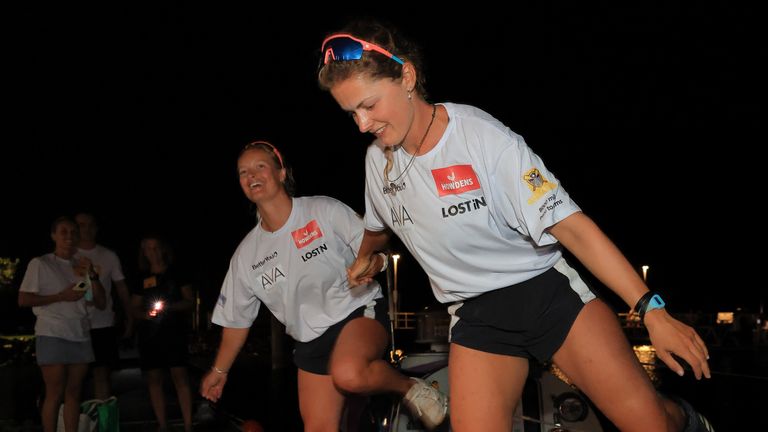
Jess Rowe and Miriam Payne made history by becoming the first female crew to row non-stop and unaided across the Pacific Ocean, an adventure they don't know how to top.
Payne, 25, from East Yorkshire, and Rowe, 28, from Hampshire, spent almost half a year at sea as they rowed from Peru to Australia, travelling around 8,000 miles in their vessel, Velocity.
They encountered multiple challenges along the way, including hallucinations, burst pipes and having to get towed back to land just eight days into their epic adventure.
"Anything that could go wrong, did," Rowe told Sky Sports.
But despite the challenges, the duo remained in high spirits, rationing chocolate supplies, listening to ABBA, and watching shooting stars at night.
"Every day was the best day. We just loved it. We were on a massive high for the whole row," Rowe added.
"We were so sad when it was coming to an end, and we wish we could be back out there. But there were so many tough times. We were problem-solving throughout."
The final stretch was the hardest.
A 20-knot wind off Cairns kept pushing Velocity away from land, but they managed to push through and arrive at Cairns Yacht Club, where their family and friends were waiting.
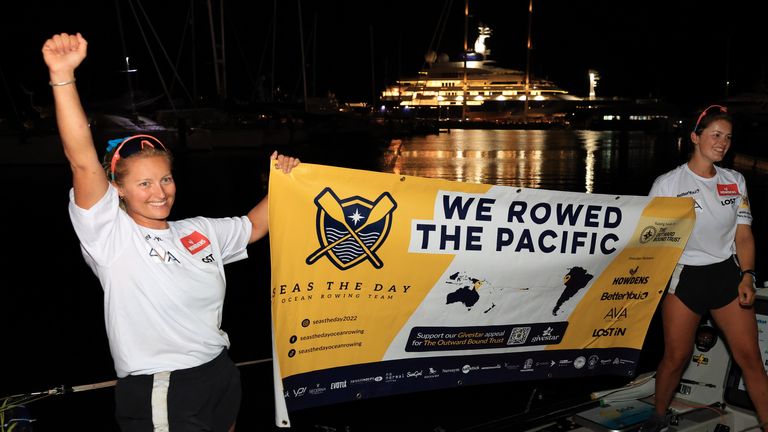
The idea came after Jess and Mim were Googling about difficult adventures, but the suggestions online "weren't quite cutting it", according to the pair.
"We kept circling back to the idea of the full Pacific and thought we have to go for the largest ocean out there," said Payne.
"We spent two years preparing, raising sponsorship money, and developing our website. We had to do courses, training in the gym, and learning how to pitch to companies.
"There was nobody to go to for advice because so few people had done it. Everything was such an unknown, and that was really hard."
How menstruating in the Pacific can be different
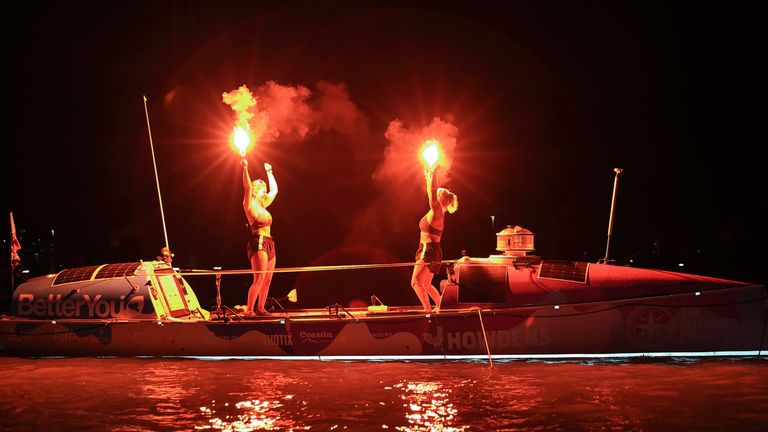
Being the first female crew also meant they had to take different measures when preparing.
"We had sustainable tampons, loo roll and wet wipes. It's pretty tough when you're rowing all day and getting stomach cramps, but we got through it," said Payne.
"My cycle was different, and I also got different symptoms. My cycle was different from the Atlantic crossing to the Pacific."
In April 2025, they took off from Lima, Peru, but had to be towed back to land after a rudder failure. They set off again on May 5 and shortly afterwards experienced similar issues.
"On the restart, we'd been experiencing major power issues which we couldn't solve for the rest of the crossing, meaning we had to switch off almost everything on the boat," Payne said.
"At one stage, our emergency hand pump broke, which we had to fix with a pair of knickers.
"One thing we've learnt from this trip is that when things go wrong, we can pull it out of the bag when we need to and we work well together."
Whale watching, growing greens and hallucinations
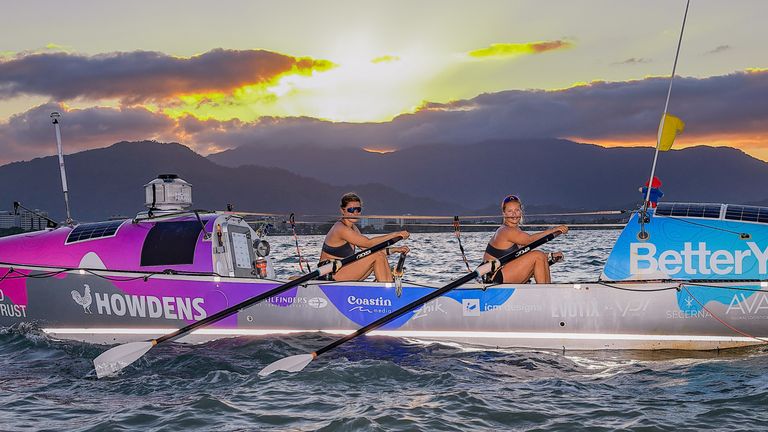
Payne and Rowe rowed in two-hour stints to help manage the load between resting, maintaining equipment and making food, and described the sleep deprivation as the "hardest part of the challenge" as it also prompted hallucinations.
"During the Atlantic crossing, there was a wave crashing against the boat, and I thought there was a wolf trying to get on the boat," Payne said.
"I also hallucinated a tree once, but it wasn't too bad. Most of the time, we'd pass out on the oars before we hallucinated."
Rowing wasn't the only activity to do. Home Harvest, a technology company that is reimagining food production, made pre-drill seed mats, allowing them to grow fresh radish and cabbage sprouts.
Choosing a highlight is particularly difficult - from shooting stars, sperm whales, and meteors to making each other cry with laughter. "We really did make the most of it," says Rowe.
"I don't know how we're going to top this. If you've got any ideas, let us know."
The rowers are aiming to raise money for The Outward Bound Trust, a charity that aims to help young people build confidence by taking part in outdoor challenges.