
Coronavirus: Extreme rower & cyclist Sarah Outen MBE on overcoming isolation
World record-breaking athlete Outen - who rowed from Japan to Alaska five years ago - talks combating adversity through her near-death experiences, with SSN's Kate Mason
Monday 27 April 2020 08:30, UK

The adventurer Sarah Outen MBE has made a career from coping with extreme isolation, travelling through some of the world's loneliest places. What she has learned has been helping others struggling with the impact of staying at home, reports Sky Sports News' Kate Mason.
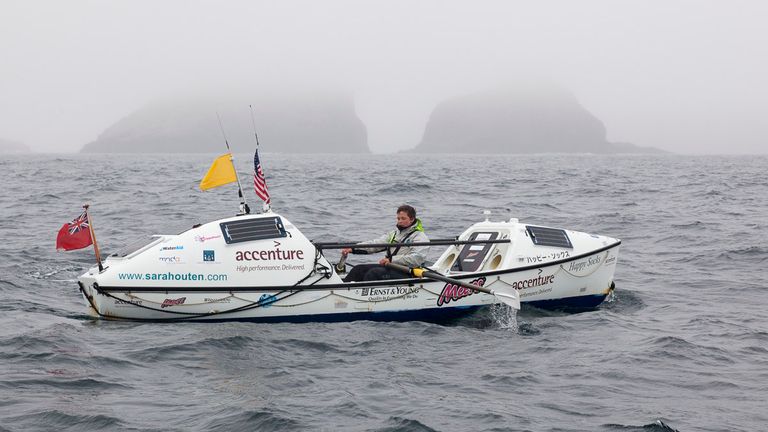
Outen became the first person to row solo from Japan to Alaska in 2015 - one of many records she broke that trip.
That challenge constituted a single section of her 25,000-mile expedition to circumnavigate the globe by boat and bike.
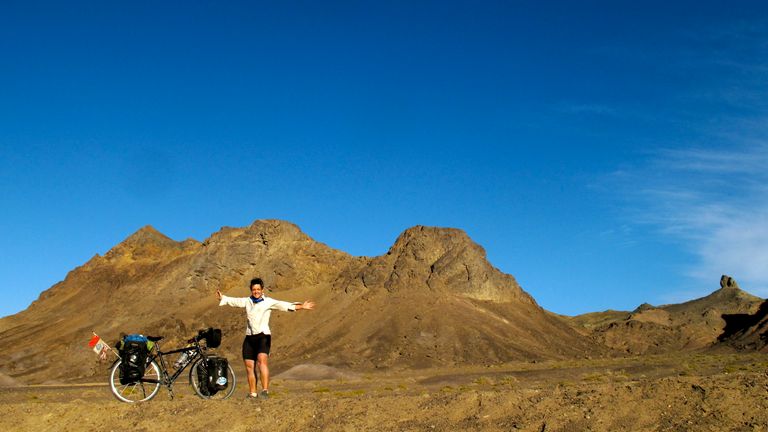
She recalls a particularly difficult stretch: "I'd been on my bike for 17 hours but I had to keep going. I was hallucinating but I knew I had to stay on my bike.
"So what I did was imagine the people I know and love all around me. And they were so real, and they stayed with me. And I kept going."
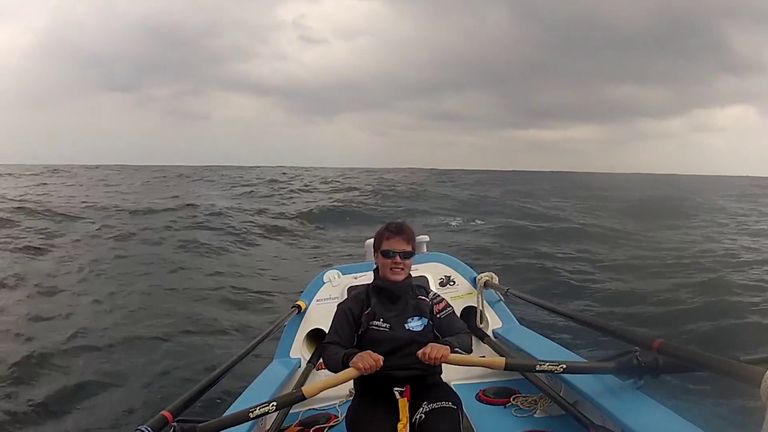
The strategies Outen picked up to deal with the loneliness, terror, and - occasionally - the mundane nature of the expedition have been crucial in her own daily life and struggles with depression ever since.
True, she's had more near-death experiences than your average member of lockdown Britain, but what she learned on her four-year challenge applies to all of us today.
- What next for Shelly-Ann Fraser Pryce?
- 'Being a lesbian is part of my identity as a sportswoman'
- 2020 European Athletics Championships cancelled
Call on your tribe
As the UK edges towards a return to social contact, here's what the 34-year-old suggests keeping in mind, starting with that hallucination on her bike in Canada...
She added: "We are sociable mammals: we need each other. When we are alone - when we feel like we are totally alone - that's when we are going to really struggle and feel as though we are not going to be able to get through life."
Sarah found picturing her closest friends and family gave her enough power to make it through that all-night ride.
It's a tool that climber Joe Simpson also called on in Touching the Void, his famous story of dragging himself back down the Siula Grande mountain in Peru alone after breaking his leg.
Most of us do not have to rely on our imagination to stay in touch with our 'tribe' right now.
But research in the Journal of Happiness Studies shows that if you picture people you care about and send love towards them, you will improve your mood.
Embrace the phone
Grandmas across the UK have been wowing their families over the last month by taking to video-networking apps with ease.
The phone can be an amazing tool, as Sarah found out: "I met Lucy [her wife] in 2013, about three months before I was due to go back to the Pacific.
"There was the irony that I had met the woman I wanted to spend my life with, but I was going away for two years.
"Ultimately it helped our relationship, because you have to learn to listen very carefully when you are communicating on a dodgy line from an ocean somewhere.
"One day, I just called her up on my satellite phone while halfway across the Pacific and I asked her to marry me. And she said yes!"
Don't beat yourself up
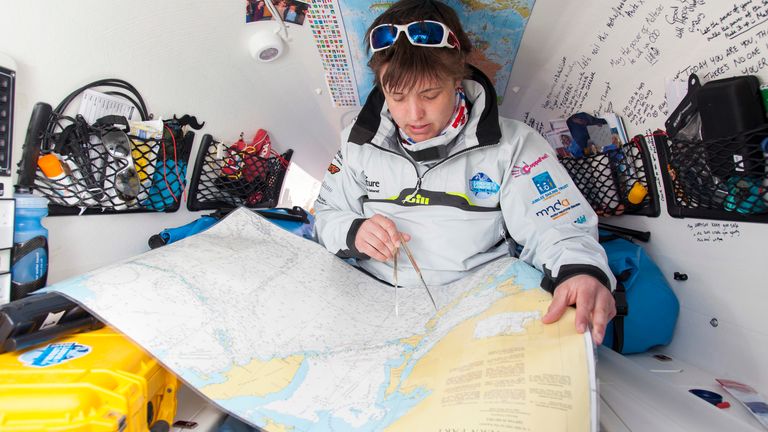
When Sarah met Lucy, she had been forced to take a break from her journey after she spent three days locked inside her boat Gulliver in the heart of Tropical Storm Mawar, with winds reaching 225km per hour.
Sarah had had the option to be rescued before the storm hit, but she rejected it.
When the storm finally died down, she had to be rescued by the Japanese Coast Guard. Gulliver did not make it.
She said: "I spent three days pinned to the bunk capsizing, capsizing, capsizing. But when I came home, I just expected so much of myself. I got into a really dark place with it. My to-do list terrified me.
"There was a trauma response that needed to happen, but I was battering myself for having stayed and not having taken the preemptive pickup to avoid the storm."
The deepest global recession in peacetime is currently predicted as productivity levels drop in the coronavirus crisis.
If you are struggling to readjust at the end of the lockdown, be kind to yourself - you are not the only one. Get rest. The physical impact of Sarah's journey lasted for years afterwards.
She continued: "I've had alopecia, a fibroid - that seems to happen when your hormones are all out of whack. It was removed by C-section basically.
"And it was a result of putting my body under all that stress and not resting. For three years, I was annoyed at my body for bleeding every day. But it was just trying to say to me: stop and rest."
Many have reported sleeping more than normal since the start of the pandemic. While excessive sleep can be connected to depression, if you can stick to a routine, then there can be benefits to a lie-in.
For starters, you get more REM sleep (why you are having more dreams) which helps the body to repair, as Sarah has eventually found.
Keep laughing
Spending 150 days alone at sea might not be everyone's idea of a good time, but Sarah managed to keep herself entertained, dressing up as people including The Queen for her stints at the oars.
She also found amusement at the impractical nature of the expedition she had chosen: "Yeah, sitting down in a kayak for 18 hours while you're on your period is not ideal.
"And then standing one foot on one boat and another on yours, wobbling above the ocean trying not to fall in. Pretty undignified.
"And what about trying to dispose of urine in a storm? Out the boat it goes... ah, it's all back in my face," she laughs.
Making the challenges of daily life into a game has made them easier to face, numerous research studies have found. And laughter keeps you healthy.
Plan for plenty of treats - we have earned them. Even the UK's most rugged explorers are finding the time to relax and enjoy themselves at the moment.
You can watch 'Home' - Sarah Outen's award-winning documentary about her journey - here.