America's Cup: An historic race being driven by modern technology
Sky Sports will show the America's Cup World Series, Christmas Regatta and PRADA Cup Challenger Selection Series, before culminating with the 2021 America's Cup Match
Thursday 22 October 2020 09:11, UK
With just under two months to go before we see all the America's Cup race boats competing in Auckland, Sky Sports takes a look at the British team's design process and how technology is driving this historic race.
The America's Cup was first contested in 1851, it is the oldest trophy in international sport and pre-dates the modern Olympic Games by 45 years.
Despite its age, the America's Cup is far from being antiquated or old fashioned, instead it is packed with innovation, world-class technology and has moved to a place that has surprised even the most experienced of sailors, Sir Ben Ainslie.
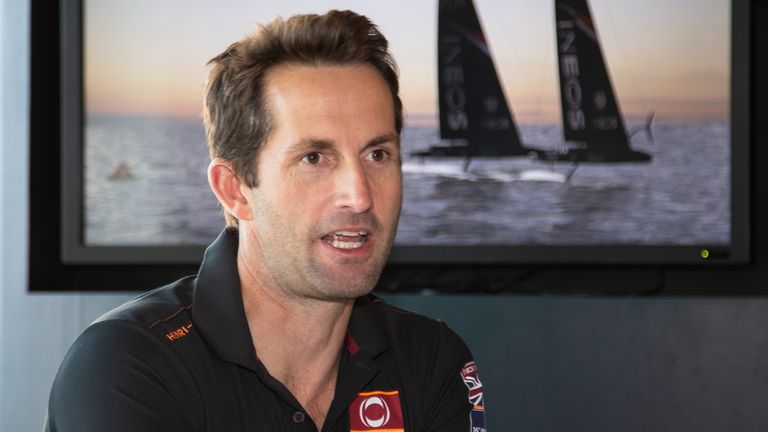
Ainslie, who is the team principal and skipper of INEOS TEAM UK, has been sailing for 35 years. He is the Sir Steve Redgrave of the sailing world, having won medals at five consecutive Olympics from 1996 onwards, including gold at the four Games held between 2000 and 2012.
In 2021 his challenge will not be of the Olympic variety but on-board their America's Cup race boat - Britannia - with 10 team-mates. Before addressing the position the sport has moved to, Ainslie shared what he expects from those around him.
"On and off the water, everyone has to have the right attitude and the right personality," he told Sky Sports.
"Honesty... I always ask for honesty. Quite early on, we were fortunate to do some training with the military and those teams are out there in life and death scenarios.
"The one thing that they will tell you, is that they have to have that absolute honesty between them. If someone has made a mistake, they need to share it, it's the only way that as a group you can improve and move forwards.
"Also, that there aren't real egos… there's a term or a policy that we use which perhaps you can't put in print (!) and we try and work off that!"
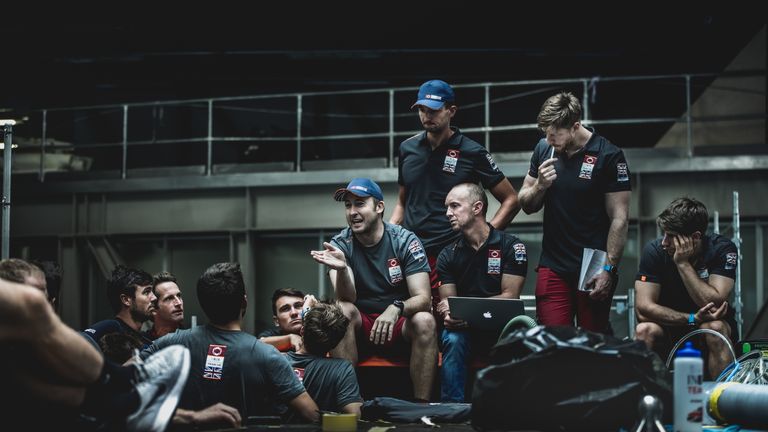
As a group, Ainslie and his team will be on board an AC75 which is a 75ft foiling monohull, essentially that is a seven-tonne boat which comes out of the water and flies a few metres above it around 60mph.
"If someone had told me, as an eight-year-old learning to sail, that we'd be doing what we're doing now, I would have just laughed and thought that it was absolute lunacy," he said.
"I couldn't possibly have dreamt that we'd be doing what we're doing."
Now, logic tells us that a seven-tonne object does not just lift out of the water without a highly-advanced and complex design process, and what made this process even more challenging was the fact that teams were not allowed to test in water or wind tunnels.
This was a stipulation within this year's rules, the AC75 Class Rule, which was created by the reigning champions Emirates Team New Zealand.
As a result, all teams have had to rely heavily on technology and computer simulations to design and refine every element of their boat.
The simulation side is an area which Emirates Team New Zealand were already well-versed on and for INEOS TEAM UK, they turned to computational fluid dynamics (CFD) and the world of AWS high-performance computing.
At the heart of that process is CFD engineer Max Starr, who has a degree in aerospace engineering and then a PhD, which shifted from focusing on the atmospheric re-entry of spacecrafts, to a 'purely numerical CFD' PhD.
Starr joined the team halfway through their last America's Cup challenge and, having sailed since he was a boy, brings both technical and practical knowledge to his role as CFD engineer.
"There's no real part of the boat's externals which hasn't gone through mine and my colleague's hands and that's incredibly exciting," he said.
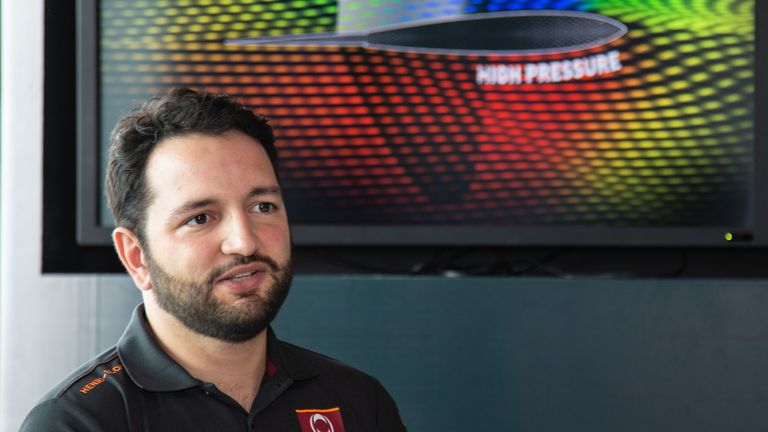
"Pretty much everything that you will see externally on the boat, will have gone through CFD simulation in some form or another
"Compared to the last Cup, the boats are much more complicated because of the pure physics and the geometry of the designs.
"Also, there's more around it you can change within this year's rules, so the optimisation window that you can look at is much bigger."
Despite Covid-19 taking away time on the water in their smaller test boat, INEOS TEAM UK were still able to move forwards using their technology and in-house simulators.
"The data is fed through a Velocity Prediction Programme [VPP] into the simulator to run it," Starr explained at INEOS TEAM UK.com
"It means that when we're designing components, even though we've never built the parts, we can 'sail' the boats and compare the different designs back-to-back."
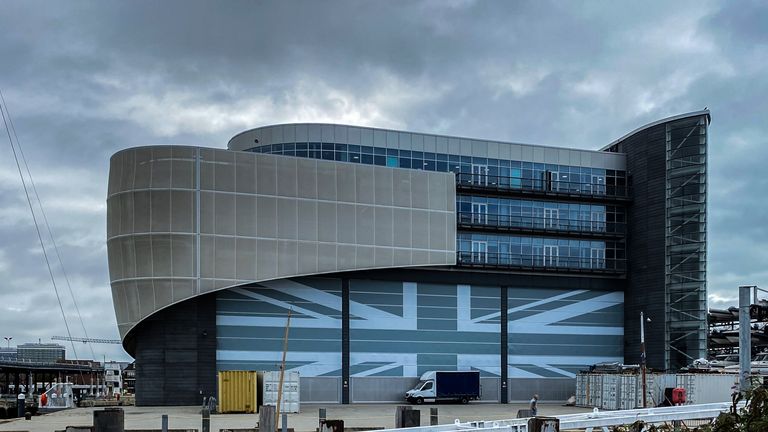
With the size and scale of the project, INEOS TEAM UK turned to AWS' high-performance computing Cloud to enable them to accelerate the number of simulations they could perform - meaning the team could cover more bases in a shorter space of time.
"AWS' Cloud allowed the team to have much finer grained simulations and get much closer to reality," Brendan Bouffler, Principal Product Manager at AWS, said.
"The best thing about it is the human productivity element to it, as it enabled someone like Max [Starr] to turn around the analysis of the outcomes in minutes, hours or days, as opposed to weeks, months and years.
"It also meant that Max could be analysing scenarios that they simply didn't expect to turn up, but that turned up because they were able to test so fully. Ultimately it means that they can be in a much better place come the race."
With the use of their cutting-edge technology and the dedication of the entire team, INEOS TEAM UK were able to complete the build of their second race boat on time.
The process took over 46,000 construction hours and 90,000 design hours, and added to the time spent working on their earlier test boat and first full-size race boat.
After a successful 12,000-mile journey on a cargo plane to New Zealand, Britannia's unveiling revealed the fruits of that design process and their CFD simulations. Visible to the naked eye is a different hull shape to their first race boat and a different deck layout.
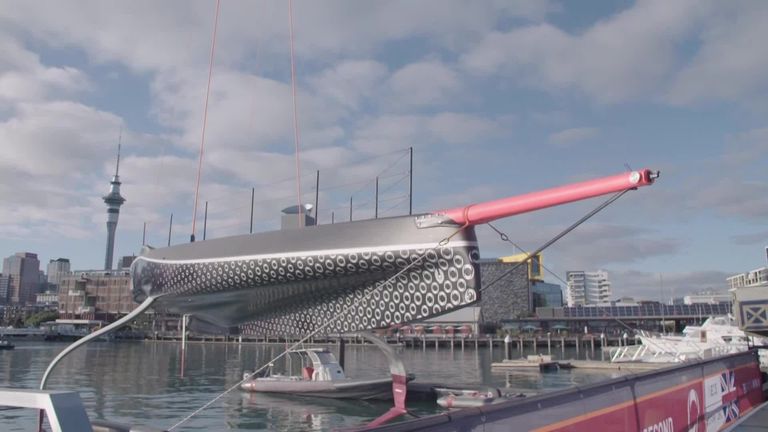
"This is an incredibly exciting class of boat at the bleeding edge of our design field," Nick Holroyd, INEOS TEAM UK chief designer said. "We feel incredibly lucky to be involved in these types of projects."
"I think Britannia looks amazing," Ainslie added. "It's the best-looking boat I've ever seen and I can't wait to put her through her paces out on the water. We hope that she goes like a rocket, just as she looks like a rocket.
"The whole team, particularly the sailors, are so excited to get out on the water and then pretty quickly get lining up against the competition, to see how we go pace wise."
The World Series and 'Christmas Race' will be the first time the AC75s will be pitched against each other, and teams' design choices be tested on Auckland's waters. From there it is all about the final hurdle to clear to reach the America's Cup race itself - the Prada Cup Challenger Selection Series in January
Watch every moment of the America's Cup challenge, live on Sky Sports. Coverage starts with the America's Cup World Series on December 17.