Oklahoma City Thunder guard Russell Westbrook pulls out of US team for Rio Olympics
By Peter Gilbert
Last Updated: 11/06/16 11:40am
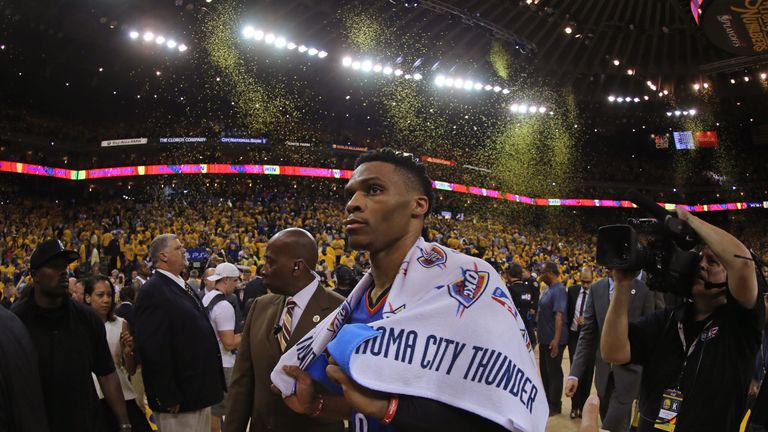
Oklahoma City Thunder guard Russell Westbrook has withdrawn from consideration for the United States team for the Rio Olympics.
"After speaking with my family, I have decided to not participate in this year's Olympics," said Westbrook, who won gold at London 2012.
"This was not an easy decision, as representing my country at the World Championships in 2010 and the Olympics in 2012 were career highlights for me. I look forward to future opportunities as a member of USA Basketball."
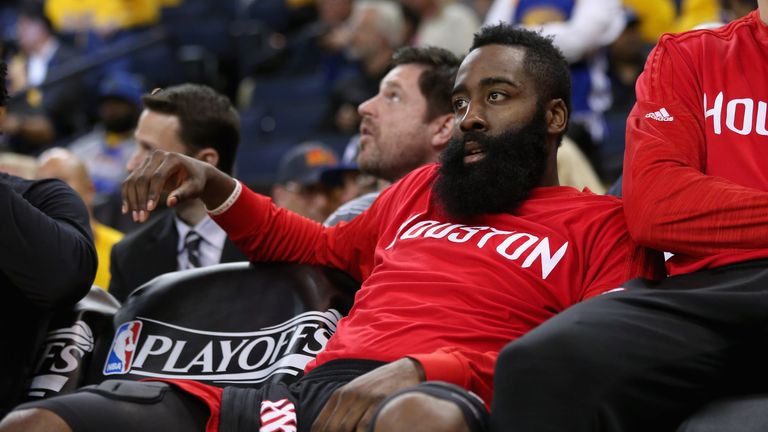
Houston Rockets high-scoring guard James Harden announced just hours after Westbrook's withdrawal that he had also pulled out of the Rio-bound team.
"As a result of many difficult conversations with my family, the Rockets, and trusted advisors, I've notified Jerry Colangelo and Team USA that I will not be competing at the 2016 Olympic Summer Games in Brazil," Harden said in a statement.
The Golden State Warriors guard missed four games in their post-season run after spraining his right knee but has returned to action and the Warriors lead the Cleveland Cavaliers 3-1 in the best-of-seven NBA Finals.

Prioritising the NBA has also hurt Canada's Olympic hopes, with the news Minnesota Timberwolves swingman Andrew Wiggins will not play for his country at the Olympic qualifying tournament in the Philippines in July.
"I understand my increased role with the Timberwolves and dedication to the upcoming season must have my total focus," he said in a statement.
While hoops star Westbrook did not specify a reason for his decision, cyclist Tejay van Garderen last week withdrew from consideration for the US Olympic team over concerns that the Zika virus outbreak could present risks for his pregnant wife.

US health officials have concluded Zika infections in pregnant women can cause microcephaly, a birth defect marked by small head size that can lead to severe developmental problems in babies.
The World Health Organisation has said there is strong scientific consensus that Zika can also cause Guillain-Barre, a rare neurological syndrome that causes temporary paralysis in adults.
The connection between Zika and microcephaly first came to light last year in Brazil, which has confirmed more than 1,400 cases of microcephaly that it considers to be related to Zika infections in the mothers.