
Olympics: LGBTI stories among Rio 2016 talking points
Monday 21 August 2017 16:54, UK
Anti-doping, Zika, and everything in between from A to Z... there seems to be no end of Olympics talking points, even before Rio 2016 has begun.
Among them are several related to LGBTI inclusion in sport. Many of the lesbian, gay, bisexual, transgender and intersex athletes competing in Brazil will be trailblazers, and their stories are already picking up worldwide attention and generating debate.
Ranging from 'rainbow moments' which will inspire others to potential topics of controversy, Sky Sports has selected four to follow during the course of the Games...
Hockey's happy couple
"16 years, 21 tournaments, 10 bronze, 4 silver, 5 surgeries & finally a GOLD!" Helen Richardson's tweet after England's surprise victory over the Netherlands in last year's EuroHockey Championships summed up just how much it meant to be on top of the podium at last.
After the satisfaction of third place at London 2012, a serious back injury had threatened to cause her to hang up her hockey stick altogether. This was a career high to rival Olympic bronze - and a feeling surpassed only by the joy of tying the knot with team-mate Kate Walsh in September 2013.

"I think it probably was the best day," Helen told Sky Sports' Sportswomen. "Obviously winning an Olympic bronze and a European gold is pretty special, but that was definitely the best day of my life."
Partner Kate, the GB captain, admits she is still "obsessed" with hockey but also filled with pride at being married to Helen. They will be the first gay married couple to compete together at the Olympics - their fourth Games as team-mates.
"We've had some lovely letters of people saying 'I was in the same position and you've made me feel confident about coming out' - and I think the more we can just normalise it, that's the best thing," said Kate.
The British women's team begin their campaign on Saturday night against Australia at the Olympic Hockey Center in Deodoro (kick-off 00.30am BST), with more Group B matches to follow against India, Argentina, Japan and the USA. A top-six finish in the pool earns a quarter-final berth.
The intersex athletes issue
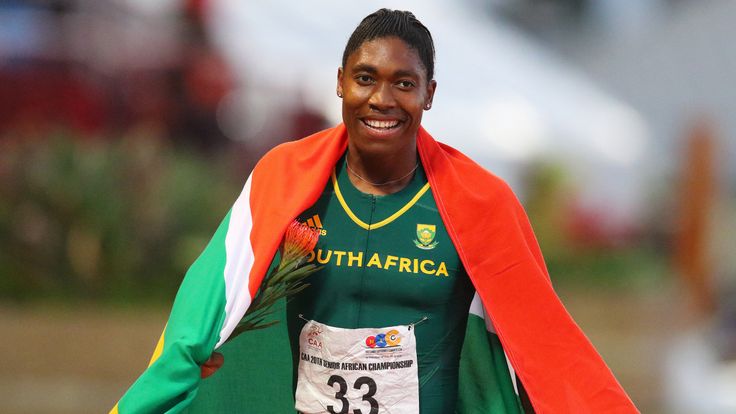
At the time of writing, some bookmakers have South African 800m runner Caster Semenya as short as 1/20 for the women's final on Saturday, August 20, on what will be the last night of athletics in the Olympic Stadium.
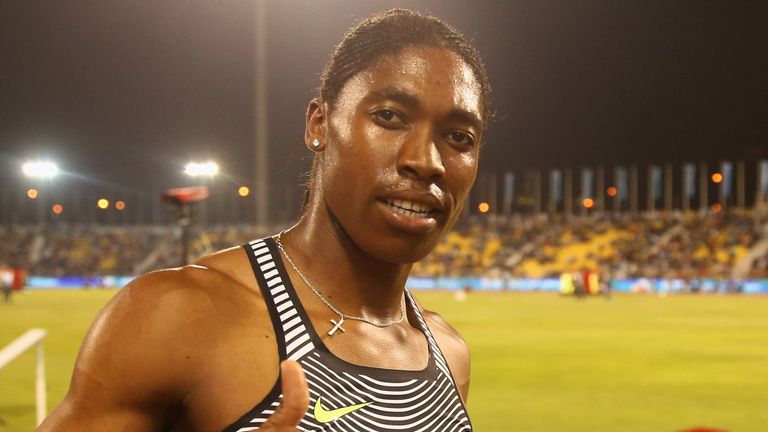
She is also considering entry into the 400m (Semenya is keen, her coach less so) so she may have already struck gold in Rio earlier that week. But even before the starter's gun is fired, a storm is brewing - due to Semenya's status, in sporting terms, as an intersex athlete.
Seven years ago, on the day Semenya won gold as an 18-year-old at the World Athletics Championships in Berlin, it emerged the IAAF had requested she undergo a gender test.
South Africa rallied around its young star in the ensuing row - accusations of insensitivity, invasion of privacy and even racism abounded. Eventually, in July 2010, she was cleared to return, but within a year she had to abide by new rules targeted at female athletes with hyperandrogenism, a medical condition which causes the body to produce excessive levels of testosterone.
For Semenya, medication was necessary to suppress those levels, and her winning time from the 2009 final remained a personal best she couldn't beat.
She was still a force, though, winning silver in the 800m at London 2012 behind Russian athlete Mariya Savinova (a result now likely to be overturned, with the World Anti-Doping Agency having recommended Savinova be issued with a lifetime ban).
After a subsequent two-year period blighted by injury, she moved to a new training base at Potchefstroom and soon began to recover her form.
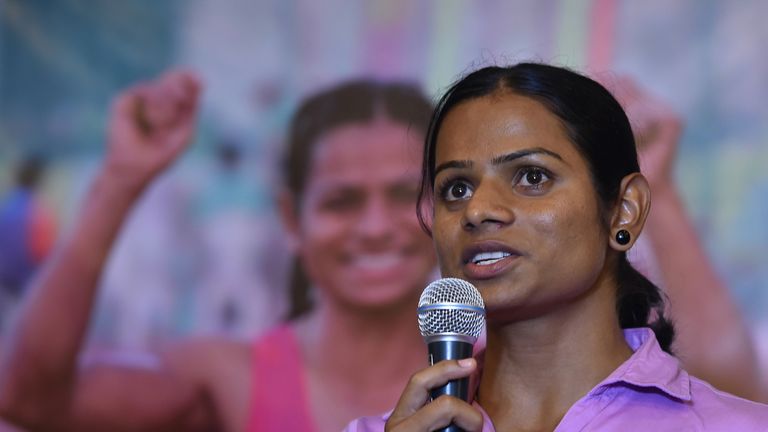
Then, 12 months ago, the Indian sprinter Dutee Chand's appeal to the Court of Arbitration for Sport resulted in the suspension of those IAAF hyperandrogenism rules, in order to gather further evidence.
Semenya no longer had to take the testosterone-suppressing medication. Another improvement followed, and at the Diamond League meeting in Monaco last month, she finally cracked her PB time.
However fast Semenya runs in Rio, it seems inevitable that a debate will rage on whether or not intersex athletes have a significant advantage over their rivals.
Rule changes too for transgender athletes
In January, the IOC adopted new guidelines which allow transgender athletes to compete without having had gender assignment surgery. Instead, transgender women must demonstrate low testosterone levels in order to gain eligibility.
On July 4, a Mail on Sunday article claimed that two British athletes were set to become "the world's first transgender Olympians" - their selection was not yet confirmed at that time, but both were expected to become part of Team GB.
The article went on to quote Delia Johnston, an adviser to several sporting organisations on transgender issues, who explained that both athletes "had transitioned years ago" but were anxious of the effects of exposure.
Johnston said: "If they were in a gold or silver medal position, they would probably drop back because their fear of ridicule and total humiliation is so massive."
Their fears are understandable. With medals at stake, the reaction of fellow athletes, national sporting bodies and even political figures could be filled with emotion, if they feel the changed IOC guidelines have worked against them.
However, Olympic diving champion Matthew Mitcham said he was much more hopeful about potential improvements in gender diversity.
"Personally, I'm very excited about the gender inclusivity of this Olympics with at least one intersex athlete and hopefully one trans athlete," he wrote on Instagram.
"I so wish this had happened during my time (or sooner) but it's a step in the right direction. I can't wait to see this evolution of sport."
Being out: Does it make a difference for gay athletes?
The growing influence of LGBTI voices in sport has even resulted in the Olympic Charter itself being changed ahead of Rio 2016.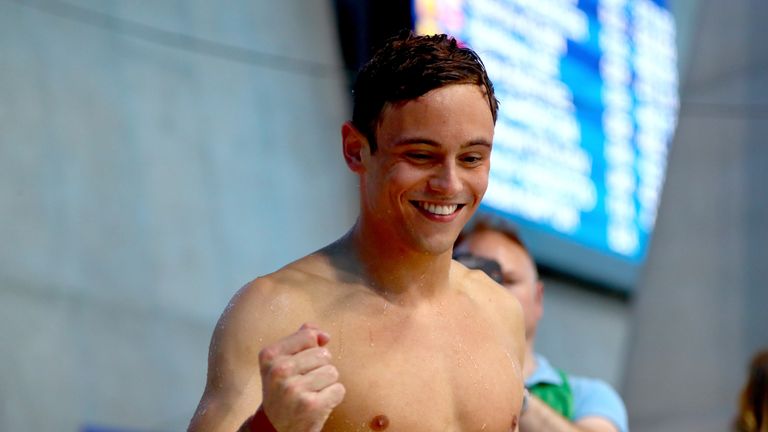
Principle 6 of the Charter now reads: "The enjoyment of the rights and freedoms set forth in this Olympic Charter shall be secured without discrimination of any kind, such as race, colour, sex, sexual orientation, language, religion, political or other opinion, national or social origin, property, birth or other status."
For gay athletes, the addition of 'sexual orientation' into this anti-discrimination clause is a proud milestone - and the importance of visibility should not be underestimated either.
Tom Daley, who admitted recently that he almost quit diving before meeting his fiance Dustin Lance Black, was asked in a Guardian interview last year if not coming out could affect a sportsman. "Yes," he replied, "because you can panic about it. It can be in your head; it becomes a bigger thing than it needs to be. So yes, definitely."
At the time of writing, there are a record 44 'out' LGBTI (lesbian, gay, bisexual, transgender and intersex) athletes in a total of over 10,500 competing at the 2016 Games, according to Outsports.com - up from 23 at London 2012.
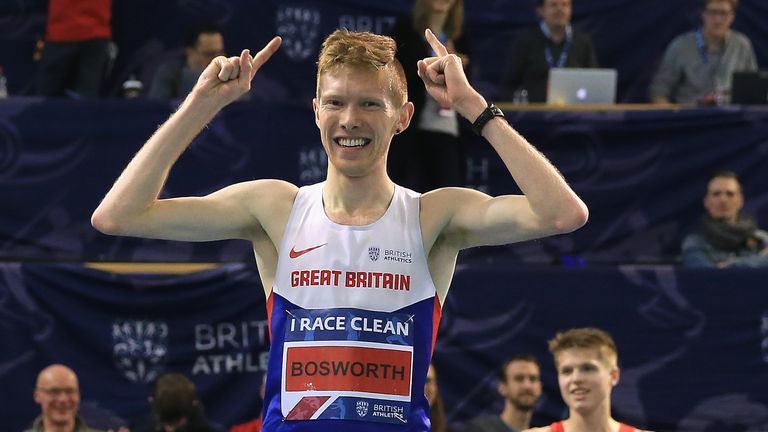
Daley is one of eight members of Team GB that are openly gay or lesbian, and all are conscious of the added 'role model' status that entails.
Race walker Tom Bosworth told the Yorkshire Post: "I don't see that as a bad thing, I kind of honour that. I want to do my best for the LGBT community."
When the Daily Mail asked what topping the Pink List in 2012 meant to her, Leeds' golden girl Nicola Adams replied: "I was really proud of that."
Excelling at the highest level requires immense focus, but for gay athletes, personal testimonies suggest coming out is more likely to help than hinder.