
British Paralympic chief defends classification system for athletes
Wednesday 7 September 2016 20:56, UK

The head of the British Paralympic Association has defended the classification system for Paralympic athletes.
Bethy Woodward, a silver medallist in the 200 metres (T37) at London 2012, has revealed she quit the sport because she claims she wasn't competing on a level playing field.
Woodward believes that when she started in the sport, the T38 category was primarily people with cerebral palsy (CP) but in four years there are now a lot more people with cerebral palsy like symptoms.
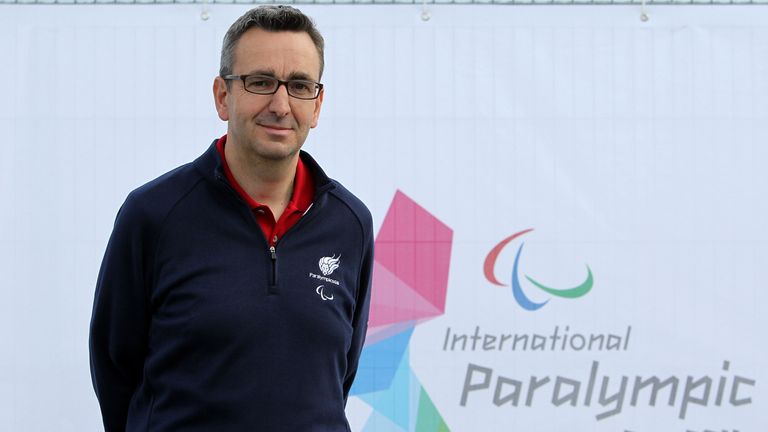
But Paralympics GB chief executive Tim Hollingsworth insists he has faith in the classification system despite the difficulties.
He told Sky Sports News HQ: "We have to understand that every athlete on our team has got a confirmed classification.
"That means they've been assessed both at national and international level and their classification has been deemed to be appropriate. So we have confidence in those classes and we have confidence in those athletes classified.

"The big issue of classification is that at some stage within each class, the line has to be drawn. It's a continuum from one end to the other and somewhere there's going to be an athlete in the same class who perhaps has a slightly different level of impairment to another, but it doesn't mean they are inappropriately classified."
Paralympics GB Chef de Mission Penny Briscoe agrees that there are inherent problems with the system, but believes it remains as fair as possible for everyone.
"It's a difficult one," she said. "If we take wheelchair tennis for example and the men's open class, you could have someone with a spinal cord injury playing against someone with an amputation, so in that way you would argue there's some disparity.
"However, you can't have a category for every level of impairment. What the IPC and the international federations are trying to do is get it as good as it can be in what is an ever-evolving high-performance system within Paralympic sport."