
Phil Clarke asks if the gulf between Super League and NRL has narrowed over the past 15 years

Wednesday 18 February 2015 17:41, UK

Can Super League clubs compete with their National Rugby League counterparts over 80 minutes? Phil Clarke considers the gulf between the two competitions.
Live World Club Series Rugby League


Live World Club Series Rugby League
Live World Club Series Rugby League
The World Club Series has finally arrived. It has been several years in the making and there is definitely an air of anticipation among players and fans. Super League versus the NRL. Which one is the best?
If it is simply a case of which teams win then it will be easy to answer that question on Sunday night, but perhaps we need to look a little deeper at times.
Which is the best competition to watch? That’s hard to say as it depends on what you are looking for. Do you want to see tries, passes, offloads? Do you like it when players take risks? Do you like a faster play-the-ball with less emphasis on wrestling around the ruck? Is the atmosphere in the ground and the noise made by the fans important to you? I suppose it comes down to individual preference.
This weekend is the first chance in over 15 years to see if the top teams in Super League can compete with their NRL counterparts over 80 minutes. We’ve had the annual World Club Challenge, but nothing like this since 1997 when the gulf between the competitions was about as big as the gap between the two countries.
The expanded World Club Series offers rugby league a chance to attract new interest. Anglo-Australian sporting rivalry has existed for over a century, and this weekend it has rugby league at its core.
For it to be successful, I feel we need three things to occur:
- Large crowds and an atmosphere that creates the stage for the players to perform on. Even if your favourite team are not playing this weekend, then the sport needs you to show your interest by being at a game.
- A fast game which flows and has few penalties, but some of the biggest ‘hits’ and best tries from either code of rugby and from either hemisphere.
- A close finish with the result in the balance going into the last minute, and maybe even a one-pointer to make Stevo happy!
I’ve no doubt that with these six great teams we’ll be treated to some magical moments of skill and brilliance. In athletics, world records tend to get broken when an athlete is pushed to their limits in competition. In a rugby league sense, the players may need to run ‘personal bests’ and break the boundaries that they previously thought were the limits of their capabilities. The players need to go harder, faster and further than ever before.
Intensity
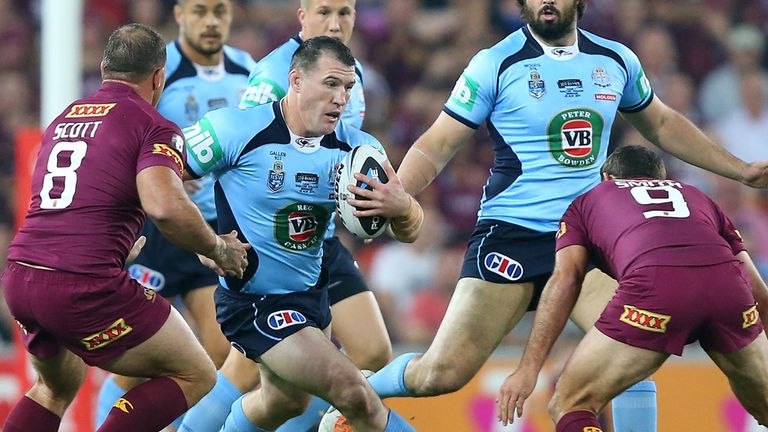

I was once fortunate enough to spend some time listening to Tim Sheens, the current coach of the Kangaroos and a man with a global awareness and appreciation of the game. He explained that one of the advantages Australian players had/have over their New Zealand and English rivals was their experience of playing in State of Origin games.
Sheen said that the speed and intensity of these games gave them the 13-a-side equivalent of a ‘near death’ experience. Once they knew how hard and far they could push their bodies, and come out alive, it helped them in games of the highest intensity.
Well many of the players at Warrington, Wigan and St Helens may be going into their ‘near death’ experience this weekend with the intensity and pace of the play higher than they may have seen before. The questions will centre around their ability to cope.
I remember playing in my first World Club Challenge match against the Penrith Panthers in the early 1990s. I could not believe how quickly the game was played, it was as if I was watching, and trying to play, in a game that was in fast forward.
Advantage
All the English sides are undefeated after two rounds, although Wigan haven’t looked that impressive and will need to improve to challenge the Brisbane Broncos. St Helens have been excellent in their two games and Warrington have only conceded three tries in 160 minutes of Super League action so far.
Those games should give the English teams some advantage, although the concept of home advantage is perhaps overrated in my opinion. I do appreciate that some of the Aussie players have had very little time in the country, and the travel can cause fatigue for some, but Wigan proved in 1994 that you can win when you play away from home, as have many Australian teams on their trips to the UK.
While looking at the games from round two this week, I was fascinated to see that in Warrington’s game at the KC Stadium, the ball was in play for over 60 minutes. In fact it was the second game this season when the ball has been ‘live’ for over an hour.
Several people keep telling me that the NRL is faster than Super League but I’m not sure what they mean by this. Last year in Super League, the average ‘ball in play’ time was 51 minutes and 13 seconds out of a possible 80. The NRL equivalent was 50 minutes and 57 seconds, so maybe it’s not just about the amount of time the game is active. Interestingly, the average time that the ball is in play in an Aviva Premiership rugby union game is 31 minutes 50 seconds.
I would be very interested to hear your comments on this subject. What do fans want to see in a game? Is it what takes place when the ball is in play that really matters?
This weekend will answer a lot of questions about the playing strength of the top Super League teams. Some administrators and coaches in this country have claimed for several years that our ‘best’ are as good as those in the NRL.
When the final hooter sounds at Langtree Park on Sunday evening we’ll know if we really have made up any ground in the last 15 years.
Watch the World Club Challenge Series live on Sky Sports 1, starting with Warrington Wolves v St George Illawarra Dragons on Friday from 7.30pm