
Kate Hardcastle on saving Bradford Bulls, reviving rugby league and inspiring a generation
Tuesday 29 October 2013 12:16, UK
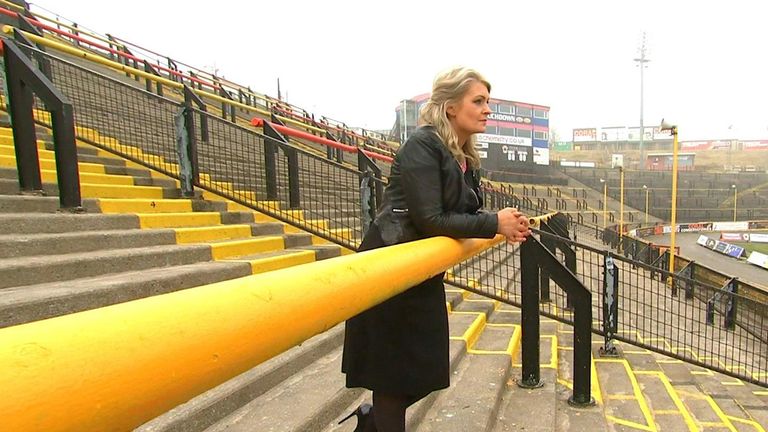
Kate Hardcastle remembers the moment she fell for the club she would one day help drag back from the abyss.
Hardcastle's remit (she is contracted to 20 days' consultancy per year but clocks up many more hours) is focused on the areas she believes the Bulls - in a struggling Yorkshire city with a fit-again football team - must embrace: smarter branding and marketing, with an emphasis on women and family. She has organised matchday childcare, charity fundraisers and fashion shows, remodelled the club's food and merchandise offerings, introduced women's groups and local businesses to Odsal. Rugby league chiefs would do well to take note: a damning report in January revealed that Super League clubs had combined debts of more than £60m. "Here's where I go from fan to businesswoman, trying to sell a product," she says animatedly. "I would want to take the sport to wider groups of people; that's how I would gain new sponsors, that's how I would gain extra revenue and reignite the media interest. "It's about attracting people who wouldn't consider rugby league as their first choice, who might not be from the areas where it's traditionally appealed. What has rugby league got to offer? We need to showcase it as being really economical, really fun as a family day out." Glamorous, smart, a multi-tasker - she is also founder of a charity, a guest speaker, a semi-professional singer and a mother to a four-year old - Hardcastle has been dubbed the First Lady of rugby league, the sport's Karren Brady. She laughs at the comparison with West Ham's Apprentice-starrring vice-chairman but understands why it lingers, an indictment of the sporting boardroom where men still grossly outnumber women. Minister for Women, Maria Miller, wants 25 per cent of boardrooms at sporting bodies to be made up of women by 2017. Is enforced quotas really the way to go? "Of course someone should get a job on merit but something needs to change," Hardcastle insists. "There is an issue of opportunities not being there so maybe we have to look at quotas as gateways. I had knowledge of the sport, of the club and of business but I don't think this opportunity would have been as readily available had Bradford not been in the situation they were in, I'm very honest about that. "Clubs need to understand which skillsets are needed and bring those people in - have they got someone to increase the female fanbase or improve the family experience? We've got to make sure the balanced boardrooms are there and if we need a quota to change that forever, let's have one." There is another childhood memory that still feels fresh as Hardcastle speaks passionately about changing the make-up of the boardroom, of the terraces. She was 11 and angry, angry that her teachers had told her rugby was not for girls - until her father set up a team and, with no one else to play, pitted them against her brother's side. "We played on a professional pitch, we beat the boys and I had the top tackle score," she smiles. "I remember the adrenaline rush. Life was never the same. "You can get bogged down in the today when you're actually part of the journey. I'm a baton-carrier, I can help make or break the opportunities for my daughter and her generation, whether that's in sport or in business. That's what gets me up in the morning."