
Phil Clarke: Super League could benefit from outsider perspective

Thursday 25 June 2015 11:50, UK
Sky Sports' Phil Clarke says Super League teams could benefit from taking on coaches that haven't played professionally.
Rugby League used to pride itself on being a ‘leader’ for team sports in the UK. It once led the way in areas such as sports science and analysis. It led the way with rule changes and has never been afraid to innovate both on and off the field. However, it’s lagged behind in one very important area: coaching. Well, more specifically, head coaching of the professional teams in the top division.
All 12 of the teams in the First Utility Super League are coached by men who have played the game professionally. With the exception of Brian Smith, the rest have done it in either the Super League or the top league in the UK before we switched to a summer competition.
They were all well known in the game before they took on the role of managing and improving their players. But I wonder if it’s the best way. Would we do better if people from outside the professional game were given a chance to work in it?
Let’s look outside Rugby League and consider what happens in football. Neither Jose Mourinho nor Brendan Rogers played the game professionally, nor did Andre Villas Boas, who is the current boss of FC Zenit St Petersburg, the current Russian champions. Few could argue that these have been successful in the most popular team sport on the planet and yet none of them played in the professional top divisions.

Some of the most dedicated and intelligent coaching brains in Rugby League are trapped in the schools and the community game. Transferring them into the professional game is the next frontier that the sport needs to cross.
In Scotland, Rangers have just appointed a man called Mark Warburton, whose playing career took place at Enfield and Borehamwood - two teams that most people have never heard of.
His day job used to be as a currency dealer in the City of London, but he’s always had a passion for football and decided to pursue it with enough determination that he’s finally managed to break through that invisible barrier which often prevents people from the outside getting into the professional game.
As a youngster he was an apprentice at Leicester City, so he clearly had the physical ability to play the game to a high level, but I wonder if a rugby league club in this country are brave enough to make someone their head coach in Super League if he hasn’t been a professional player.
Respect
We all know that it’s not necessary to have been a great player to be a great coach. In fact, I often think that it can be an obstacle. Michael McGuire and Trent Robinson are examples of successful coaches who never played at the highest level of the game. In fact they were just second team players for the most part. They have both proven themselves to be outstanding coaches.
Many people in this country tell me that the NRL is ahead of the game over here and on this point I slightly agree. In recent times they seem prepared to give a chance to someone who wasn’t a player.
Daniel Anderson worked his way up as a junior coach at Parramatta Eels before the New Zealand Warriors took the brave decision of appointing him as their head coach in 2001. His team made the Grand Final in the following year and he was voted the Coach of the Year. He then went on to become the coach of New Zealand before he joined St Helens in 2005.
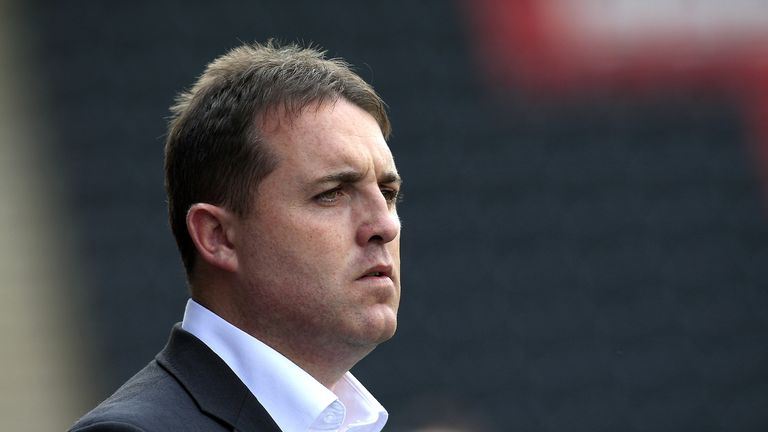
Now that’s 10 years ago and you could say that we are still waiting for an ‘outsider’ to do the same in the Super League. Trent Robinson was very successful in France which clearly helped him to get the job as boss of the Roosters, but would he have been given a chance in the UK?
The only team that I recall attempting to do something similar in recent years were the Salford City Reds. Back in 2001 they appointed Steve McCormack to be the boss when he was just 28 years of age. He’d never played at a professional level and was sadly sacked 10 months later.
He clearly has a passion for coaching and has worked at several clubs since then, but never at the highest level of the club game, even though he has coached Scotland for over a decade. Do we have a perception problem that prevents us from respecting someone who has not played?
Who first?
Well, I am slightly wrong when I said that the NRL was ahead of us. One such example was a man called Joe Coan who spent time coaching both St Helens and Wigan in the 60s and 70s. He had never been a professional player and was a school teacher in St Helens.
He combined his teaching career with his coaching one and was very well respected. However, he faced a criticism that other teachers have also suffered when they have worked at clubs; players say they talk to them like teachers!
At one time I thought St Helens would lead the way and appoint a man called Derek Traynor. He’d only ever played in the community game, but then went on to work with Mike Rush as part of the youth development team, which is now his area of expertise and interest. I think that that chance has passed.
Another possibility is a man called John Winder who works at Wigan. He used to work for the local council in sports development before moving to Australia and working as a community coach for the Melbourne Storm. He returned to Wigan as head of youth in 2011 and has slowly worked his way up from there.
Live Ladbrokes Challenge Cup Rugby League


At present, he is one of the assistants alongside Paul Deacon. It is worth remembering that Paul has played in Grand Finals and international Test matches.
Both would have their strength as coaches, and Paul may be far better than John - I don’t know - but should their playing careers influence their future coaching ones?
John is not the type of person that I am thinking of here though. I was thinking of a person with more experience in life. I am fascinated to see if the game is open enough to a man or woman who has gained experiences other than those from a training pitch or dressing room. Those who have managed people before, worked with budgets, and are experts in teaching and leadership.
Those of you who may have laughed when I mentioned women need to be made aware; some of the coaching that takes place at a few of the leading football clubs in the world have sessions that are led by women.
Some of the most dedicated and intelligent coaching brains in rugby league are trapped in the schools and the community game. The coaches work as volunteers in addition to their day jobs. Transferring them into the professional game is the next frontier that the sport needs to cross.