Why is there a lack of British drivers in Formula 1?
Is it tougher than ever for British drivers to make it in F1 and could British motorsport heading for a crisis?
Monday 12 December 2016 09:23, UK

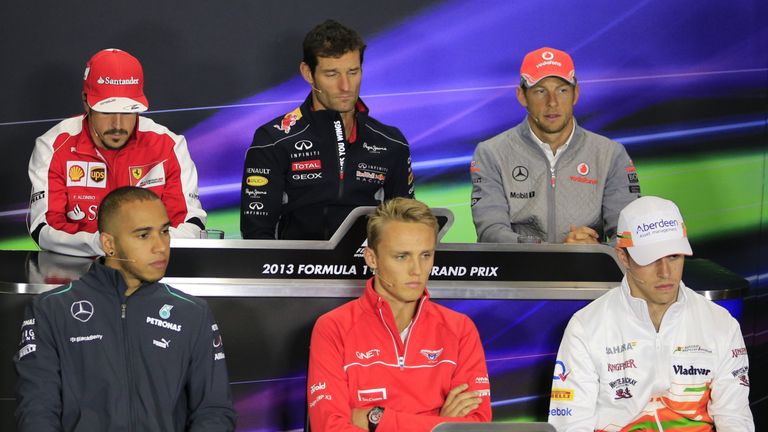
The F1 grid used to be dominated by British drivers, but 2017 may see only two Britons - Lewis Hamilton and Jolyon Palmer - taking the start in Australia.
As recently as 2013, Britain had four drivers on the grid in Hamilton, Jenson Button, Paul di Resta and Max Chilton and even that figure pails into insignificance compared to the 12 British drivers who participated in the inaugural F1 world championship in 1950.
In the 1990s and into the 2000s, the likes of Damon Hill, Eddie Irvine, Martin Brundle, Johnny Herbert, David Coulthard, Justin Wilson and Anthony Davidson all flew the Union flag in Formula 1.
But is British motorsport heading for a crisis and is it harder than ever for British drivers to break into F1?
So why is the sudden lack of Brits in F1?
"It certainly appears to be harder than ever for talented, young drivers to get a foot in the F1 door - especially if you happen to be British," Derek Walters, coordinator of the Racing Steps Foundation, which helps young British drivers with funding, told Sky Sports.
"Competing in F1 eats dollars faster than the cars consume fuel. And therein lies the problem for British drivers. For whatever reason, our top talent does not attract the kind of megabucks backing the likes of Sergio Perez, Carlos Sainz and Felipe Nasr are able to acquire from their home country multi-nationals.

"Just to get to the point where you can knock on the door of an F1 team - never mind hold a sensible discussion about a drive - costs vast sums.
"The budget the RSF has to spend to progress each of its F1 prospects to that point via the typical junior and recognised feeder series such as Euro F3, Formula Renault 3.5 and GP3 /GP2, is somewhere in the region of €8m."

The Racing Steps Foundation was founded by businessman Graham Sharp to help young British talent and to date the Foundation has funded and managed 18 drivers and motorcycle riders.
Their backing helped James Calado secure five Practice One outings with Force India in 2013, but he was unable to graduate to an F1 seat and moved to sportscars where he races for Ferrari. Reigning Formula Renault 3.5 champion Oliver Rowland is supported by the RSF and signed to Renault's F1 team as a junior driver, but F1 still seems a distance away.
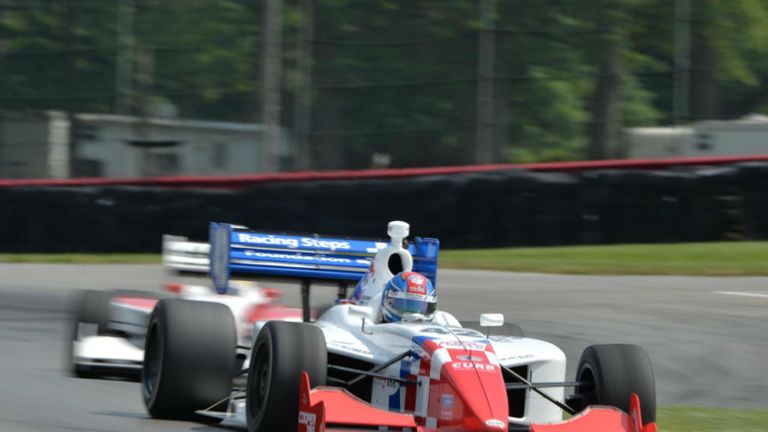
Jack Harvey was another to receive RSF support, but moved to America to pursue a career in IndyCar, telling Sky Sports in 2015 he felt "stuck" as he tried to progress up the single-seater ladder in Europe.
So why are more and more British drivers turning their backs on F1?
Seb Morris was part of the 'Britain's next F1 Star' show and progressed through the junior ranks as far as GP3 before making the move to sportscars in 2016 where the 20-year-old now races a Bentley in British GT.
"For starters it comes down to how the money is currently being distributed in the sport," Morris told Sky Sports.
"You usually have to start with a team at the back of the grid like Fernando Alonso did, but the problem we are now having is that the bottom teams are getting next to no prize money and they have to find a budget from somewhere. With the current economic climate, it's so hard for the teams to get sponsors on board, it's easier to get a driver bringing a budget.
"That is why we've had the situation over the last five years of drivers with the most money getting the seats over those with talent."

Morris believes the problem goes deeper, though, and feels a complete revamp of how prize funds are distributed if talented young drivers are to make it to the pinnacle of the sport.
"I'd still love to do F1, but it is just budgets. Even the budgets in GP2 and GP3 now…," he said.
"If you look at America and how it's structured, the winners of each championship get free drives the year after, or get a prize fund that is the equivalent of the amount of money you would require to move up.
"I think the UK and Europe could take a leaf out of that book. Again, that all starts with how money is distributed in the single-seater categories, for them to put enough money to one side to give the top couple of drivers prize pots that would allow them to keep moving forward."

Will more British drivers give up on the F1 dream?
Morris believes there is "no viability" in British drivers "chasing the F1 dream anymore" and expects more to follow him to sportscars.
"The reason I didn't carry on in GP3 was because in 2015 we only had about a quarter of the budget of what it would have taken to be in a top team and so we went with a bottom team. That's what we had to do at the time, but we didn't want to do that again so I made the move to sportscars because I wanted to do something properly.
"There is much more chance of a career in sportscars for British drivers. If you look at the British drivers who are still chasing the F1 dream they are switching to sportscars - like Jake Dennis and Ben Barnicoat - and there are others in GP2 who are planning on switching over because there is just no viability in doing it anymore."
Is it harder for British drivers?
The Welsh racer also believes British drivers are at a disadvantage when it comes to finding sponsorship, particularly when some drivers are state backed.
"I think it is harder for Britons because there are people from other countries with government support. When Pastor Maldonado was racing, he was sponsored by the Venezuelan government, but the British government are tight on budget and can't put millions into an F1 drive when it can go to the NHS," he said.

"It is just silly money, there is no other sport in the world where you need that kind of money to break in. In football terms, I'd be getting paid £100,000 a week. I am one of the top 50 drivers in the world and if you equate that to football you'd be on a hefty salary.
"Motorsport is a strange sport. You can be one of the best, I consider myself one of the top five or six in the country, but still we are struggling to get a salary."
So could we be set for a long period with F1 devoid of British talent?
"The main problem is prize money distribution and how funding is distributed right from the top to the bottom. Once that is sorted out I believe we could see a lot more British drivers in the sport," said Morris.
"If teams have more money they can fund young drivers, like Lewis Hamilton was by McLaren. But I believe he will be the last ever driver to be brought up by a Formula 1 team."