F1 review 2011
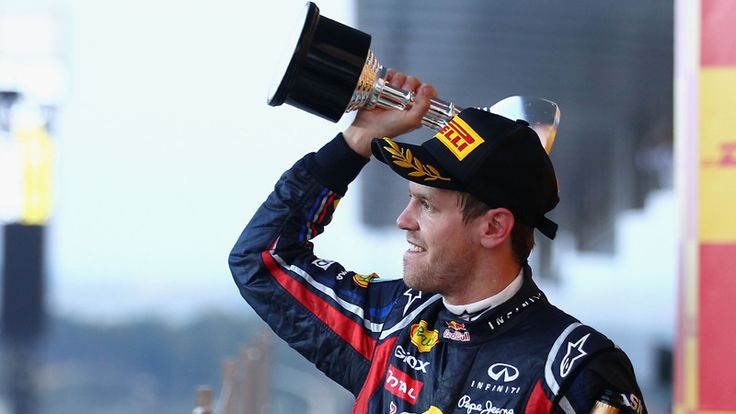
Sebastian Vettel might have retained the world title in dominant fashion, but delve deeper into the 2011 season and there was still plenty to excite fans. Skysports.com picks out some highlights.
Thursday 22 December 2011 10:02, UK
Skysports.com reviews the 2011 season which saw Sebastian Vettel retain the world title.
On the face of it, a season that saw a world champion retain his title with 11 wins in 19 races doesn't sound too exciting and whilst it's true that 2011 can hardly be described as a vintage year for Formula 1, there was still plenty of interest for those who cared to give the sport more than a cursory glance. From the start, the form of Sebastian Vettel and Red Bull appeared ominous, with the German at times appearing to toy with the opposition. Rivals got a look in occasionally but in truth it never seemed likely that Vettel would stumble. At the age of 24, he therefore stands as F1's youngest double world champion and, alongside Fernando Alonso and Lewis Hamilton, arguably the most complete driver in the sport. The latter pair both endured a frustrating year, with Alonso grappling a Ferrari that failed to deliver upon its pre-season promise while Hamilton endured his worst season yet in F1. Bested by McLaren team-mate Jenson Button in the standings and bedevilled by problems both on and away from the track, Hamilton at times cut a sombre figure in the paddock. Yet he still scored three wins, two more than Vettel's own team-mate Mark Webber, who can be forgiven for feeling a little shell-shocked as the year reaches its close. Elsewhere, Michael Schumacher was again seen to struggle in comparison with his pomp - seeming a more likeable figure as a result - while Paul di Resta made a solid, if not spectacular start to his F1 career. Vettel might have walked it but all the way down the grid there were battles to be fought, intrigue to be unpicked and excitement to be had; with 12 teams and 24 competitors herded on to one 'field of play' the possibilities are many. Factor in a continuous stream of technical and tactical innovation and sprinkle some sharp political manoeuvring on top, then it's quite some recipe. Perhaps someone should come up with a dedicated TV channel to cope? Driver of the season: Sebastian Vettel Vettel's title success last year was a smash and grab affair. Having not led the drivers' championship all season, he took the final race by the scruff of the neck and delivered whilst his rivals floundered. That race in Abu Dhabi set the pattern for 2011 - one that has repeated itself so often it's almost as if, casting one's mind back, the 19 races have melded into one. In fact, Vettel won 11 times but it was the manner in which he achieved the majority of those successes which gives the 2011 season a plotline akin to that of 'Groundhog Day'. The young Weltmeister invariably failed to show his hand until qualifying, and even then it would only be in Q3 that we were left under no illusions that, once again, it was business as usual. Fast forward 24 hours and Vettel would streak clear at the lights (or bluntly chop across any rival who even dared to make a better start) before building a lead. His Red Bull's working of Pirelli's new rubber ensured this advantage was never quite that which he might have eked out in the previous two seasons and yet Vettel's ability to manage his tyres time after time, whilst keeping just out of reach of his nearest pursuer, took his success way beyond the simplest of equations i.e. the fastest driver in the fastest car. It didn't work out all the time - Lewis Hamilton passed him to win in China - while one wheel out of place in Canada was all it took for Jenson Button to take advantage. Such mishaps, though, shrivel when placed next to the wins he delivered when things did not appear to be going quite to plan: in Belgium, a race that featured eight changes of lead during the early laps but ended with Vettel on top, despite having to deal with the threat of a tyre blowout; and then in Italy. The latter victory, achieved on a track that hardly suited his car, was the German's best and might be seen as the moment of affirmation. Vettel retained his title two races later in Japan but by then the writing had long been on the wall. Race of the season: The Canadian Grand Prix Jenson Button's win at Suzuka was his fifth for McLaren but first in totally dry conditions. It came towards the end of a season in which he finished above team-mate Lewis Hamilton in the standings - a real achievement when one remembers some of the predictions made when, even as the new world champion, Button left Brawn GP at the end of 2009. Hamilton's season has, to say the least, been one of contrasts and whether or not one agrees with team boss Martin Whitmarsh's assertion that Button's form was a contributory factor (funnily enough Hamilton did not) there's no denying that the latter's 12th season is up there with his championship year. Perhaps it's been even better. As a driver noted for his smoothness, there is an irony that Button seems to excel in races that run anything but. The most chaotic this year took place in Montreal and took over four hours to complete after a storm hit the Circuit Gilles Villeneuve. By that stage Button had already been hit by Hamilton ("What's he doing?") and was then to collide with Fernando Alonso. The latter incident punted him down to 21st and last place just past half distance but as the track started to dry, there then came a response: back in the points 12 laps later, Button was up to second after passing Mark Webber and Michael Schumacher on laps 64 and 65 respectively before taking the lead when Vettel ran off the dry line on the 70th and last lap. The Chinese Grand Prix, in which Hamilton hunted down and passed Vettel during the closing laps, might have produced tension of a slower burning kind, while the latter's win at Monza was as fine an example of both guile and balls-out bravery as you're likely to see. Yet neither could match Montreal for excitement and unpredictability. Team of the season: Red Bull It's been three-and-a-half years now since Mark Webber claimed Red Bull's first front row start at Silverstone and because of how things have largely been since, there's almost a quaintness to the excitement that particular breakthrough created. Armed with successive drivers' and constructors' titles, the Milton Keynes outfit are for now big hitters; whether that stays the case will depend both on the commitment of team owner Dietrich Mateschitz as well as Red Bull's ability to maintain - indeed to add to - the key ingredients for their success. After all, were Renault not enjoying similar success five years ago? This year's RB7 was the fifth design to come from the pen of Adrian Newey and, with 12 victories from 19 races, it was his most successful yet. A record of 18 poles from 19 races tells its own story in terms of outright pace, with the car's tendency to chew rubber marginally faster than its rivals a negative only if one's business is one of splitting hairs. Its ability to generate downforce was such that Red Bull could afford to run less wing (and more DRS, particularly in qualifying) than their rivals when it suited: like at Monza where, despite still lagging behind in top speed on the speedbowl's long straights, their speed through the bends more than compensated. Its effectiveness also masked struggles with KERS, particularly at the start of the season, and while Red Bull might have dusted down the idea of a blown diffuser last year, that was only part of the reason for their success. When the use of off-throttle blown diffusers was banned at the British Grand Prix, Vettel and Webber still qualified on the front row and although Fernando Alonso beat them in the race, the advantage he enjoyed that day was arguably as much down to a botched Red Bull pit stop as it was the Spaniard's new and improved Ferrari. Other technical innovations such as the legal flexing front wing, plus strong reliability (neither of the team's two retirements was down to mechanical failure) and teamwork (Red Bull's pit crew were joint fastest in 2011) complete what has been a dominant display. But for how long can they keep it up? Controversy: Lewis Hamilton vs Felipe Massa It must be said that this so-called 'feud' was small fry in comparison with some of the flash points we've witnessed in recent years. From the McLaren/Ferrari spying controversy of 2007, to Renault causing a deliberate crash and even the relative small fry that was last year's Ferrari team orders row, F1 in 2011 brought little in the way of scandal. The ruckus that wasn't started in Monaco before further skirmishes took place in (deep breath) Monaco, Britain, Singapore (during both qualifying and the race), Japan and India - more than enough to suggest something ulterior was happening and yet the reality was more mundane. Hamilton's approach does tend to polarise opinion and it's easy to see why: when it works he's brilliant; when it doesn't, the 2008 world champion still tends to look a bit like a boy trying to do a man's job. Alas for him, the latter has more often been the case this year. Thus, given Hamilton's habit of leaving himself with much ground to make up during races, he would dispense with midfield runners before happening upon the slowest car fielded by a 'big three' team. That car would invariably be driven by Massa, who seems more on edge than ever with his Ferrari future once more open to debate. What tended to follow next would best be filed under the category of 'racing incident' and although words would be exchanged via the media afterwards, they were never particularly harsh. Indeed, each driver still insisted on the qualification of affording the other respect. Just about the worst thing Massa could say about his rival's gung-ho-edness was that it suggests he "cannot use his mind". Does that really suggest a genuine loathing? When they were team-mates at Williams, Nelson Piquet called Nigel Mansell an "uneducated blockhead with a stupid and ugly wife". Now that's fighting talk.Year to forget: Williams Piquet and Mansell may well have hated each other's guts but at least they were given cars to win world championships. Relations between Rubens Barrichello and Pastor Maldonado seemed amicable enough but would not Sir Frank Williams have traded a fight or two in favour of a return to the good old days? Given the way things turned out in 2011, Sir Frank might well have offered the same simply for a podium appearance; he might even have offered to go out and buy the handbags. It really has got that bad for the nine times' constructors' champions, who managed just five points in 19 races - points that wouldn't have existed two seasons ago. The team's FW33 chassis, with its low-slung gearbox designed to improve air flow to the rear beam wing, was a bit of a departure but one that evidently did not work. The nadir came in Abu Dhabi, where Barrichello and Maldonado occupied the very back row of the grid. That wasn't an accurate reflection of their pace (an oil leak prevented Barrichello from setting a time while Maldonado picked up a 10-place grid penalty after exceeding his allotted engine allowance for the season) but it was a nevertheless a stark indicator of how far the team's stock has plummeted in recent years. Alas for Williams, this is no mere analogy: the value of their share price has also fallen by about a third since March's flotation and questions have also been asked about the legitimacy of their big-money sponsorship deal with PDVSA, the Venezuelan state company which backs Maldonado. Of course, it remains to be seen whether changes made to the team's technical staff will arrest the decline but such root surgery, together with a re-acquaintance with old partners Renault, suggests a team that is certainly trying. The infrastructure is there, now Williams must put the rest of the ingredients back in place. Given that they have not won a race since 2004, improvement will take time. Teams tend to use major rule changes as a means to make up ground; 2014 cannot come soon enough for Williams. Rookie of the year: Paul di Resta The season brought another clutch of unobtrusive baptisms, although comparing the arrivals of Di Resta, Sergio Perez, Pastor Maldonado, Jerome d'Ambrosio and Daniel Ricciardo to the stellar ones of Sebastian Vettel and, in particular, Lewis Hamilton is not entirely fair. None of the fivesome (Ricciardo only completed a part season) appeared out of his depth, although Di Resta and Perez caught the eye the most - if for no other reason than they were in the best machinery. Perez would have finished seventh in his very first race were it not for the fact the rear wing of his Sauber broke the rules. The 21-year-old Mexican had the speed to match Kamui Kobayashi (they were equals in qualifying) but without his team-mate's adventurousness. Whatever one thinks of the Japanese driver's approach, though, it yielded more points than that of Perez. Experience also won out at Force India, where Adrian Sutil bested Di Resta - and just shaded him in terms of qualifying pace too. When comparing the benchmarks, however, it should be remembered that Sutil was contesting his fifth full season - all with the same team - whereas Kobayashi's was just his second. And we should also bear in mind that, while Di Resta took part in a number of free practice sessions last season, he had spent the four previous seasons concentrating on the German DTM series - a rather different discipline than single seater racing. Di Resta is staying put next season and assuming Michael Schumacher does indeed call it a day for a second time at the end of 2012, then another good year, not to mention the long-time backing of Mercedes-Benz, will place the 25-year-old Scot right in the frame for a move. Surprise package: Renault's R31 Formula 1 is one of the more blatant examples of a sport that rewards risk, although it's thankfully the case that improved safety standards have made outcomes that were once accepted with a shrug of the shoulders much, much less likely. Sergio Perez's harbour front crash in Monaco was the most serious accident of the season and although the concussion the Mexican suffered was bad enough to rule him out of both that race and the Canadian Grand Prix, the presence of a deformable impact barrier, as well as side impact bars on his Sauber car, lessened the blow significantly. An unwelcome flashback to a far more dangerous era, albeit a brief one, came at the Hungaroring, where Nick Heidfeld's Renault appeared for a moment as though it might be engulfed by flames after a pit stop. The German hopped gingerly from his R31 and, as it turned out, into the sunset - the fall guy following the disintegration of the team's early-season promise. That turn of events and the fire itself were blamed on Renault's decision to do something different as regards the blown diffuser concept and develop a forward-facing exhaust. Such a departure could have had rivals following their lead had it delivered spectacular results. Alas for Renault, that was not the case: two early podium finishes were as good as it got and they were left to reflect upon both a poor season and the irony that, with technical regulations as restrictive as they are nowadays, a daring approach is not perhaps the best one. Best moment of 2011: Sebastian Vettel overtaking Fernando Alonso at Monza Whatever doubts remained about Vettel's ability to get the job done this season were laid to rest when Formula One returned from its mid-summer break and the world champion took victories number seven and eight in Belgium and Italy. Both races took place on tracks that were supposed to rein in Red Bull's superiority - especially Monza, where Vettel could only finish sixth last year. Despite being well down on straightline speed - seen as a prerequisite in the season's fastest race - the combination of downforce and DRS through the corners earned Vettel pole position, by half a second, over Lewis Hamilton. Fernando Alonso, quite rightly opting for glory in front of Ferrari's Tifosi fans, then produced a brilliant, banzai start and shot past Vettel from fourth on the grid. The manoeuvre would, however, have a knock-on effect further down the field, inadvertently leading to a collision and the arrival of the safety car. Vettel was therefore made to bide his time, but once racing resumed he pounced - and in some style: his Red Bull, with two wheels on the grass, passing Alonso's Ferrari around the outside of the Curva Grande somewhere in the region of 190mph. Cue sharp intakes of breath all round and in one fell swoop, the banishment of a notion-cum-exercise in clutching at straws that Vettel only knows how to win from the front; that he couldn't fight. Job done, he was never challenged again all afternoon. The championship would not be settled for another two races, but Monza proved the knockout blow. 2011 rule changes: for better or worse? New Sky Sports recruit Martin Brundle reckons there were 1,150 overtaking manoeuvres during the 2011 season and who are we to argue? Debate has been fierce, however, as to how many of those overtakes were actually genuine and whether the latest responses to criticism that Formula One doesn't produce enough excitement, the introduction of the DRS wing and the re-introduction of the KERS power boost, have in fact made the racing false. It was the former development that drew the most criticism, the argument being that by allowing a driver one second or less behind a rival the chance to stall his car's rear wing, the driver of the car in front was in effect being deliberately handicapped. But what of the argument that, in driving a car festooned with aerodynamic devices that create grip but lessen the downforce available for the car following, the leader already enjoys an advantage? After a slow start, there was soon plenty of overtaking - almost too much it seemed, with cars passing and re-passing with such frequency that one might be forgiven in feeling a little dizzy. But how much of it mattered? The pass Hamilton finally made on Vettel in Shanghai was without DRS and although Abu Dhabi's two zones brought plenty of dicing, it appeared as though all the good work done in the first would then be undone in the second. Jenson Button made great use of DRS and KERS to get past Fernando Alonso at Interlagos but he was only in a position to do so because of the Ferrari's weakness on harder compound tyres. Although not a rule change as such, the arrival of Pirelli seemed to have the biggest effect of all; their desire to shake things up didn't always go entirely to plan, but with a year's experience under their belts and tweaks to next year's rubber, hopefully teams will be kept on their toes and we'll be kept guessing as to how races might play out. Gone... but not forgotten: Rubens Barrichello? Toro Rosso's recent decision to axe both their young drivers in order to hatch the latest pair Red Bull fledglings might stir a sense of injustice, but it pales in comparison with the extremely vexing decision not to nominate the documentary 'Senna' for an Oscar. The 15 films up for the statuette must be very good indeed. The arrival of Asif Kapadia's film at a cinema near us was a real treat back in the summer, giving the big-screen treatment to a story that deserved a wider audience. 'Senna' was bound to stir emotions, but another thought that registered was how long ago now it all seems. The sight of a young, gauche Rubens Barrichello stood in obvious awe next to his hero also underlined the longevity of the latter's F1 career; one that, at the time of writing, hangs in the balance. Barrichello was contesting his second season at the time of Senna's death and it was his accident during Friday practice at Imola in 1994 which set the tone for that awful weekend. Thankfully, he recovered and has gone on to score a total of 11 victories in 322 grand prix starts. Whether the latter figure increases depends on what Williams decide to do; what might be beyond them for quite some time, though, is the ability to build a race-winning car, so we can safely rule out win number 12. Barrichello was in a similar situation three years ago: seemingly on his way out at Honda before they morphed into Brawn GP, had a change of heart and he claimed two more wins. Surely history cannot repeat itself? Like Michael Schumacher, for whom he arguably sacrificed the best years of his career, Rubens clearly has a serious love affair with the sport and to see the two old gunslingers fighting on into 2012 does seem endearing. But sentiment is at a premium in F1. I wonder if either Daniel Ricciardo or Jean-Eric Vergne will be around in 20 years' time?