
Sam Michael Q&A
McLaren's Sporting Director on how and why the team won the Canadian GP, when the team worked out their winning strategy, and whether Jenson is a more 'sensitive' driver than Lewis...
Tuesday 19 June 2012 09:29, UK
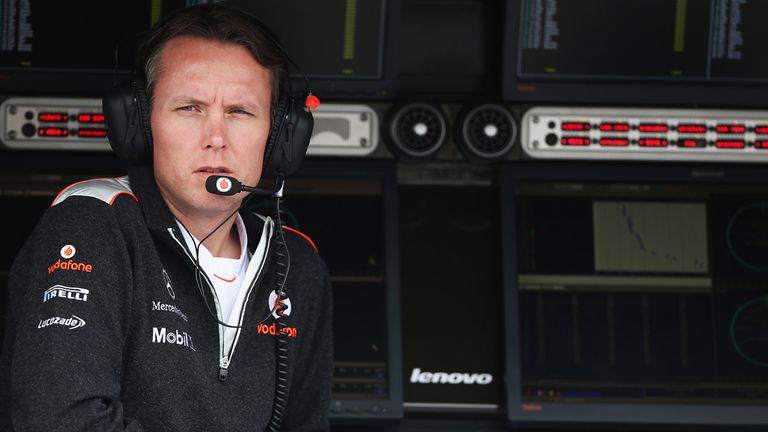
McLaren's Sporting Director on how and why the team won in Canada, when they worked out their winning strategy, and whether Jenson is a 'sensitive' driver.
How has the atmosphere changed around McLaren after that big win in Canada?Sam Michael: "Obviously, it's given everyone a big boost and a lot of incentive to try and repeat it in Valencia. It was a long time between wins for McLaren. We knew that the car and team potential has been there so it was really good to finish it off. "I think that Sunday's race was really good for the operational group and the trackside because there was only a tiny amount of difference between the cars of Sebastian, Fernando and Lewis. Over the whole package there was not more than a tenth across those three cars so we won the race on strategy and managing the tyres - and, of course, the drivers driving flat-out. It's very good to get a win like that on merit and with nothing inherited. "Our most exposed point was after our second pit-stop. We had fantastic pit-stops but on that particular one we did have a problem with the right-rear gun and that cost us just over one second - and that one second meant that for one lap we were exposed to Ferrari. If Fernando had stopped for his second pit-stop the lap after Lewis, instead of trying to go to the end, then there was an extremely high possibility that he would have come out in front of us." There are plenty of people still bewildered about how these tyres are performing. How difficult is it balancing the data you have compiled over a weekend with the organic nature of how the race is unfolding?
SM: "In actual fact, the race unfolded very closely to what our strategy team had predicted would happen a week before Montreal. We went into the race thinking that a two-stopper was the most competitive strategy for the fast cars and that a one-stopper would be the most competitive for the midfield cars because they tend to have less energy input because they are not travelling as fast and therefore have less tyre wear than the front groups. "For the front groups, without a Safety Car, we couldn't see how you could survive on a one-stop strategy because you would be putting too much energy into the tyre. Our strategy group predicted that a two-stopper would be the most effective and it wouldn't be possible to stay competitive on a one-stopper for the front-running teams. "What unfolded on Sunday - and what was unusual and we didn't predict - is that Red Bull and Ferrari did not follow us into the pits. So although we're very happy with the win and everyone did a fantastic job, I think if we look at the analysis of what happened on Sunday we just did what we expected everyone else to do. It wasn't that we made some sort of blinding call - what we did was what we thought was obvious." Was it not the case, perhaps, that they looked at how well you were performing and thought the only way to beat you was staying out?
SM: "Maybe, but even that we didn't understand because your best chance to beat someone is to have the ability to attack. "In the first stint, Sebastian was fighting was Lewis. In the second, Fernando was fighting Lewis. And in the third, there was no battle - we just had to catch-up a gap and overtake. Once Lewis was on them, it was fairly easy stuff because of the difference in tyre wear." From Lewis' perspective, coming off such a great weekend, is now a good time to strike with a couple of back-to-back victories? What would putting together a little run mean for the World Championship?
SM: "It would make a massive difference. But even overriding that, this championship is going to be won on consistency and it's easily possible that the World Champion will only have one or two race wins. It's actually possible that he may not win a race at all - although I don't think so because of the number of winners that we've had already. But you won't need to win five or six grands prix to win this year's World Championship. It's going to be [won through] consistency. The really important thing is not to have any DNFs. If you have any DNFs, you'll be in big trouble." Whilst Lewis is in the ascendency, it hasn't been the greatest series of races for Jenson. How do you go about getting a grip on what has gone wrong for him and do you have the means to put it right?
SM: "Definitely. With Jenson in Canada, if you go back to the start of the weekend we had quite a few problems with his gearbox on Friday and he lost a lot of track time because of that. From that point on, we tried a few different things with his car set-up to try to explore different areas, and in hindsight we probably shouldn't have done that. The wear profile on his tyres was extremely different to what Lewis had and there are certain reasons for that which we believe we've understood and can easily put right for Valencia. "Jenson is clearly a fast driver. If you look at the lap-times difference between Jenson and Lewis in Montreal, that is not the difference between those two drivers because it's just not like that. Look at the way Jenson dominated the grand prix in Australia, he's clearly a driver who knows how to go quickly." Does his set-up need to be more delicately balanced than Lewis'? Does the car need to be a little more precise to his liking to get the best out of him?
SM: "Not really, no. He doesn't require a more precise set-up than Lewis. Most of the time, they drive similarly set-up cars. There are always a few little tweaks that the drivers make because they might have a slight difference in style, but he is in no way more sensitive to the car than Lewis is." Does he put pressure on himself? Sometimes you can put on too much...
SM: "He probably does that internally, but one of the things you realise from working with Jenson is that he copes with pressure very well and he doesn't show it. He has a very good poker face and, even under the current situation where he feels under pressure, he doesn't let that show. That's how he's always been - he's been like that whether he's winning or whether he's struggling. At the moment, I think he's playing on that and I think it's a very useful characteristic to have in someone. It's one of his strengths and he's got a lot of confidence in his ability - he's not a World Champion for nothing. He's still very much in the title hunt and he knows that." The season is now entering the European leg of the campaign and traditionally this is an easier time of year to bring upgrades. Will the next stage of the season be more about the development process or more about understanding the tyres?
SM: "Definitely both. If you look at last Sunday, the Ferrari, the McLaren and the Red Bull were all within a tenth of each other and all managing their tyres in a very similar manner. So if we can add one or two of tenths of lap-time to our car it will make a massive difference because we will then be able to separate ourselves. It's still very much a development race in F1 between the top three teams and the tyre management is something we have to get right as well - so we have two things going on but they are just as important as each other." And how do you feel about your car. Is it a project that is still on an upward curve?
SM: "Absolutely. We've brought at least a tenth of a second to the car at every race and in some races we've brought much more than that. We had a very good upgrade for Barcelona and over the next two or three races we will keep bringing that sort of level of performance. "I think you have to bring at least a tenth per race to stay still - but anything more than a tenth and hopefully you are moving clear of the other guys."