1000 Words On: The Iceman's Return
Thursday 29 December 2011 09:31, UK
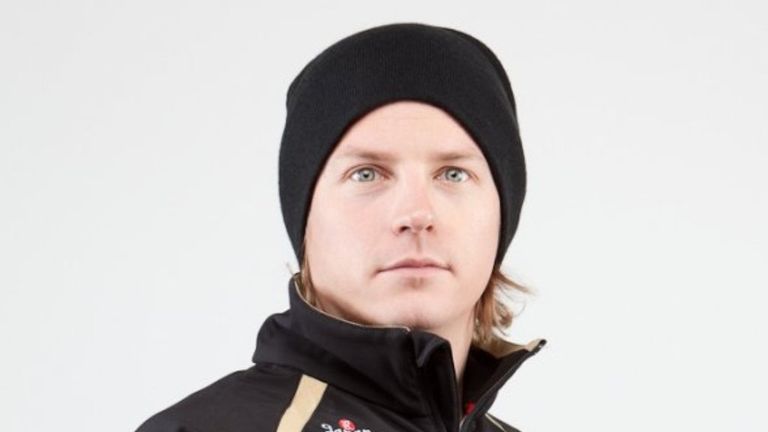
F1 will be better for Kimi Raikkonen's return, but the question is: will Lotus-Renault be?...
The Iceman has thawed. As Martin Brundle remarked the other day, "after digging rally cars out of snow, after constantly hitting trees, Kimi will forgive F1 everything he disliked before". The 2007 World Champion might not like F1's rampant commercialism or the bind of PR events, but he's learnt the uncomfortable way that the grass is greener in F1 than it is in a muddy, snowy ditch. Welcome back, Kimi. You've been missed. The question remains, of course, which one of the many Kimi Raikkonens will return. As time slowly ran down on his first F1 career, Ferrari gave up trying to guess what they could expect from their best-paid employee (in 2009, Raikkonen was listed by Forbes as the second highest-paid athlete in the world, with a reputed salary of $50m). Luca di Montezemolo was even moved to ask after one particularly undistinguished race whether another Kimi Raikkonen had been behind the wheel. Brilliant one day, bored the next, Raikkonen remains an enigma to most, a maverick to his supporters, a source of fascination to all. F1 will be all the better for his return, but it's no means certain that Lotus-Renault will be. The primary concern is one that even his most ardent admirers will recognise. Kimi might be a very fast driver but he's not a driving force. Never has been, never will be. An acutely relevant remark made by Di Montezemolo whilst explaining Raikkonen's exit from Ferrari was the lament that "we realised that our team needed a driver capable of really getting involved with the engineers, a characteristic that was not part of Kimi's genetic make-up, even though he is an amazingly talented guy." The word 'galvanising' does not feature in Kimi's dictionary. Then there's the issue of motivation, a concern so vexing that Raikkonen's new boss Eric Boullier declared just a year ago: "I would have to speak personally with him first, look him in the eyes to see if I see enough motivation there for him to return to F1. It doesn't make sense to hire somebody, even a former world champion, if you cannot be sure that his motivation is still 100%. Why should you invest in somebody who leaves you guessing?" Why indeed. Presumably Raikkonen's eye-contact was sufficiently reassuring for Boullier to agree a deal and, in the first interview marking his comeback, the Finn was at pains to insist: "I would not have come back if I wasn't motivated". And yet for a driver renewing his vows with declarations of long-lost love, it was a tad unsettling to learn that Raikkonen has scarcely watched any F1 in the last two years and was only minded to watch the final 20 laps of Sunday's Brazilian GP. Kimi is an enigmatic figure, and interest is no barometer of motivation, but it's hardly reassuring. Heading into 2012, his primary challenge will be adapting to the new tyres which confounded Michael Schumacher for the first season of his comeback. Then there's the perennial challenge of beating his team-mate, who is likely to be either Roman Grosjean, Bruno Senna or Vitaly Petrov, but not Adrian Sutil or, at least for now, Robert Kubica. Though there's a possibility Force India will have been persuaded into a u-turn by Sutil's late-season revival, it's still expected that the team will announce on December 15 that the German has lost his seat to Nico Hulkenberg. Sutil - who has a bit of alleged personal history with a member of the Renault hierarchy which makes it highly improbable he will be considered as Raikkonen's partner - thus finds himself at a crossroads with few open routes available. Williams may or may not be in the market for a driver to replace Rubens Barrichello, but they are not the attractive destination they once were - as the retention of Pastor Maldonado, for no other reason than the money he brings, makes abundantly and painfully clear. Still, with nowhere else to go, and no better driver available, Sutil's transfer to Williams is the likeliest outcome of this particular game of musical chairs. However, one alternative option Sutil might consider is the possibility of becoming Mercedes' third driver - a position unfilled since Nick Heidfeld left to become Pirelli's tester - with a view to succeeding Schumacher for 2013. The flaw in this plan may yet prove to be F1's leading man himself, with Sebastian Vettel surely destined, at some stage in his career, to join what is essentially Germany's national team. With already nothing left to prove at Red Bull, and Mercedes sure to reap the rewards of their aggressive recruitment policy of recent months sooner rather than later, that time be just 12 months away. There is a sense this winter that this is merely the calm before next year's storm, that the pawns are being moved around and only next year will the big pieces wake from their slumbers. The game at this stage is jockeying for position. Jenson Button has nailed his colours to the McLaren mast but on the day of Raikkonen's announcement it was notable that Lewis Hamilton fell a long way short of making his commitment to the team binding. Everyone in F1 - including Hamilton, including Raikkonen (who is sure to have an opt-out performance clause in his contract with Lotus-Renault, a team rated as a 50-1 shot for the World Championship) - must be aware that three big seats will be becoming vacant in a year's time. Barring a dramatic usurping of Fernando Alonso next season, Felipe Massa is surely entering his final year at Ferrari. Mark Webber and Schumacher, meanwhile, are just as surely entering their final season in the sport. And, as stated previously, it's not inconceivable that Vettel has just twelve months left at Red Bull. In which case, 2012 has all the enticing makings, for both the sport's major and minor players, of being a free-for-all audition and F1 is about to start the trial of the decade. Bring it on. Pete Gill Follow us on twitter at SkySportsF1