Fernando and Ferrari: Charting Alonso's unfulfilled five-year quest for the title
There were plenty of highs and lows in the tempestuous partnership
Thursday 11 December 2014 11:18, UK
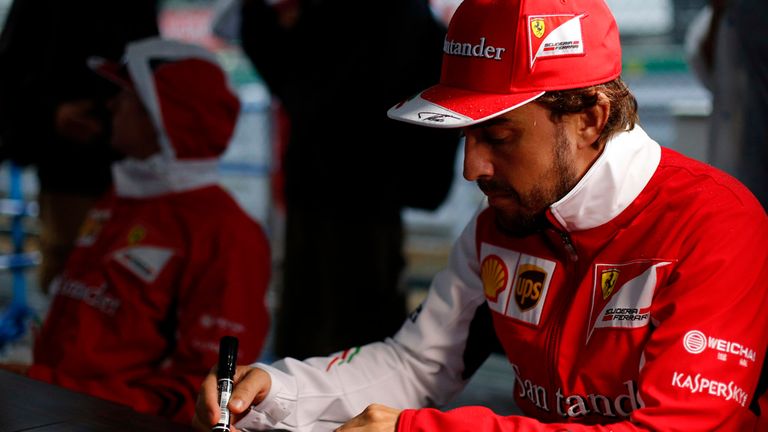
Fernando Alonso’s tempestuous five-season stint at Ferrari has come to an end with a public divorce worthy of a reality TV star played out over 18 months.
Oh, how things have changed from when he joined the team ahead of the 2010 season: “I really think that Ferrari will be my last team. Leaving Ferrari to change team is always a step backwards. Ferrari is more than a team.”
Now aged 33, still with only two world championships to his name and with time running out on his F1 career, Alonso has become convinced that a move away from Ferrari and a return to McLaren will be a step forward. The partnership hasn’t delivered the success both parties expected and if Alonso goes on to win a further world title, it will be the longest gap between championships in F1 history.
So what went wrong at Maranello? We chart Ferrari and Fernando's unfulfilled quest for the title season-by-season...
2010
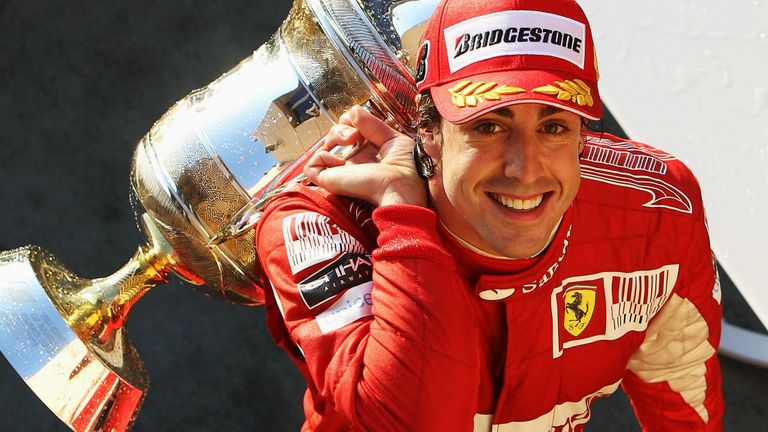
Just how differently might things have turned out for Fernando and Ferrari had they not let the Drivers’ Championship slip through their fingers at the first attempt? While Alonso may have got mathematically closer to denying Sebastian Vettel and Red Bull two years later, 2010 stands out – and glaringly so – as the one that got away thanks to a bungled strategy call by the team in the Abu Dhabi finale.
It wasn’t that Alonso’s first Ferrari car, the F10, was the equal or better of Red Bull’s RB6 but it was arguably closer on outright pace to Vettel’s all-conquering machine than any of the following three years. That’s a point underlined by the fact that what, quite astonishingly, stand as Alonso’s only two dry-weather pole positions of his Ferrari career came during that first season. Like his ousted predecessor, but future team-mate, Kimi Raikkonen, Alonso won on his debut for the Scuderia, leading home Felipe Massa in an impressive one-two in Bahrain. But the Spaniard then only finished on the podium twice (in Spain and Canada) in the next nine events and uncharacteristically threw points away via costly mistakes in China, where he jumped the start, and then in Monaco thanks to a heavy crash in final practice which kept him out of qualifying. After a British GP ruined by drive-through penalty, Alonso found himself 47 points off the pace in the championship.
However, it was at the very next round, and now infamous 2010 German GP, where the Spaniard’s fortunes started to turn. A first victory since Bahrain may have only been secured after the Ferrari pitwall controversially told long-time race leader Massa to move out of the way for his team-mate, but the effect on Alonso’s faltering title challenge was immediate as he won three of the next seven races – including Monza – to claim the title lead ahead of Red Bull duo Mark Webber and Vettel. Going into the Abu Dhabi finale, Alonso only needed to finish second to be sure of the crown but a lamentable misreading on the pitwall of who their main Red Bull rival was in the evolving race – Vettel was the outsider for the crown but leading the GP – prompted a mistaken strategy call to cover an off-colour Webber’s early stop, which only served to drop Alonso into traffic and stuck behind Vitaly Petrov’s Renault in seventh place. With the DRS overtaking aid still several months away from creation, Alonso found no way past the Russian and the title went to Vettel by four points.
In the noisy aftermath to the title failure, head of race track engineering Chris Dyer paid the price for the strategy error with his job while an Italian politican even called on President Luca di Montezemolo to resign. Alonso, while clearly frustrated with the near-miss, said the new partnership could still be pleased with their first year together: “It's very easy to see the best strategy after the race. But this is sport, this is motor racing. Sometimes you win, sometimes you lose. It was a good year, the first year of my relationship with Ferrari. For the last few years I've been fighting to be in Q3 and now I've finally been fighting for the world championship once more.” A drivers' title would surely follow...
2011
...or not. Having come so close to delivering instant success in year one, Alonso's second season at Maranello proved the ultimate let-down as the partnership yielded just one win as new world champions Red Bull dominated the campaign. Ferrari failed to fully utilise off-throttle blown diffusers and thus their only victory came when the technology was banned, briefly, at Silverstone.
Given that Alonso was on the podium a further nine times during the campaign and team-mate Massa never finished higher than fifth, the Spaniard could certainly say that he was keeping up his end of the deal. Ferrari certainly felt that too as on the eve of his home grand prix at Barcelona they announced they had agreed a long contract extension with their star driver - a deal that tied him to Maranello all the way to 2016. Although the length of the deal raised a few eyebrows at the time, particularly in the light of an underwhelming start to the season for the Scuderia which had seen Alonso finish fourth, sixth, seventh and third in the opening four rounds, the former Renault driver felt Ferrari remained the best place to achieve his dream of a third world crown.
“The intention is to keep enjoying racing,” he said. “For sure, I think I’m in the best team possible to fight for world championships. I think some other teams go up and down. They have good years and bad years. At Ferrari, in the worst season you finish third or second in the world championship, so this is something that Ferrari can offer to a driver.”
2012
The defining image of Alonso’s third season at Maranello remains the shot of the Spaniard, with crash helmet still on, staring stony-faced across parc ferme in the pouring rain of Interlagos as the realisation that Vettel had again just denied him that elusive world title with Ferrari sunk in. Armed with a car that all-season long couldn’t hold a candle to the aerodynamically-superior RB8 for outright speed, Alonso had amazingly led the standings for much of the year only to be overhauled by his title nemesis in the final reckoning.
In a first half to the season characterised by unpredictability as teams struggled to master Pirelli’s fast-degrading tyres, Alonso, despite starting the season with a car over a second off the pace, was F1’s Mr Consistent with a string of impressive top-five drives, the highlights of which were surging victories from poor grid positions in first the rain of Malaysia and then on home soil in Valencia. A defensive win from a wet-weather pole in Germany increased his title advantage over Vettel to 44 points, but the German’s four straight wins from Singapore to India turned things back in Red Bull’s favour.
The speed of that momentum swing was increased by Alonso’s failure to score points at Spa or Japan, the Spaniard not going beyond the first corner at either race after being caught up in startline carnage. For all that, he arrived at the Brazil season finale still with an outside chance of the crown and the wheel of fortune finally seemed to have turned in Ferrari’s favour when Vettel dropped to the back of the field after spinning and damaging his car on the first lap. It wasn’t to be, however; Vettel raced back to sixth place while Alonso finished second, giving the German a third straight title by a scant three points.
So denied at the last again, but Alonso expressed confidence that if Ferrari could just deliver a 2013 car that was within striking distance of Red Bull they could get the job done: “We proved that with a car a little bit slower than the others we can win the championship. With a car that is the same as the others I think we can win a few races before the end. And with a car that is a lot slower than the others we can fight until the last race. So it was a very good season for us and we proved many things this year.”
2013
For just about the first time, 2013 saw very public cracks start to appear in the Alonso/Ferrari relationship as another season petered out in frustration. Although two early-season wins in China and Spain had offered hope this could finally be their year, that was as good as things would get as Red Bull and Vettel ran away with both titles like never before.
Alonso again outperformed the F138, as demonstrated by his record against Massa who achieved just one podium, but a distant second place in the standings this time could not be classed as progress and it was under this continued underachievement that speculation of a split first emerged. Alonso’s management was believed to be instructed to look for vacancies around the paddock and with Red Bull's Webber retiring, Christian Horner was informed that the Spaniard could make himself available.
Alonso’s frustrations got the better of him in Hungary when he joked that he wanted "someone else's car" for his 32nd birthday and that led to an unprecented public rebuke from then Ferrari president Di Montezemolo for the team's star asset.
"There is a need to close ranks, without giving in to rash outbursts that, while understandable in the immediate aftermath of a bad result, are no use to anyone," a statement read. "That was a reference to the latest comments from Fernando Alonso, which did not go down well with Montezemolo, nor with anyone in the team.
"So, when Montezemolo called the Spaniard this morning to wish him a happy birthday, he also tweaked his ear, reminding him that, 'all the great champions who have driven for Ferrari have always been asked to put the interests of the team above their own. This is the moment to stay calm, avoid polemics and show humility and determination in making one’s own contribution, standing alongside the team and its people both at the track and outside it'."
The rebuke did little to ease tensions and at Monza Alonso branded the team “idiots” over team radio at the start of Q3, although the exact translation of this was later disputed. That is when rumours of a previously-unthinkable reunion with McLaren surfaced, although Alonso remained adamant he was committed to winning with Ferrari.
"Not really," the Spaniard told Sky Sports News when asked if a return to McLaren attracted him."I keep repeating every weekend - and I don't know why I have to keep repeating - I love Ferrari and I will stay in Ferrari until the end."
Indeed, at that stage Alonso even talked of extending his stay at Maranello beyond 2016. "It is good to have these comments, but I have no intention [of leaving]. I have three more years with Ferrari and I hope many more to come if we can extend the contract and that will be my hope."
At the time Sky Sports F1’s Mark Hughes forecast a 2015 switch to McLaren for Alonso – a prediction that was to prove uncannily accurate.
2014
And so to 2014. Despite the expectation that the onset of radical turbo engine regulations - and the resultant shift in bias away from aerodynamics to engine performance - could prove Ferrari's forte, what proved to be Alonso's final year in red was by far the worst.
Although his personal reputation was enhanced by his total domination of new team-mate Raikkonen, the mediocrity of the F14 T meant he stood on the podium just twice all year - and not once on the top step. Such were the struggles that by season's end, Alonso was just sixth in the standings - his lowest finish since driving for Renault in 2009.
The Maranello marque's lacklustre power unit had already proved the catalyst for dramatic change at the top: team boss Stefano Domenicali resigned after the first three races while long-time president Luca di Montezemolo followed in September. Despite the troubles on and off the track, Alonso had initially seemed likely to stay on for at least one more year, with the Spaniard telling Sky F1 in June he still felt he could add to his titles at the Scuderia: "I do. It was my ambition, when I signed for Ferrari, to get some more championships and I've been very close on two occasions."
Alas, that was as close as Alonso would ever come at Ferrari. Amid tension with new boss Marco Mattiacci - who would be axed himself after just seven months, a day after the season ended - and the realisation that Ferrari's rebuilding was unlikely to deliver instant success, Alonso decided to cut his losses and head for pastures new, the official parting of the ways coming ahead of the season finale in Abu Dhabi when Vettel of all people was announced as his replacement.
With Ferrari’s new flame already having one foot inside the door as his perennial rival packed his bags, perhaps the split will be best for all involved, Alonso chasing elusive success and Ferrari able to continue the rebuilding process with a driver who with four world titles to his name at 27 can afford to wait a little longer to become the next man to join the likes of Schumacher, Lauda and Fangio in the Prancing Horse's title-winning hall of fame.