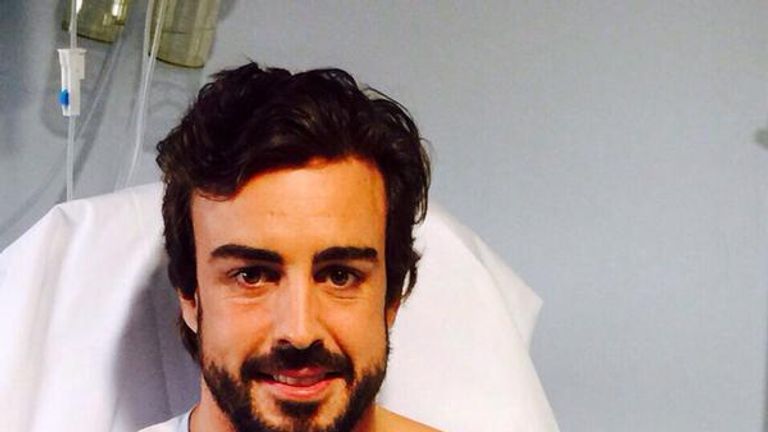
Fernando Alonso's Barcelona crash: Time to put the mystery to bed?
Three months on from Alonso's strange accident in testing at Barcelona, what we know, what we don't, and what we will probably never know
Tuesday 12 May 2015 13:53, UK
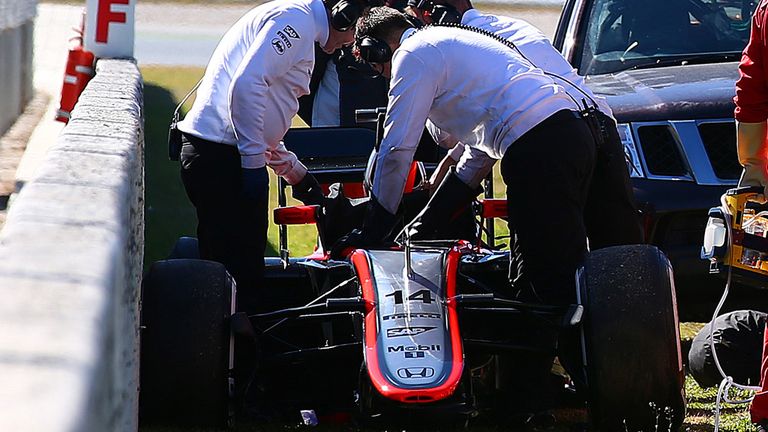
The mystery of Fernando Alonso's crash during testing has inevitably resurfaced following his return to Barcelona for the Spanish GP. But three months later, what do we know about the crash - and is it time to let the story rest?...
What do we know for certain about the crash?
Beyond the core details - that Alonso's McLaren hit the wall at Turn Three at around 135kmh on the final day of the first Barcelona test - very little. No footage of the accident has been released, McLaren haven't publicly divulged any of the telemetry from Alonso's car, while the findings from the FIA's investigation into the crash haven't been published - and nor are they likely to be.
Why is the crash considered to have been such a mystery?
A dense cloud of intrigue has surrounded the crash almost from the very moment it happened. From the outset, the lack of information instantly fuelled suspicion that something untoward had occurred either before, during or after the accident. McLaren's subsequent belated explanations, even before Alonso himself flatly refuted their account a month later on his action to action in Malaysia, were widely adjudged to be unconvincing while the fundamental difficulty in reconciling such a relatively minor crash with Alonso spending three nights in hospital before missing the season-opening Australian GP has hung over the affair throughout.
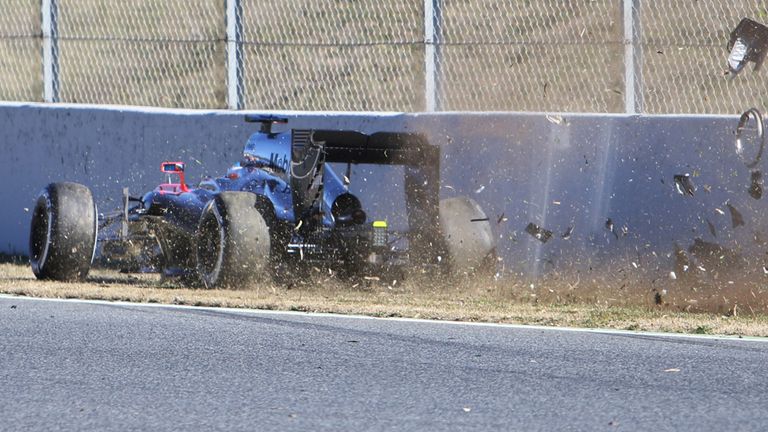
So just why did Alonso crash?
According to McLaren, the crash was caused by an 'unpredictable gust of wind' and an exhaustive trawl of the data from Alonso's car didn't detect any evidence of a malfunction. Speaking upon his return at the Malaysia GP, however, Alonso reported "it's clear there was a problem in the car" and announced the crash was caused by "locked steering". Reminded of McLaren's 'gust of wind' explanation, Alonso scoffed: "Even a hurricane would not move the car at that speed."
Why does it matter?
First and foremost, because F1 prides itself on putting safety first and any unexplained accident naturally causes alarm up and down the pitlane. Amid claims that Alonso may have blacked out at the wheel - either because of an electric shock or through fainting - Lewis Hamilton reputedly berated the FIA for failing to release their findings into the crash at Sepang.
Alonso's suggestion that the sensors on his car were too immature to detect a failure will also have certainly stung an organisation which recently renamed itself ‘The McLaren Technology Group’ while many pundits pounced on the discrepancy between the two accounts as the first signs of fissure in the Alonso-McLaren union which cracked so spectacularly after less than a year of their first marriage.

Will we ever know what happened to cause the crash?
Almost certainly not; the only way a definitive conclusion can be reached is if the extra sensor McLaren subsequently bolted on to their cars detects a definite locked steering malfunction - but even then, there would be a degree of doubt that it was an exact like-for-like repeat.
Ultimately, perhaps, the only conclusion which can be reached is that the accident didn't massively matter. Alonso has suffered no after-effects, only missed a race in which McLaren were last on the grid, and his subsequent successful return to action would seemingly conclusively validate the clean bill of health he was given by doctors. The McLaren-Honda, meanwhile, hasn't proved to be any sort of danger to the field - add your own punchline about its lack of speed not being a danger as well - and there's been no hint of a repeat occurrence of the locked steering Alonso cited.
As for the Alonso-McLaren partnership, there's been no indication of a rift, not even in the wake of their deeply depressing start to 2015. Officially, McLaren have maintained a stoic silence in the wake of Alonso's rebuttal, but privately there have been no recriminations either. Alonso and Ron Dennis, who had already apologised to the media for inaccurately insisting that his driver hadn't been concussed during the crash, dined out together in Sepang and the McLaren chief executive was sanguine about the matter when asked about Alonso's contradiction during an unscheduled Sky F1 interview (which, as far as we are aware, remains the only occasion since March when McLaren have spoken about the crash). "I think everybody was telling the truth," responded Dennis. "Fernando felt something wrong with his steering; I’m not going to disagree."
As we wrote at the time, sometimes, even in F1, accidents just happen. Time to let the mystery rest?