
All change at Ferrari
Sky Sports F1's Mark Hughes reveals the background to Luca di Montezemolo's exit - and how Red Bull Technical Director Adrian Newey could have been lured to Maranello. If only...
Tuesday 28 April 2015 12:04, UK
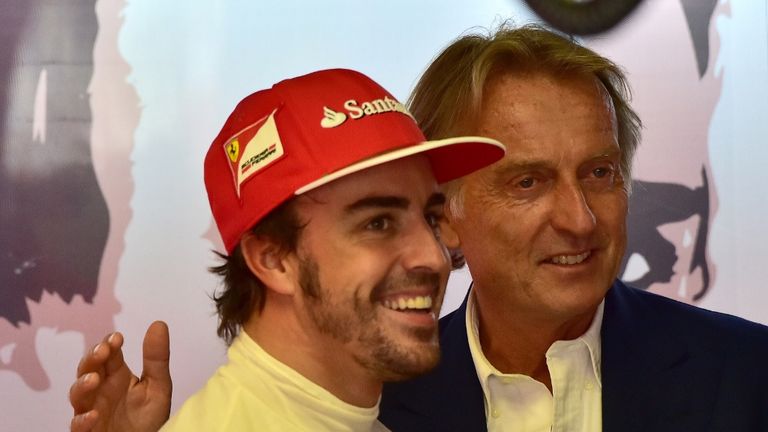
Luca Montezemolo’s reign at Ferrari comes to an end after 23 years in charge.
Motor racing history will probably be kind to him. He was after all at the helm when the Scuderia took that record-breaking run of titles in the early part of this century, when Michael Schumacher redefined the goalposts of success. But with the team’s last world title now a full decade ago, its 2014 car less competitive than any so far this century and with a winless season – its first since 1993 – looking very likely, questions had to be asked.
Ferrari’s place in the sport, its financial deals, its support from Fiat and the expectation of supporters are structured around success. Consistent lack of it and with no sign of improvement were always going to spell trouble for the boss and when the CEO of parent company Fiat, Sergio Marchionne, was publically critical of Montezemolo earlier this week, it was obvious what was coming next.
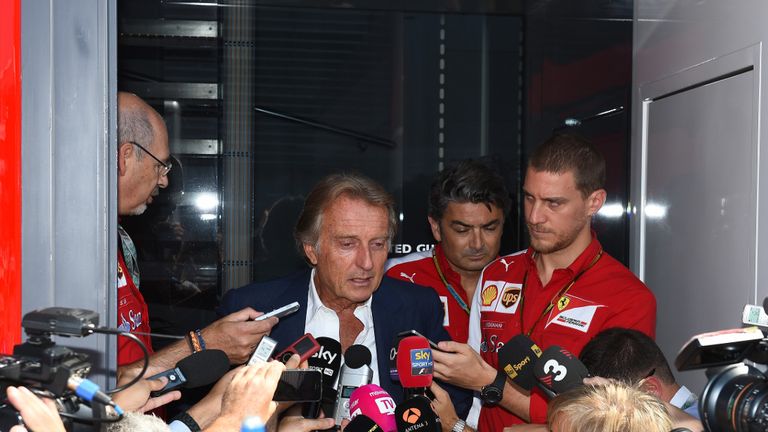
It could be argued, of course, that it was not Montezemolo who was responsible for the sub-standard power unit of this year’s car, nor even of the decision to compromise the packaging of the mechanicals in favour of aerodynamics which led to that. But the buck always stops with the boss in the end and, if anything, Montezemolo was slow in acknowledging this – especially when he accepted Team Principal Stefano Domenicali’s resignation earlier this year. Domenicali was a loyal lieutenant of Montezemolo’s and had already, with great reluctance, carried out his wishes in dismissing technical director Aldo Costa in 2011. When asked to dismiss engine chief Luca Marmorini earlier this year, Domenicali refused – and proferred his own resignation instead. It was the act of an honourable and loyal man even though it was damaging to his career.
But what was not widely known at the time was the impact Domenicali’s resignation was to have on the possible recruitment of two men who may have had the power to transform the team’s fortunes. Sources inside the team state that both Adrian Newey and Mercedes HPP [the F1 engine arm of Mercedes] boss Andy Cowell were in talks with Domenicali about moving to Ferrari but that when he resigned they each lost interest in any such move.
It’s believed that Newey’s discussions were much further advanced than those of Cowell’s but the prospect of the respective designers of F1’s best chassis and engine being brought together at the Scuderia will forever be consigned to the realms of ‘What if?’. The culture of blame and dismissal rather than regrouping and refocusing that has characterised Ferrari since the departure of the Jean Todt/Ross Brawn/Rory Byrne axis was presided over by Montezemolo. For Newey at least, this culture played a major part in his decision not to go there. Ferrari has made itself, he believes, an unattractive place to work.

But if Montezemolo has witnessed the gradual decline in the Scuderia’s competitiveness since the departure of Brawn, Todt and Schumacher, so he was in charge when these people were recruited and built the foundations of the fantastic success that was to come. But even in that there are reservations. Todt was recruited on the advice of Montezemolo’s close associate Bernie Ecclestone. Todt in turn targeted Schumacher who in turn insisted that Brawn and Byrne be part of the package. These men formed a nucleus and Brawn tells of how they formed a protective ring to keep interference from senior management – i.e. Montezemelo – away from the day-to-day running of the team. Once they left, his influence – through Domenicali – became much more direct.
Montezemolo leaves a Ferrari company that is about to publish record profits. But much of the reputation and allure of the road cars responsible for those profits comes from the racing team. That correlation is not so direct that it becomes broken the moment Ferrari stops winning on track, but what has been deemed unacceptable is a long-term decline on track – and that is what Ferrari’s record has looked like since the breaking up of the team that gave the Scuderia that unprecedented run of glory. The boss is only as good as the people below him.
MH