
Sir Chris Hoy says Jason Kenny could add another six Olympic gold medals
Monday 5 September 2016 11:21, UK
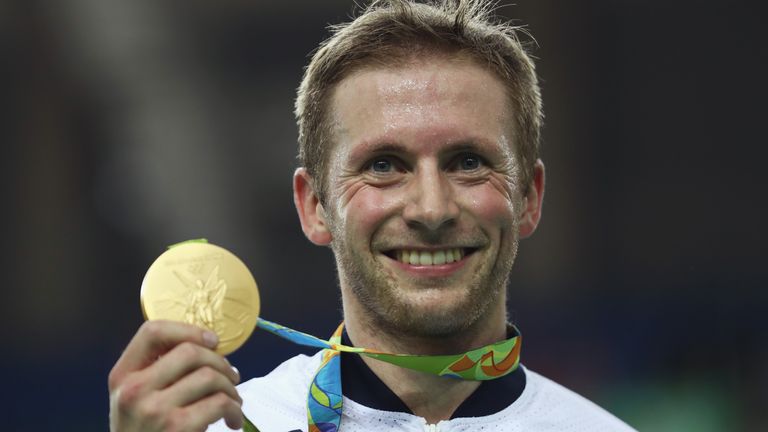
Great Britain's joint-most successful Olympian Jason Kenny could double his gold tally at the next two Games, according to Sir Chris Hoy.
Hoy, whose record six-gold medal haul was matched at the Rio Games this summer when Kenny added another three to his collection from London 2012 and Beijing 2008, believes the 28-year-old has shown no signs of slowing down and will continue to dominate cycling for years to come.
"He is only 28 now. I was 28 when I won my first Olympic gold medal and he's got six," Hoy said.
"In theory he could go on for another two Games and could win the same again at each of those.
"He has potential to win another six gold medals, which is incredible."

Team GB won 11 medals on the velodrome track at the Olympics in Brazil last month, including six golds, and Hoy thinks Britain can have further success in cycling at future Games as long as investment in the sport continues.
"Every time the team perform at that level you think 'That was brilliant but we can't expect that next time' and they go out and do it again," added Hoy, a Sky Ride Ambassador speaking at Sky Ride Glasgow.
"We can maintain our status as the top nation in track cycling for the foreseeable future, certainly for the next Olympic cycle and for a long time if we keep the investment and keep focusing on the younger riders coming into the programme.
"If funding is cut that is when you start to have issues."
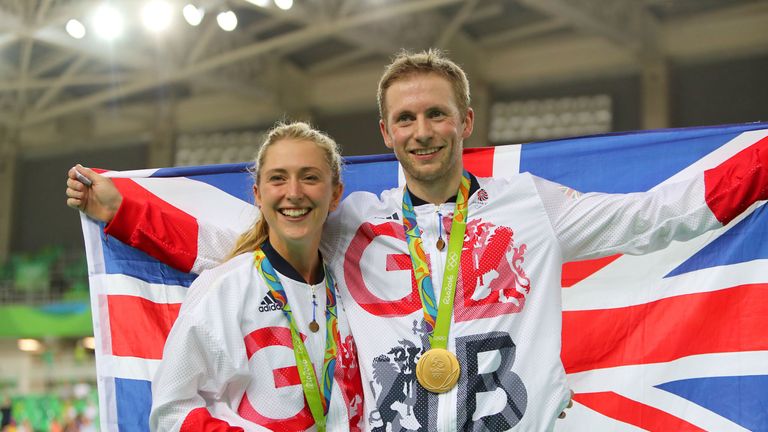
A number of Britain's Olympians, including many of the cycling team, have returned from Rio with enhanced marketability but Hoy does not see Kenny, who famously likes to keep a low profile, being distracted by off-track demands.
"It is a benefit to a sport if you have a number of household names," Hoy said.
"Cycling now has a dozen who the public would know straight away and that has to help with the marketing of the sport.
"I never missed training from doing commercial stuff but you certainly miss some rest periods and that was the hardest thing.
"The media interest and additional demands mean your time is so scarce and in the background your rivals, who have not had this success and don't have this demand on their time, are working to knock you off your perch.
"That is the biggest risk for athletes, getting the balance right. Of course reap the rewards because they have survived on a pretty measly budget for a number of years and they have the chance to commercially capitalise on it now.
"You have to weigh it up against the downside, the more you do of that the harder it is to recover from your training. It depends on the individual and how much they are prepared to work outside their sport."