Criterium du Dauphine race guide
We take a look at the challenges which make up the testing route for the prestigious French race.
Last Updated: 10/06/14 10:55am
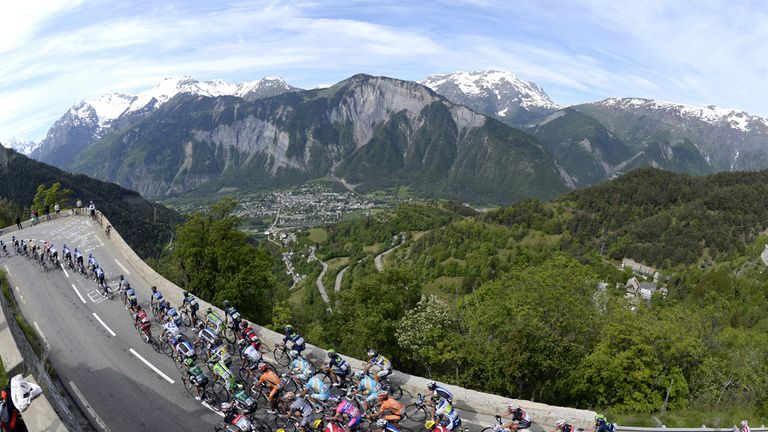
One of the toughest and most prestigious tests on the cycling calendar, the Criterium du Dauphine (June 8-15) is an event every stage racer would dearly love to add to their palmares.
Contested over eight days, the 2014 route sees the race's reputation as a stiff climbing test solidified with a relentless barrage of inclines.
With the chance to pull on a yellow jersey less than a month before the Tour de France kicks off, the event is a key build-up race for those riders and teams looking to contest the most famous of Grand Tours.
Team Sky head to France looking for their fourth consecutive victory in the race, after Chris Froome's win last year followed Sir Bradley Wiggins's back-to-back triumphs in 2011 and 2012.
Wiggins will not race the event this season, instead riding at the Tour de Suisse. Despite that the race is not short on big names, with Alberto Contador (Tinkoff-Saxo), Vincenzo Nibali (Astana), Tejay van Garderen (BMC Racing) and Andrew Talansky (Garmin-Sharp) lining up to break the Sky dominance.
Stages
Sunday 8 June - Stage 1: Lyon to Lyon, 10.4km individual time trial

This year the race starts with a short individual time trial around the streets of Lyon. The course is arrow straight in the opening kilometres as the riders cross both the river Le Rhone and La Saone. The opening stretch should suit the more powerful time trial specialists before the course starts to get technical with a number of switchbacks as the riders climb Montée De L'observance. The category-four climb lasts 800m with an average of 5.5% so it shouldn't cause any major problems for the riders. The descent winds down to the edge of the river and the second half of the course is flat as it follows the La Saone on its way into the finish.
Monday 9 June - Stage 2: Tarare to Pays d'Olliergues-Col du Beal, 156km

Next up stage two moves onto Tarare with a hilly route that takes in no fewer than six categorised climbs and ends with a hors-categorie summit finish. The riders are thrust straight into the climbing as they hit the first lump of the day at just 5.5km, however, the category-four Côte de Saint-Marcel-l'Éclairé shouldn't cause any major problems for the peloton. The first real test of the day will come at 90.5km into the stage as the riders hit the category-two Côte de Bard, at 6.3km long the peloton will be thinned out as they begin the descent and head towards the second category-two climb of the day, the Col de la Croix de l'Homme Mort. The peloton will then pass over the category-three climb of Col des Pradeaux at 115km before preparing themselves for the final climb of the day. The ascent of the Col du Béal will see a showdown between the main contenders as they battle it out over the 13.6km climb.
Tuesday 10 June - Stage 3: Ambert to Le Teil, 194km

Stage three is the longest of this year's race as the peloton heads south from Ambert to Le Teil. The day starts with a category-two climb at 28.5km into the stage and at 8.7km long it may cause a few problems for the sprinters. A breakaway could go clear on the climb, but with only the short category-two climb of Col de la Mûre in between the sprinters teams will be keen to bring any breakaway riders back and set it up for a bunch finish.
Wednesday 11 June - Stage 4: Montelimar to Gap, 167.5km

Stage four is another relatively gentle road stage, with just two categorised climbs along the way. However, the category-two climb of Col de Manse with the last 20km could see that the stage doesn't end in a bunch finish. The route heads easts out of Montelimar with the first noted climb of the day coming midway through the stage, by which time a break is likely to have broken clear. Attacks are likely to come on the final climb of the day at 155km, but the peloton will look to sweep them up on the descent into Gap.
Thursday 12 June - Stage 5: Sisteron to La Mure, 189.5km

Mountainous roads characterise stage five with a lumpy day that takes in six categorised climbs. A breakaway should be able to establish itself and reach the first category-two climb of the day at 68.5kms into the stage and the 6.6km ascent of the Col de Manse could shed the non-climbers and thin out the peloton. The riders will then pass over three category-three climbs in quick succession, but with none of them lasting more than 2.7kms it's unlikely we'll see any action here., instead the GC contenders will be saving themselves for the two category-two peaks that come within last 40km of the stage. The Col de la Morte may only be short at 3.1km long, but with an average gradient of 8.4% it could be the platform for an attack. There is also an opportunity for a rider to jump clear on the long descent before the road ramps up again for the last climb of the day, the 6.3km long Côte de Laffrey. With a flat run into the finish the Côte de Laffrey will be the final chance for riders to launch an attack and it could present a golden opportunity for a breakaway rider to succeed.
Friday 13 June - Stage 6: Grenoble to Poisy, 178.5km

Stage six sees the riders given a break from the mountains as the riders head north from Grenoble. A breakaway is likely to form in the opening kilometres, but the sprinters teams will be keen to ensure that they don't get too much of a gap. The first categorised climb of the day comes at 89.5km but at just 1.5km long, the category-four Côte de la Bétaz is unlikely to play a role in the stage results. The Côte de Marcellaz-Albanais is next up with just less than 20km to go in the stage, it's the longest climb of the day at 4.6km, but with an average of 4.4% the sprinters should be able to make it over without any problems. The final climb of the day is the Côte de Ronzy and at just 7km from the finish a number of riders will be looking to launch a race winning move. If the sprinters teams can keep the attacks under control then we are likely to see a bunch sprint, but the final climb could suit a lone attacker.
Saturday 14 June - Stage 7: Ville-la-Grand to Finhaut-Emosson, 161.5km

Stage seven returns to the mountains and it's another opportunity for the general classification men to test their legs. The stage starts in Ville-la-Grand on the border of Switzerland before heading into the mountains for brutal day of climbing. The road begins to rise after 22km and the riders will crest the first climb of the day at 34km. The 10.3km ascent of the Côte des Gets will be testing but the riders will have a chance to rest on the long descent before they reach the category-one Col du Corbier. The twisting 7.5km climb averages 7.5% after which the riders will have to dig in again to reach the adjoining category-two Pas de Morgins. There is a moment of respite at the other side with 22km of flat roads but the road soon heads skywards again as the riders reach the hors-categorie Col de la Forclaz. The climb is longest and steepest of the day, but with the hors-categorie Montée de Finhaut-Émosson coming so soon afterwards, it may not be the decisive climb. The stage should see a battle between the main favourites but could also see solo rider claim a famous win.
Sunday 15 June - Stage 8: Megeve to Courchevel, 130.5km

Although the route may be easier than the previous day, it's by no means an easy stage for the riders. The day starts in Megeve and heads straight downhill meaning it will be hard for a breakaway to establish itself until the peloton reaches the first climb of the day, the category-two Côte de Domancy. The route then winds its way through the mountains and towards the category-one Col des Saisies where the riders will tackle the 13.4km ascent before a challenging and technical descent. Any gaps that appeared on the climb or descent have a chance to be closed with a relatively flat run into the bottom of the Côte de Montagny at 115.5km into the stage. The snaking climb could see riders go on the attack with the hope of building an advantage ahead of the final climb of the day. The stage concludes with a summit finish at the top of Montée de Courchevel Le Praz.