Vuelta a Espana Race Guide
We run the rule over the demanding route for the third and final Grand Tour of the season.
Last Updated: 24/08/13 6:49pm
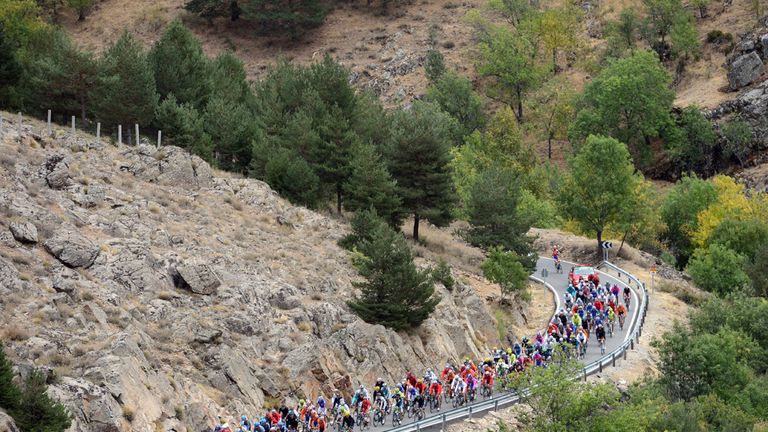
A selection of the world's best climbers will test themselves on one of the hardest routes ever assembled at the season's third and final Grand Tour, the Vuelta a Espana (August 24-September 15).
Following on from the success of a brutally mountainous 2012 race, organisers have taken the Vuelta to another level by including no fewer than 11 summit finishes in the 2013 parcours.
Included among them is an ascent of the notorious Alto de L'Angliru on stage 20, a 30 per cent finishing ramp on stage nine and a barrage of other monstrous climbs that will ensure the peloton is blown apart at every turn of the three-week race.
Stages (all profiles c. Unipublic)
Stage 1: Saturday, August 24 - Vilanova de Arousa to Sanxenxo, 27.4km team time trial

The race starts with a largely flat team time trial in Galicia, in the north-west of Spain. The course is also not overly technical, with the final 5km into Sanxenxo curving gently towards an idyllically located finish line by the water front. The teams with most raw power should prevail and steal an early march in the general classification.
TV coverage: Live on Eurosport from 1745-2000.
Stage 2: Sunday, August 25 – Pontevedra to Baiona (Alto do Monte da Groba), 177.7km

It may only be the second day of the race, but the general classification could be given an early shake-up by a summit finish on Alto do Monte da Groba. The category-one climb is 11km long, averages 5.6 per cent and reaches a maximum incline of 10 per cent, offering the potential for attacks and gaps opening up. Legs will be fresh, though, and the earlier part of the day is flat but for a small, category-three climb, so anyone darting off the front on the final climb will have to go flat out to resist being caught.
TV coverage: Live on Eurosport from 1500-1700.
Stage 3: Monday, August 26 – Vigo to Mirador de Lobeira / Vilagarcia de Arousa, 184.8km

Day three and already summit finish number two. However, this one is only a short, category-three ascent to Mirador de Lobeira that will be more appealing to punchy climbers and attackers looking to steal a stage win than the GC contenders. The stage rolls gently for much of its 184.8km course up the north-west coast of Spain, finally springing into life with an uncategorised climb and then the summit finish. Given that neither the GC teams or sprint squads will be targeting this stage, there is also a chance the breakaway could stay away.
TV coverage: Live on Eurosport from 1500-1645.
Stage 4: Tuesday, August 27 – Lalin / a Estrada to Finesterra (La Etapa del Fin del Mundo), 189km

The so-called “End of the Earth Stage” starts inland and moves back out to the coast, finishing on Cape Fisterra. Although there is only one category-three climb on the route, a tough, undulating day awaits the riders that should once again suit a breakaway or the puncheurs in the peloton. The finish comes after a short, 2.5km climb, so the sprinters should be deterred, with victory instead going to the man with the freshest legs and best-timed attack.
TV coverage: Live on Eurosport 2 from 1500-1645.
Stage 5: Wednesday, August 28 – Sober to Lago de Sanabria, 174.3km

The race moves away from Galicia on a day that is set to be a two-way battle between the breakaway and late attackers. An early incline will help an escape go clear ahead of the third-category climb of Alto de Covelo, which summits after 78.8km. The road then undulates towards the second categorised climb, the Alto del Padornelo, which summits after 141.3km and is almost certain to be the be all or end all for the break. Either way, attackers will ping out of the peloton on the descent, before two small, uncategorised climbs on the otherwise flat run to the finish have a final say on who will prevail.
TV coverage: Live on Eurosport 2 from 1500-1645.
Stage 6: Thursday, August 29 – Guijuelo to Caceres, 175km

This day is more heavily leant towards the sprinters, although it is still far from flat as a pancake. Now moving into Extremadura, between Madrid to the east and the Portuguese border to the west, the route undulates and then dips downhill for the first 50km, before ambling along gently towards the finish line in Caceres. The final 5km are all gently uphill, so unless a late attacker manages to surge clear, it will be the most powerful sprinter who prevails out of what is likely to be a reduced bunch.
TV coverage: Live on Eurosport 2 from 1445-1645.
Stage 7: Friday, August 30 - Almendralejo to Mairena de Aljarafe, 205.9km

The first week ends with another day for the sprinters as the race heads into Andalucia in the south. Just over 205km, the route again undulates mostly downhill towards the finish line in Mairena del Aljarafe. There are intermediate sprints at 117km and 174.5km, and the road then rises slightly upwards on a small, uncategorised climb inside the last 10km. It shouldn’t upset the sprint teams too much, though, and a bunch finish is a near certainty. However, there are a couple of late, tight turns that the trains will have to be wary of.
TV coverage: Live on Eurosport 2 from 1500-1645.
Stage 8: Saturday, August 31 – Jerez de la Frontera to Estepona (Alto Penas Blancas), 166.6km

After a couple of days of letting the sprinters have their time in the limelight, the climbers and GC riders return to the fore for the third and hardest of the summit finishes so far. The day undulates along for around 150km, before reaching a stinging crescendo on the category-one ascent to the finish line atop Alto de Penas Blancas. The climb is 14.5km long, averages 6.6 per cent in gradient and has a maximum ramp of 12.5 per cent, which arrives early in the climb. This section will probably see any remnants of the breakaway swallowed up, but it remains too far out for fireworks from the peloton. Instead, the attacks will be saved for the latter half and, with the race now in its second week, it is unlikely riders with designs on overall victory will be holding back.
TV coverage: Live on Eurosport from 1500-1645.
Stage 9: Sunday, September 1 - Antequera to Valdepenas de Jaen, 163.7km

Stage nine’s profile suggests a rolling day ideal for a breakaway winner, but what it doesn’t show is the sheer brutality of the wall leading up to the finish line at Valdepenas de Jaen. Thirty per cent ramps await the riders here, and although it is only a short, uncategorised climb, its extreme gradient - combined with the fact that the riders have endured nine tough days in the saddle - means gaps could be opened up. The breakaway still has a good chance of staying out, but the escapees will be desperately tired by the time they reach the final climb and will be at serious risk of cracking as soon as the road rears up. They could survive the slopes if they have enough of an advantage heading over the preceding category-two Alto de los Frailes, but if not, the puncheurs in the peloton will come to the fore in what is sure to be a spectacular stage finish. Don’t be surprised to see riders dismounting and pushing.
TV coverage: Live on Eurosport from 1530-1645.
Stage 10: Monday, September 2 – Torredelcampo to Guejar Sierra (Alto de Hazallanas), 186.8km

Day 10 of the race, and still no let-up in difficulty. Lactic will still be thick in the legs when the peloton sets out on a mountainous day containing two categorised climbs in the final 40km, including summit finish number five. A breakaway should go clear early in the day and build up a healthy advantage, but they will be slowed down by the category-one Alto de Monachil, which summits after 159km, and then swallowed up at the foot of the “especial-category” climb to the finish atop Alto de Hazallanas, which is being used for the first time by the Vuelta and is described on the race website as a “great discovery” and “truly unforgettable”. It is 15.8km long and although it is broken up by a short downhill after 7km, two subsequent sections reach 18 per cent in gradient, with the latter coming inside the last 2km. The two-climb finish has similarities to the Col de Pailheres/Ax 3 Domaines eighth stage of this year’s Tour de France, where Chris Froome set himself on the road to overall victory by opening up gaps to his with a solo triumph. A Vuelta winner-elect could look to do the same here.
TV coverage: Live on Eurosport 2 from 1500-1645.Stage 11: Wednesday, September 4 – Tarazona to Tarazona, 38.8km individual time trial

After a first and hard-earned rest day, the riders return to action with a tough and hilly mid-distance individual time trial starting and finishing in Tarazona. The opening half is all uphill as the course ascends the category-three Alto del Moncayo, before dropping back down to the town as descending and bike handling skills are put to the test. It is the only individual time trial of the race, so GC riders who enjoy the “Race of Truth” will look to ride hard in order to make it count.
Stage 12: Thursday, September 5 – Maella to Tarragona, 164.2km

The riders return to their road bikes for an undulating day that should finish in a bunch sprint. The route is punctuated by a series of small, uncategorised climbs in the opening 40km and then the category-three ascent of the Alto del Collet, which summits after 90.5km. However, with the best part of 70km still to race, even if there are splits in the peloton, there is plenty enough road for the sprint teams to bring it back together in time for a bunch finish in Tarragona. They must also be on guard against crosswinds, though, as the final stages run parallel to the Costa Dorada coastline.
Stage 13: Friday, September 6 – Valls to Castelldefels, 169km

This day ends with more than 45km of downhill and flat to the finish, but the chances of a sprint finish are limited courtesy of the category-one climb to Alto del Rat Penat, which averages 10.6 per cent in gradient over its 4.3km course and rears up to a maximum of 16 per cent, which will almost certainly see the fast men dropped. A breakaway has a chance of staying away, but the more likely outcome is a second escape forming out of attacks on the climb and then its members battling out a reduced-bunch sprint. One other complication is the wind, which will once again be blowing hard and threatening echelons in the peloton and splits. This has the makings of a compelling day.
Stage 14: Saturday, September 7 – Baga to Andorra (Collada de la Gallina), 155.7km

Moving away from the coast and into the Pyrenees for the first time, stage 13 presents the race’s sixth summit finish. The peloton could well have been blown apart well before then, though, because the last 100km of the day is peppered with big climbs. It begins with the truly mammoth especial-category ascent to Port de Envalira, which eventually tops out at 2,408m – the race’s highest point – after a climb that is effectively almost 50km long, but officially listed as 27km, with a maximum gradient of 15 per cent. Riders will get dropped here, and the peloton will be further thinned down on the subsequent category-two duo of Coll de Ordino and Alto de la Comella. The road then drops down before rising back up to the category-one finish on Collada de la Gallina, which is 7.2km long and has a maximum gradient of 15 per cent and an average of eight per cent. The same climb was used as a finish in the 2012 race and provided a thrilling finale won by Alejandro Valverde, who will no doubt have designs on making it two in a row.
Stage 15: Sunday, September 8 – Andorra to Peyragudes, 224.9km

Staying in the Pyrenees, the race heads west on a long, mountainous route from Andorra into Tour de France country for a summit finish – the seventh - at the Peyragudes ski station. The stage includes four category-one climbs – Coll de Canto (after 31.4km), Port de la Bonaigua (101km), Coll de Port de Bale (200km) and to Peyragudes (226.4km) via the Col de Peyresourde – which will make for a severely taxing day in the saddle. Should strong enough climbers low down on the GC get in the breakaway, they will have a good chance of staying away and stealing a stage win. Sprinters and the weak will be dropped early, but the rest of the peloton should stay together over the long first two climbs, with preliminary attacks starting on the subsequent Port de Bale. The real moves will be saved for the Peyresourde, though, which reaches a maximum gradient of 13 per cent and is followed by a short descent and then a final rise to the finish.
Stage 16: Monday, September 16 – Graus to Sallent de Gallego (Aramon Formigal), 146.8km

The final outing before the second rest day throws up a punishing third consecutive summit finish, albeit at the end of a slightly shorter stage. The climbing starts after 20km with the category-three ascent to Puerto de la Foradada, which summits after 29km, and continues after a short descent with the long road up to the category-two Puerto de Cotefablo, after 100km. Following a 14km descent down into the valley, the road rears back up for a stepped, 30km climb to the finish line. However, with short flats and downhills punctuating the ascent, the category-one climb to Aramon Formigal officially starts 15.8km out. The big names are likely to start launching their attacks around 9km out, where a maximum ramp of 9.5 per cent provides an ideal launchpad.
Stage 17: Wednesday, September 11 – Calahorra to Burgos, 189km

The GC riders will step aside on the first day back after the rest day and allow the battle between the sprinters and breakaway to resume. A largely uphill first half of the day and two category-three climbs at two-thirds distance place the advantage in the hands of the escapees, but legs will be severely tired by at this stage of the race and the cumulative strength of the peloton may prove overwhelming. There is 50km of largely gentle downhill to the finish – plenty for a charging sprint teams to catch escapees and set up a bunch finish.
Stage 18: Thursday, September 12 – Burgos to Pena Cabarga, 186.5km

A rolling day, ending with the race’s ninth summit finish, offers a breakaway a decent chance of staying away for victory. There are five categorised climbs in total, but the first four – three category threes and one category two – don’t appear demanding enough to facilitate attacks in the peloton. A 34km downhill section leading up to the final climb with give the escapees chance to consolidate their advantage before the 5.9km, category-one ascent to Alto de Pena Cabarga. In the pack, the best descenders may look to attack on the downhill to open up a lead ahead of the steep climb, which averages 9.2 per cent in gradient and has a maximum of 20 per cent.
Stage 19: Friday, September 13 – San Vicente de la Barquera to Oviedo (Alto del Naranco), 181km

The race enters the Principality of Asturias for its penultimate day mountainous day. The first half of the stage ambles along relatively gently, but then the riders are hit with a barrage of two category-three climbs and a category-two summit finish on Alto del Naranco in Oviedo in the last 40km. A breakaway will go clear, but with barely any breather between the late climbs, they will need to build up a large lead to have any chance of staying away. As with the previous day, the GC contenders will save their attacks until the final climb, which, although short, offers the potential to open up gaps at a crucial time in the race.
Stage 20: Saturday, September 14 – Aviles to Alto de L’Angliru, 142.2km

Few climbs in the world strike fear into riders quite like the Alto de L’Angliru. While it averages 10.2 per cent over its 12.2km distance, it is the 23.5 per cent ramp at around the 10km mark that has earned the climb its global notoriety and placed it among Europe’s hardest ascents. It returns to the Vuelta after a year’s absence, presenting the 2013 race’s toughest challenge at precisely the time when legs will be at their most tired. The stage takes in three categorised climbs – one each of categories one, two and three – before leading on to the Angliru. Any breakaway riders still up the road will be quickly swallowed up and the spotlight will soon turn to the GC contenders. It could be that the race is all but decided by this stage, but such is the Angliru’s difficulty, it has the potential to open up significant gaps and will ensure that nothing can be taken for granted until the summit is reached.
Stage 21: Sunday, September 15 – Leganes to Madrid, 109.6km

The final stage into Madrid is a largely processional day ending in nine laps of a 5.7km circuit around the city centre and a bunch sprint. There are also two intermediate sprints – at 64km and 92.5km – meaning the race for the points classification’s green jersey will go right to the wire.