
GAA fixtures plan for 2021: What options are available to the association following latest delay?
All Gaelic games activity is suspended until Easter at the earliest, but with such a delay on the original calendar, the GAA may have to alter its fixtures plan for 2021. But what options are available to the association, as they aim to strike a fair balance between club and intercounty?
Friday 12 February 2021 05:57, UK
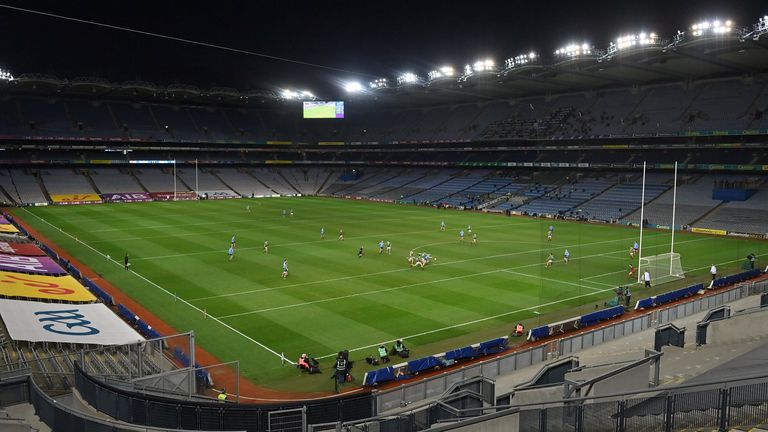
Wednesday evening's announcement from the GAA came as a major setback to those involved in Gaelic games all over Ireland.
In December, the association rolled out a Master Fixtures Plan for 2021, which already seems in tatters as the layout of the year is once again shrouded in uncertainty.
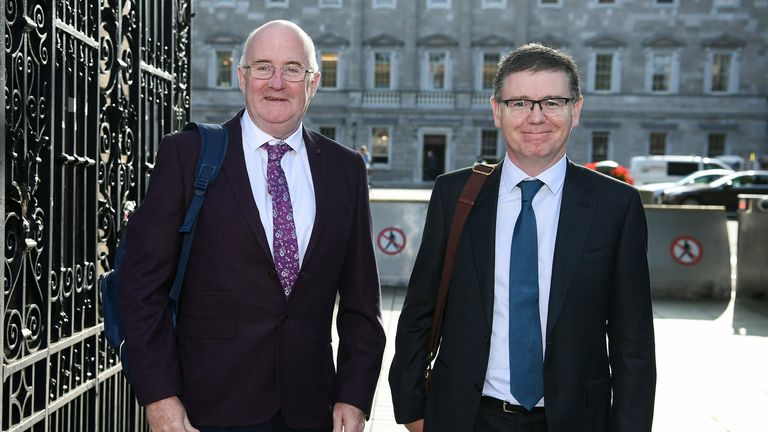
The top brass admitted as much, as director general Tom Ryan and president John Horan informed the membership: "As of now, the GAA have made no firm decisions on what competitions may or may not be facilitated in any revised fixture programme - such decisions will be a factor of how much time is made available to us, both for an intercounty season and for the broader participation levels that will be necessary for a meaningful club season."
Alan Milton, the GAA's director of communications, echoed the sentiment on Thursday morning, suggesting to Morning Ireland that they will now have to adapt a reactionary stance to the pandemic once again.
"We're just going to have to knuckle down and try show some of the flexibility that we showed in 2020 facing into 2021," said Milton.
"You might remember the frenzy we had in March and April last year when every day we were asked what our competitions were going to look like.
"We couldn't answer it then and we can't answer it now. But what we did show last year was that if you scenario plan well enough, you can react quickly and it can bring the wider membership with you."
Club or county first?
The question on everybody's lips right now, is whether the intercounty season will be staged first - as originally was planned. Or if a similar approach to 2020 will be taken, where club action will be given precedence with an intercounty season pushed back to the latter stages of the year.
Horan has noted the GAA is 'not in any rush' to return, but at some point a decision will have to be made.
In truth, Covid-19 levels and government policies will be the major factors, setting parameters in which the GAA can operate.
Forecasting future Covid-19 numbers is a dangerous game; one which has made a mockery of grand plans right across society over the last year.
But the GAA will be hoping that reduced numbers of cases in the coming months will pave the way for a meaningful season later in the year.
The case for 'club first'
The temptations for the club games to come first are obvious. 100% of the GAA's playing population would be catered for. If it were to be pushed back to the end of the year, club players would likely face at least 12 months without a championship match.
Extraordinary circumstances they may be, but is that a sustainable lay-off for the association?
The added bonus is that if the country's vaccination programme is carried out with efficiency, there may be scope for crowds to return to stadia in some capacity towards the end of the year.
That would be an appealing aspect for the GAA's coffers, as they count the cost of a 2020 championship which was played behind closed doors.
The caveat being, a return to widespread action at grassroots would need the green light from the government.
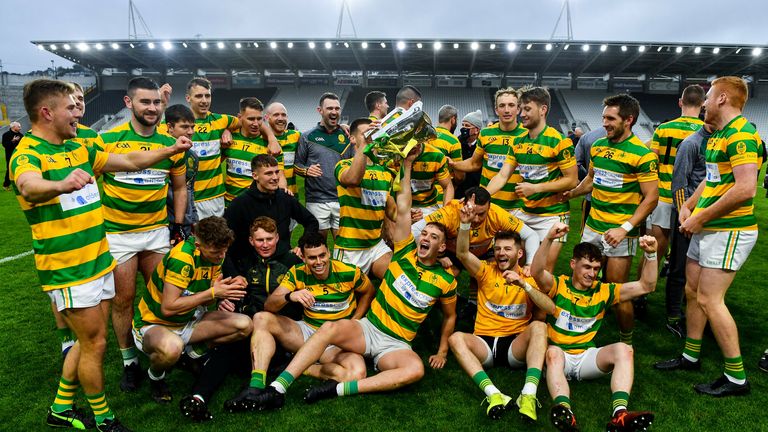
The case for 'county first'
To put it simply, it is a numbers game. Running intercounty competitions is a far smaller operation for the GAA, with a more manageable load to oversee.
This was evident in late 2020, as club competitions were cancelled in September, after which the intercounty games were staged.
On the whole, it was run off smoothly. Restrictions were put in place and largely adhered to.
The ejection of the Sligo footballers from the Connacht Championship due to a Covid-19 outbreak in the squad was the only hiccup, in an otherwise efficiently-run campaign.
Many predicted there would be a delay, with the GAA having raised the possibility of the All-Ireland finals getting pushed back into the new year, should postponements be necessary. However, the races for the Liam MacCarthy and Sam Maguire Cups were concluded on-schedule.

In comparison to the club game, intercounty competitions are easier to manage, and may be a preferred option should cases remain high.
Indeed, should the government allow widespread playing of Gaelic games at a point in the designated 'intercounty' season, club action could resume with 'leagues' ran off without the county players. This would provide meaningful games for all members of the association, rather than sideline the majority in order to facilitate the elite.

Other hurdles
There is a decision to be made, when the picture of the next few months becomes clearer. The GAA have indicated that they are waiting for the government's updated 'Living with Covid' plan before releasing their own roadmap.
Of course, a notable aspect of Wednesday's news was that Gaelic games are no longer considered 'elite' under the government's latest Level 5 restrictions.
Jack Chambers, minister of state for sport, said the GAA, Camogie Association and LGFA had not shown 'massive appetite' to return in the 'medium term'. This raises the possibility that should they wish to do so, the Gaelic games bodies may be able to re-apply for elite status, if the lockdown were to be significantly extended.
Another hurdle to overcome, with uncertain times ahead for the GAA.