
Houston Rockets reload offense to ease James Harden's excessive workload
Watch Houston Rockets @ Boston Celtics on NBA Primetime, live on Sky Sports Arena on Sunday evening from 8:15pm
Sunday 3 March 2019 20:27, UK
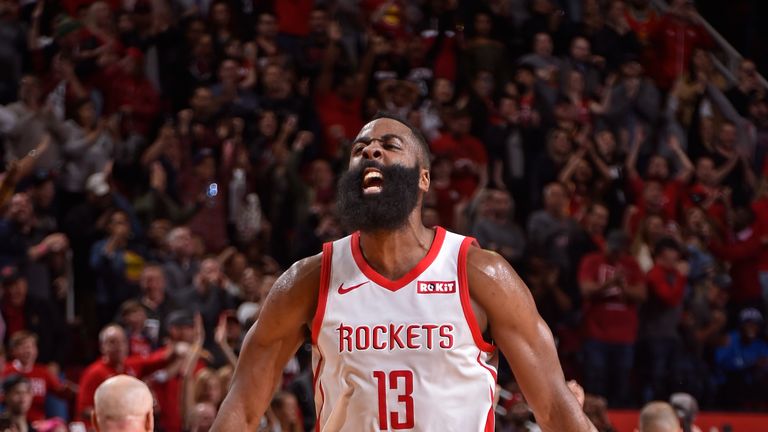
James Harden has had a record-breaking offensive season with the Rockets, but the burden on him to carry the team night in, night out is huge. Now Houston have found a solution to ease his excessive workload. Mark Deeks explains all.
James Harden of the Houston Rockets has done amazing things this season.
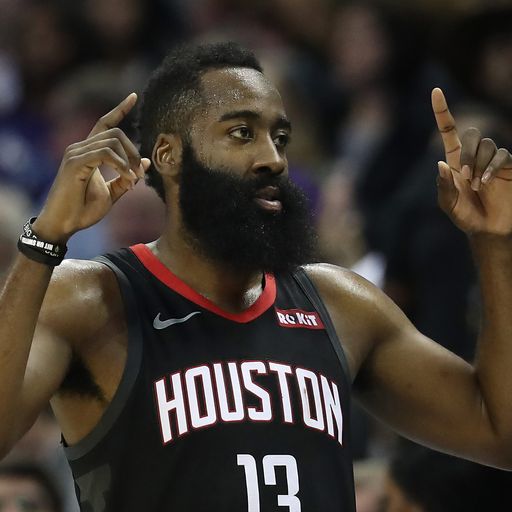
His 36.6 points per game lead the league, and by a giant margin of 8.0 points over second-placed Paul George. He has done so while also posting 7.7 assists, 6.6 rebounds and 2.2 steals in 37.4 minutes per game, playing a far better brand of defense than he used to, while also shouldering a truly enormous offensive load. He has so many achievements as an individual that his achievements alone have their own Wikipedia page.
It has come at a cost, though.
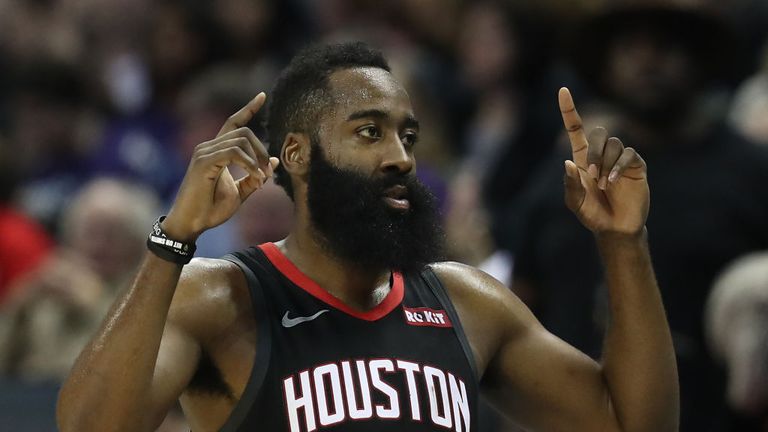
While it may not be the most aesthetically pleasing way to play the game, a very large proportion of Harden's offense comes via isolation possessions. Isolations, the overly prevalent and unpopular vehicle of turn-of-the-century NBA offense that was slowly phased out of the game as rule changes and greater understandings of floor spacing and efficiency became the new orthodoxy, has been the Harden way. Harden is not only putting in numbers almost never before seen - he is doing it in the way no one else has ever been allowed to.
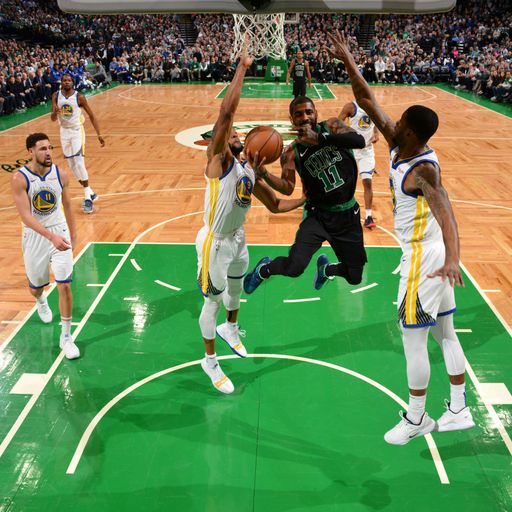
But by his and his team's own admission, the Rockets did not design it this way. Rather, their hand was forced. The failure of the Carmelo Anthony experience and Chris Paul's injuries have made for a dearth of offensive options on the Rockets roster, forcing them to experiment.

While much of the narrative surrounding their disappointing follow-up campaign to last year's Western Conference Finals run focuses on the losses of Trevor Ariza, Luc Richard Mbah A Moute, forward depth and resultant defense - and quite fairly, as they rank sixth-worst in defence compared to second-best on offense - it is only because of Harden that the Rockets even have this one strength. For Houston to have that good of an offense with only two players who can create shots, no depth and few shooters, they have had to invent this new way.
This is taxing on Harden, as it would be on anyone. To have so much time on the ball is to be constantly thinking, dodging pressure defenses and traps, stopping and starting, taking bumps, and the sheer volume of possessions will grind him down. In fact, he has recorded more isolation possessions as an individual this season than any other NBA franchise has as an entire team. Harden and the Rockets were isolation-heavy last season, but they have become almost a pastiche of themselves this year.
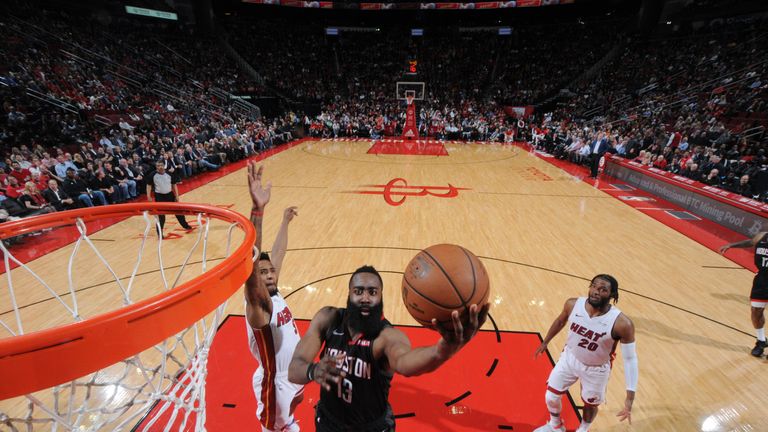
Unfortunately, this is not something the Rockets have been able to fix during the season. The idea Brandon Knight could come back and provide some bench dynamism never came off, and nor did the Michael Carter-Williams signing. Eric Gordon is amid a career-worst season and is not significantly improving, and while signing Austin Rivers as a mid-season pick-up in theory gave them an extra isolation player who would only drive or shoot threes in accordance with team philosophy, he has never been especially good at it despite his intentions to be, and nor does he give them other ways to play.
What Houston did do, however, was sign Kenneth Faried.
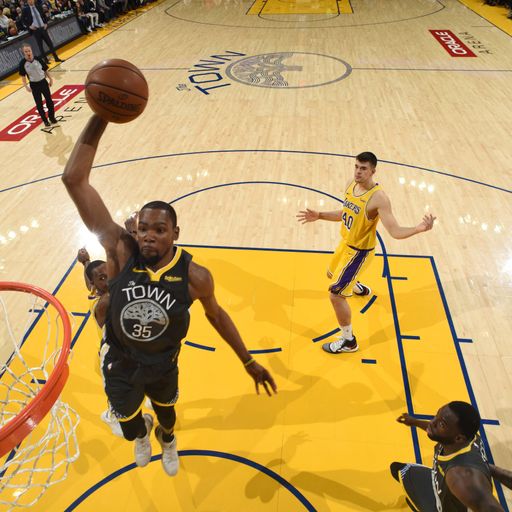
After his buyout from the Nets, Faried joined the Rockets, eyeing a team with plenty of minutes who could suit his skill set. An athlete, rebounder and powerful finisher with defensive concerns and who has been nevertheless somewhat left behind by the evolution towards floor spacing from the big men positions, Faried is still a productive player who should be in the prime of his career, yet who had spent the past 18 months stuck on the Nets and Nuggets benches.
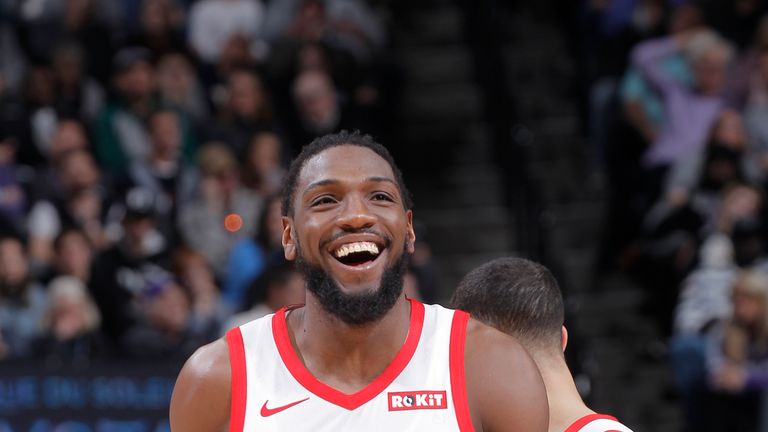
At the same time that Faried became available, Clint Capela went down with injury. The Rockets are hugely reliant on Capela's interior play - while he has not played with the defense of years past, his finishing from the dunk position makes it difficult to step up on Harden and Paul's drives, and he is among the league's better rebounders. The Rockets had very little depth behind him - while not a like-for-like replacement for the Swiss big man, Faried is pretty close, and in Capela's absence, he contributed a vital 15.9 points and 10.3 rebounds per game.
Capela's return, however, has created another problem. It is never that bad of an idea for a team to get its five best players on the floor at the same time whenever they can, yet in the Capela and Faried pairing, the Rockets would be pairing two similar players, neither of whom is good at defending, nor shooting from the perimeter. In theory, the pairing should not work. And in an ideal world, it would not have to.
That said, thus far, the good news is that that theory has not proven to be a reality. Notwithstanding the tiny sample sizes - Faried and Capela have currently played 44 minutes alongside each other, a total that would be higher had Faried not suffered his own short-term injury soon after Capela's return - the early returns are promising. In those 44 minutes, the Rockets have recorded a +7.3 net rating, coming via a 53.6 rebounding percentage, a 105.9 defensive rating, a 62.5 per cent assist rating (compared to a team-wide 51.4 per cent), and a very healthy 107.5 pace ranking.
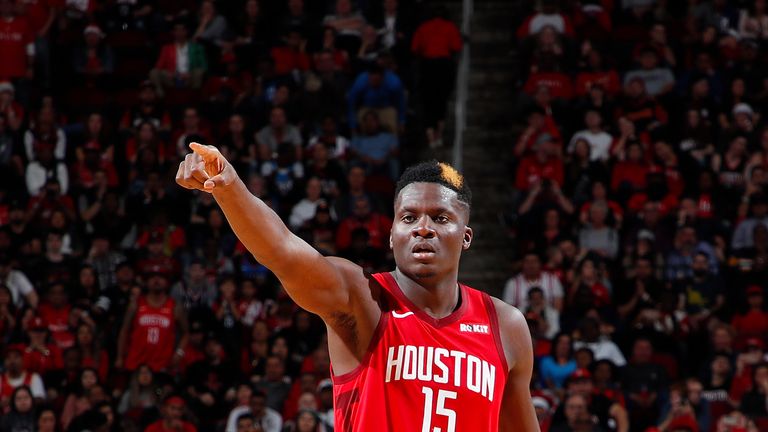
Put more simply; when Capela and Faried share the court, the Rockets dominate the glass, run the court, defend better despite their individual perimeter deficiencies, and provide targets for more efficient offence.
Admittedly, the tiny sample size is a part of why. Over time, the numbers may all go the other way, as the pair's combined inability to adequately switch at two key defensive positions becomes a targetable weakness. So too is the fact the numbers are favourable when compared to other possible line-ups, and the fact Isaiah Hartenstein, Nene, Gary Clark and (briefly) Marquese Chriss and Zhou Qi were so limited is precisely why Faried was the breath of fresh air he was. The pairing work more because of their relative talent level than their optimum compatibility.
Live NBA: Houston @ Boston


That said, it works. Against the Golden State Warriors last week, the Rockets rode a front court of Capela, Faried and PJ Tucker to the upset win. Notwithstanding the defensive questions, the pair provide multiple offensive finishing options for Harden to dump off passes to finish in the half-court, and run the court well enough to limit the need to do so. Due to their preferred locations being within the paint, they are more impactful as pressure-release valves for Harden than simply adding yet another perimeter player would be. More importantly, they shore up the rebounding disadvantage that the Rockets have given up all year, ranking joint-fifth-worst in the league on the season with a team 48.2 rebounding percentage.
The Rockets, then, need to find the balance between the two issues. The short-term remedy to Harden's excessive work load relies heavily on Paul taking on a large share of it; the long-term solution requires a roster reformation over the summer. The short-term remedy to the talent disparity means playing Faried and Capela as much as possible; the long-term prognosis for the pair is not favourable.
To play Capela and Faried together means to have even less ball handling and shooting on the court than usual, an area in which Houston are already short, placing even more pressure on Harden rather than the opposite. But they do at least right the rebounding problems and provide genuine post targets.
They are good enough right now, and the other options weak enough, to make it realistic, viable and wise.