Chicago Bulls are still finding themselves offensively after busy offseason
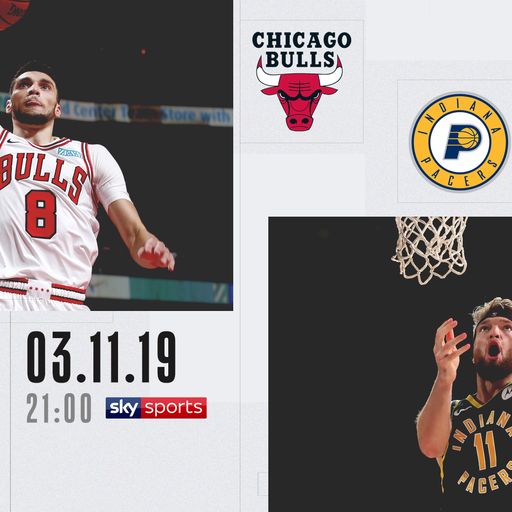
Watch Chicago Bulls @ Indiana Pacers on NBA Primetime on Sky Sports Arena on Sunday at 10pm
Sunday 3 November 2019 15:42, UK
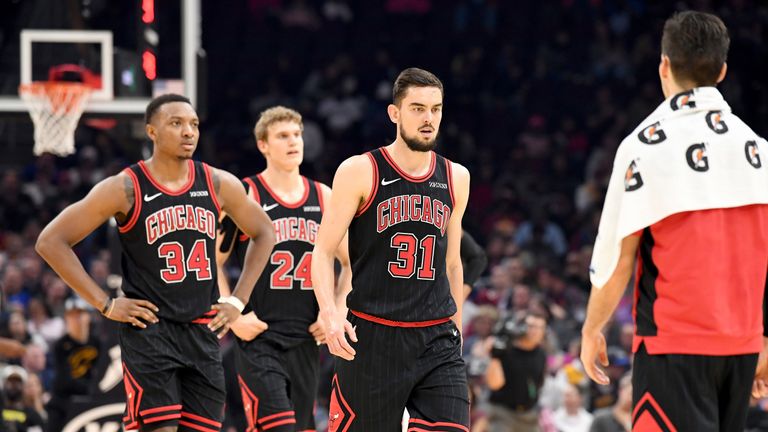
The Chicago Bulls added a mix of youth and experience in what was viewed a successful offseason but that has yet to translate on the court. Mark Deeks explains why the Bulls are still searching for an offensive identity.
Live NBA: Chicago @ Indiana


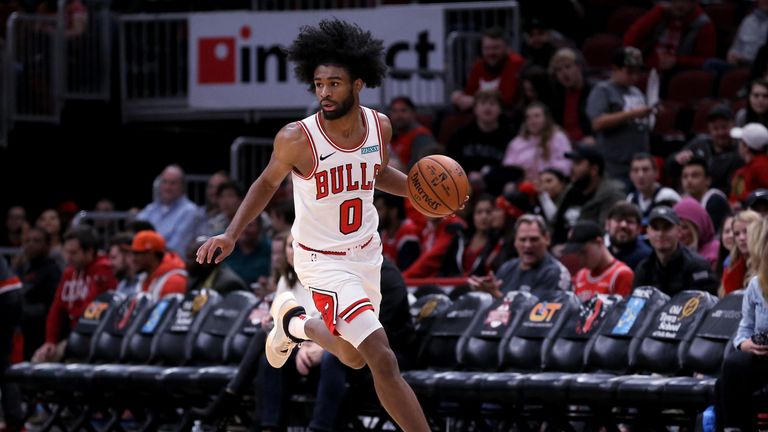
In the assessments of many analysts, this one included, the Chicago Bulls had a good offseason. With the loss of only Robin Lopez from their playing rotation from last season, they added Coby White, Tomas Satoransky, Thaddeus Young and Luke Kornet for competitive prices, addressing areas of need on their depth chart while also adding a mixture of youth and experience that chimed well with their longer-term ambitions and made making the playoffs this season a possibility.
Perhaps more striking than the quality of the upgrades was their styles of play. Throughout their reloading process that has gone on for several seasons now, the Bulls' management has stressed a desire to play a higher tempo and better-spaced brand of basketball, in accordance with modern orthodox principles. It has however been more paying lip service than a reality hitherto.
Over the last four years, the Bulls have ranked 19th, ninth, 20th and 15th in the NBA in pace. The one year they were quick, they were not better for it; in the same span, they have ranked 29th, 28th, 20th and 23rd in league offensive rating respectively.
In that time, they have been undermanned offensively. Jimmy Butler at one time propped up the remnants of the Tom Thibodeau defense-first era, but with his departure, the offensive leaders have been Zach LaVine and Lauri Markkanen, neither with the ability to create their own shot befitting of an offensive leader (although LaVine certainly has the mentality).
Unless there is a Stephen Curry-like level of growth from White, none of the acquisitions will become an offensive superstar either. Yet with both Young and Kornet being capable offensive players when facing the basket at big men positions, plus White's dynamic transition play and shooting to go along with Satoransky's innate unselfishness and highly efficient play, the theory was that the Bulls could incorporate some four- and five-out line-ups, spreading the floor, moving the ball around crisply and running out many units that can score from multiple areas with no significant offensive weak links.
The potent shooting of White and LaVine, the floor-stretching versatile presences of Young and Markkanen, the nous of Satoranksy and Ryan Arcidiacono, the passing and screening of sophomore center Wendell Carter and the low-dribbles high-efficiency complementary talent of Otto Porter were, it was thought, a line-up primed to take big steps forward offensively even without adding any stars.
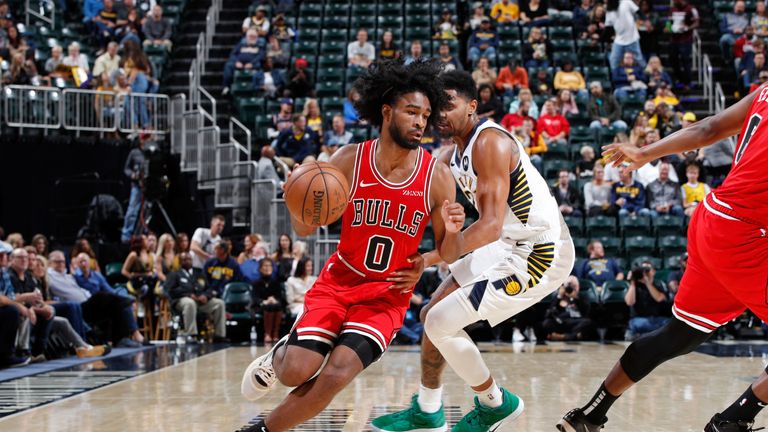
Thus far, however, that has not been the case.
On the short season thus far, the Bulls are ranked merely 21st in pace, 17th in offensive rating, and, most importantly of all, sit outside of the provisional Eastern Conference seedings with a 2-4 record. Their lowly 31.2 per cent three-point shooting as a team ranks 24th out of 30 teams, and the ball is not zipping around incisively as it was hoped it would.
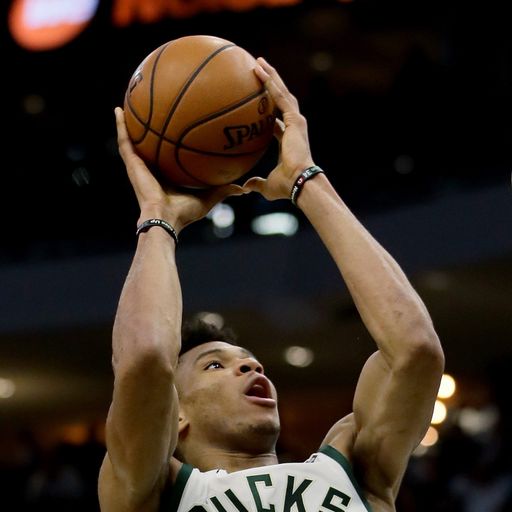
Currently, the Bulls as a team rank 26th in passes per game at 246.5, a mere 0.1 per game ahead of the Charlotte Hornets in fourth last. For comparison's sake, the league-leading New Orleans Pelicans throw 331.0 per game. The Bulls are instead getting up looks fairly quickly, with 39.4 per cent of their total shot attempts coming within the first 10 seconds of the shot clock. On a team that does not push the pace all that often in the transition game, that is a high mark.
Ball movement is not in itself automatically going to convey offensive efficiency. Plenty of passes are always going to be fairly sedate and unimpactful, particularly if they are merely reversing around the perimeter with a defense already set up. In running a fairly simple motion offense with few set plays, the Bulls have done their fair share of this. But in not much driving and kicking, the resultant possessions have largely fit into two categories - barrelling into the lane or just raising up from outside.
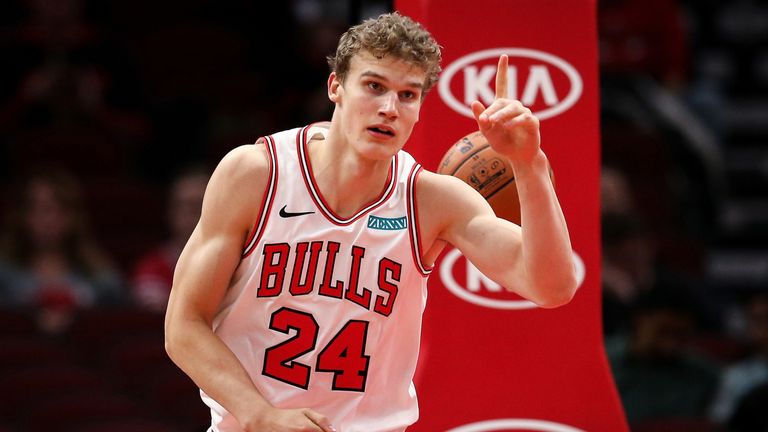
More than anything, though, the Bulls are just not hitting their shots. If the shooters are not hitting from outside, they will not be played up tight on or closed out hard to, and the passing angles are diminished as a result. Markkanen, in particular, seems to have lost his shot, hitting only 25.0 per cent from three-point range on the season on a high volume of shots, most of which have been fairly open. With Porter also regressing to his shooting mean after an extremely hot burst to end his first part-season with the team, the perimeter passes are not resulting in good shooting.
When they are not doing so, limitations within the team's offensive personal are being exposed. Back-up point guard Kris Dunn is not an efficient scorer from any area of the court, a career-long problem that saw White brought into what was once his spot. Satoransky is deferential to the point of being detrimental at times. Porter and Young can only hit looks when set up for them. And the lack of trusted depth on the wing has meant the bench unit, sans White, has not been able to change up the tempo.
Despite his improvements as a half-court playmaker and scoring option, LaVine does not put in much movement off the ball, and thus operates mostly with it in his hands up top. He is normally looking to score in these situations, particularly via a pull-up jumper he loves, and it is hard to run cutters off of a player pounding the ball into the ground from outside.
Despite his sweet shooting stroke and ability to put the ball on the floor for his size, Markkanen has no go-to post moves and can struggle to change direction. His best moments come when he moves incisively off the ball, either around the perimeter or to the rim. Yet he has not been doing enough of either.
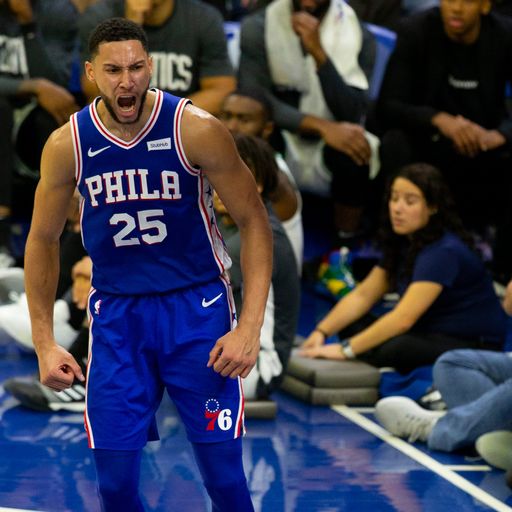
Despite being one of the best passers on the team, Carter's vision from the high post is nullified by his own hesitancy to shoot. In theory, he has ability to expand the playbook by running some offense through him in this area a la what the Toronto Raptors did with Marc Gasol in their playoff run last season.
In practice, though, Carter is behind the curve as a shooter, and his 0.7 assists per game speak to the knock-on effect this has had on his playmaking. Ironically, this is where Lopez has been missed. He could create his own from the foul line and in, expanding the range of options in the pick-and-roll game that currently gets clogged. Carter is not there yet, especially when driving to drive to the rim.
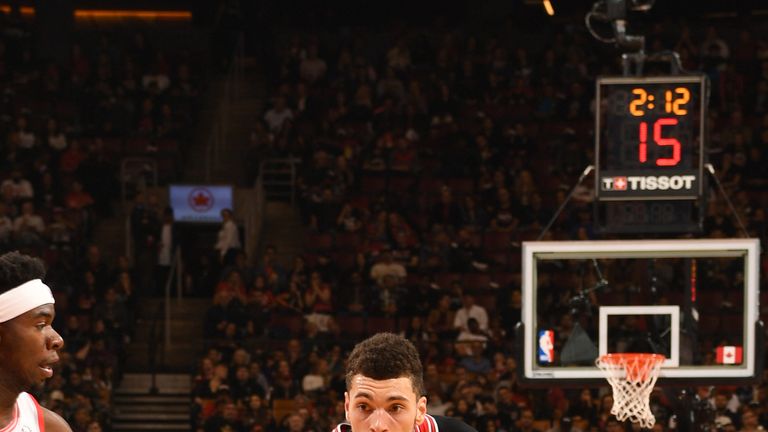
When the shots stop going in, it seems as though the ball stops moving with it, and the players stop moving. LaVine, empowered to try and become the go-to guy, is most guilty of this, a player with a lot more transmit than receive about him. His ability to get his own from a standing start is helpful, but in doing so excessively, he can take the team out of the principles of motion they are trying to establish. Markkanen meanwhile has been tending to loaf around the perimeter too often thus far this season, and Porter has always done that.
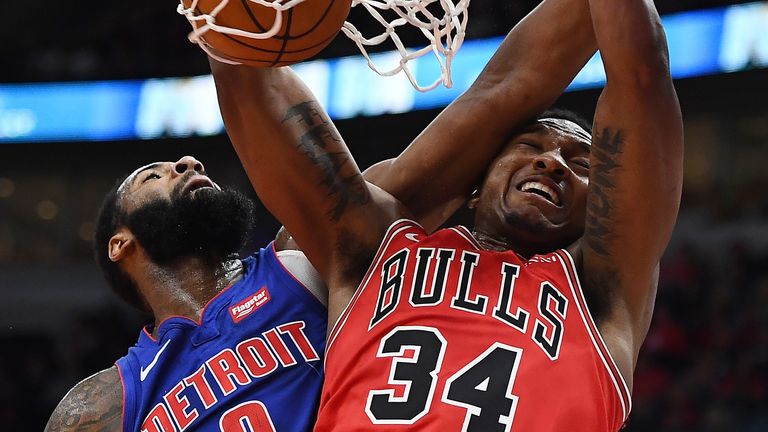
What has kept the Bulls afloat offensively has been the interior game. Chicago are the league leaders in terms of the percentage of total points scored in the paint and are fifth in offensive rebounding. Combined with being seventh in points off turnovers, and their opportunity baskets are proving more productive than their designed offense. While welcome, this is not the evidence of growth that was hoped for.
The Bulls have it seems targeted personnel and designed an offense to suit the talents of LaVine, and, by proxy, White, who has essentially played the role of 'Bench Zach' thus far. They have brought in a point guard in Satoransky who will bring the ball up for him and then run to the corner, two long forwards in Porter and Markkanen who can always get jumpers away, and a potentially excellent screen-and-roll option in Carter.
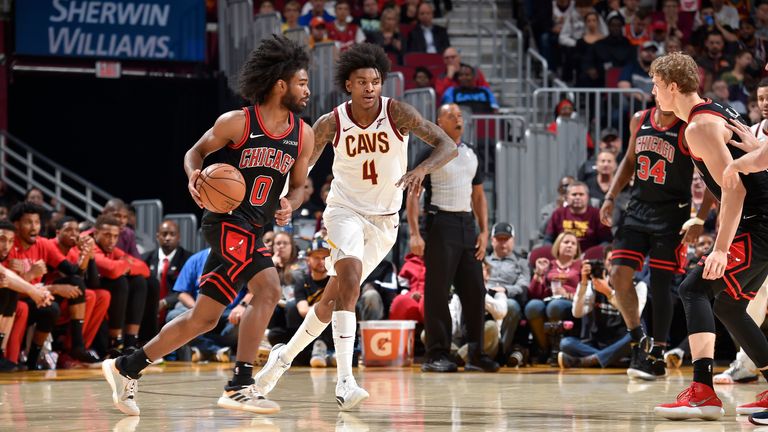
Perhaps, if LaVine can make a leap as a passer on the move, taking advantage of his defensive gravity rather than fighting up contested looks, the quantity of quality outside shots will increase. With increased confidence, Markkanen puts in better off-ball movement and becomes the uber-finisher, while Porter finds his preferred areas and Carter becomes more featured in the half-court game. Maybe even Dunn will hit some shots outside the paint.
The Bulls have tried to embrace the threes and lay-ups mantra so prevalent in the modern NBA, both in terms of their style of play and the playing personnel they have put together, a sensible move that is a welcome departure from some of the stodgy mid-range centric units of years past.
The results at this point, however, have not been any better.
Having changed basically their entire playing rotation over the past year and a bit, some growing pains are inevitable, and with 75 games after tonight still to go, the hopes of making the playoffs this season are still entirely legitimate.
As of right now, though, the Bulls are still trying to find themselves offensively.