
San Diego residents will vote on building a new Chargers stadium
Tuesday 8 November 2016 12:31, UK
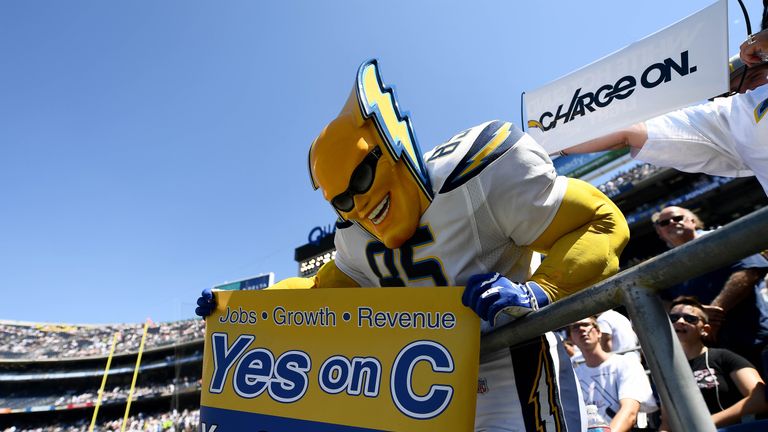
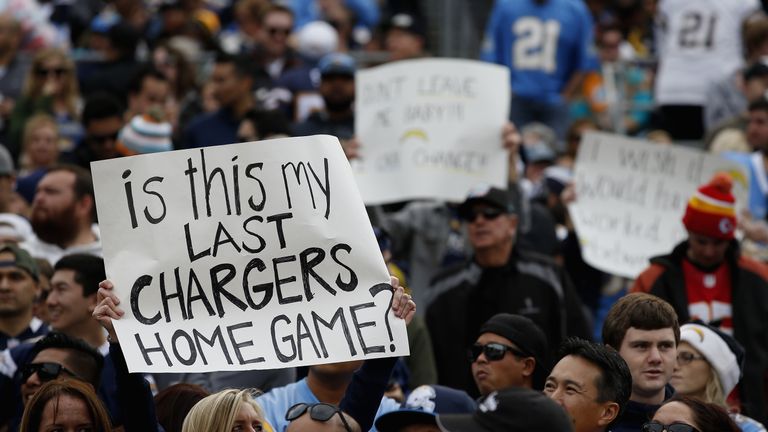
Residents of San Diego will today vote on whether or not to build a new stadium for the Chargers. The outcome could have wide reaching effects on the future of the franchise, with a possibility of moving the team out of the city if the proposals are rejected.
It has been a confusing process from the start, and any outcome is likely to offer more questions than firm answers. However, this is what we know so far.

What is the proposal?
'Ballot Measure C' - the official name for the vote proposes that a new, Super Bowl ready stadium would be built to replace the ageing Qualcomm Stadium, the current home of the San Diego Chargers.
The facility would also be used as a trade centre and music venue, available "300 days a year", according to team executives.
The stadium would require $1.8 billion, raised by increasing the hotel taxes from 12.5 per cent to 16.5 per cent, as well as $650m pledged by the NFL and Chargers owner Dean Spanos.
There is also a separate proposal - Ballot Measure D - which, if passed, gives the Chargers organisation the right to build the stadium but without any public funds. This measure would still raise taxes on hotel occupation, to be used for the construction of the convention centre.
What are the conditions of the vote?
To pass, there must be a two-thirds majority in favour of the Chargers' stadium plans. However there is potential that, should over 50 per cent of the public vote yes, this may be enough, as the Californian Supreme Court can lower the voting threshold.
Who is for/against?
Obviously the Chargers are pushing for the move, but they have garnered the support of Mayor Kevin Faulconer. Measure C is also backed by the San Diego Regional Chamber of Commerce and Downtown San Diego Partnership.
The San Diego Taxpayers Association is staunchly against the proposal, claiming that Spanos has spent $5m on a popularity campaign.
Current opinion polls would indicate that only 45 per cent of voters would approve Measure C, which would not be enough for a stadium change in the city.

What are the potential outcomes?
If the majority is achieved, the Chargers would look to build a stadium in East Village, the largest urban neighbourhood in Downtown San Diego.
The increase in tax is predicted to raise $1.15 billion, enough to cover the remainder of the stadium's bill.
If the proposals are rejected, but still achieve over 50 per cent of votes, the franchise may look to take legal action and force the bill through.
Lower than a 50 per cent result and the chances of the organisation leaving the city increases dramatically.
The Chargers have the option of joining the Rams in Los Angeles, but this would need to be agreed by January 2017, and it is clear that a ground share would be neither side's preference.

Moving in with the Oakland Raiders is also an option, as is replacing the Raiders if they were to go Las Vegas. There is even the outside possibility that the Raiders could end up in San Diego if the Chargers left for Los Angeles.
However a rejection of the vote doesn't confirm the team moving. They have a contract in Qualcomm until 2020, and even then could negotiate a rolling deal to stay, if it proved to be the best option in the short term.
Ultimately the decision is still up in the air, whatever the vote. However the outcome will provide an important gauge for Spanos on the future of the NFL in San Diego.