Rams begin 2016 NFL season back in Los Angeles
Tuesday 13 September 2016 07:03, UK

The Rams are no stranger to moving home. The franchise, which began in 1936 as the Cleveland Rams, has relocated more times than any other in the NFL.
In 1946, the team moved to Los Angeles, where they stayed until 1994 before heading to St Louis, Missouri.
With Kurt Warner's 1999 Super Bowl victory a distant memory, the Rams have missed out on playoff football for the last 11 years, equalling the longest drought in team history, and are hoping that a return to LA can kickstart a playoff-bound campaign.
They open the 2016 season against Californian neighbours San Francisco 49ers, but why exactly do franchises move and how does it work logistically?
Why move the team?
In Europe, it would seem alien to move a football club more than a few miles from their previous home. The Rams' 1,800-mile journey to Los Angeles equates roughly to Arsenal or Spurs moving to Moscow, Russia. But for American franchises, it is simply part of the business. Teams are there to make money, or else work out what changes need to be made.
A primary factor in relocation is marketability. Rams owner Stan Kroenke, who also owns Arsenal, is a businessman looking to generate a profit through the team. The market appears to be more attractive in LA, where club wear, ticket sales and sponsors reach a greater target audience.
Moving the team can be good business for the whole league. According to Forbes, the move could increase the value of the broadcast rights, already worth almost double those of the Premier League.
The Rams have history in California. The franchise spent 49 years in LA and still maintain a loyal fanbase in the city. It can also provide a boost for the new location, regenerating areas through the economic injection of infrastructure, jobs and sports tourism.
However, that can work both ways. St Louis locals have not only lost their team, but the Missouri taxpayer is also landed with the $144m bill for an empty stadium, covering the costs of existing debts and maintenance until it can be filled.
How did the move happen?
A clause in the stadium contract stated that the Edward James Dome, the Rams' home in St. Louis, had to be a "top quarter" stadium, in terms of amenities for fan experience. Kroenke suggested a $700m plan to transform the stadium but the town were unable to raise the significant funds needed, and Kroenke began to turn his attention elsewhere.
Meanwhile, both the Oakland Raiders and the San Diego Chargers voiced interest in the prospect of moving to Los Angeles. When owners met to discuss which team might get approval in January 2016, it initially appeared that the league was in favour of the Raiders' and Chargers' joint bid, over that of the Rams.
However, in a secret ballot, the Rams won the right to build a 70,000-seat stadium in Inglewood, California. The caveat being that the Chargers or Raiders have the option to share the stadium, if they cannot agree a new stadium deal themselves.
Player perspective
Moving is part of the deal for American sports players, who can find themselves traded at a moment's notice. But Lance Kendricks, the Rams tight end who has played his whole career in St. Louis, believes the organisation has handled the operation as smoothly as possible.
"The move has been great. Coach Fisher has done a great job with the transition. This is probably the smoothest you can move a team from one city to another.
"I grew up in the mid-west, went to a mid-west school and then got drafted by a mid-west team, so for me it's nice to venture out."
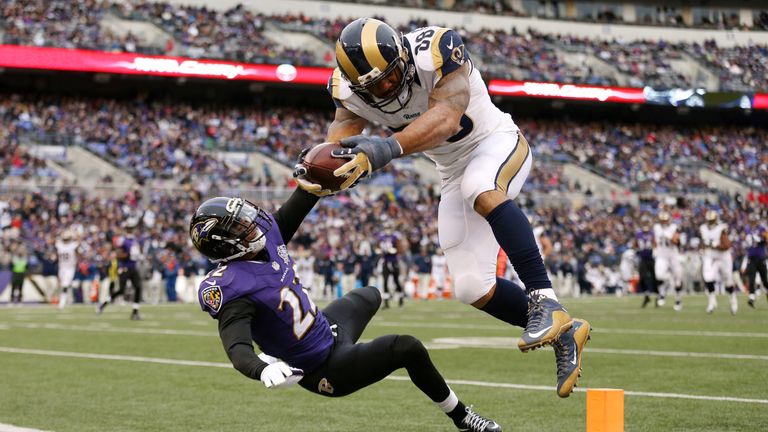
Kendricks was excited to start building a relationship with the fans, who have stuck with the team since their departure.
"Its exciting to be back in LA. There are so many fans that are already there and so it's great to be back for them."
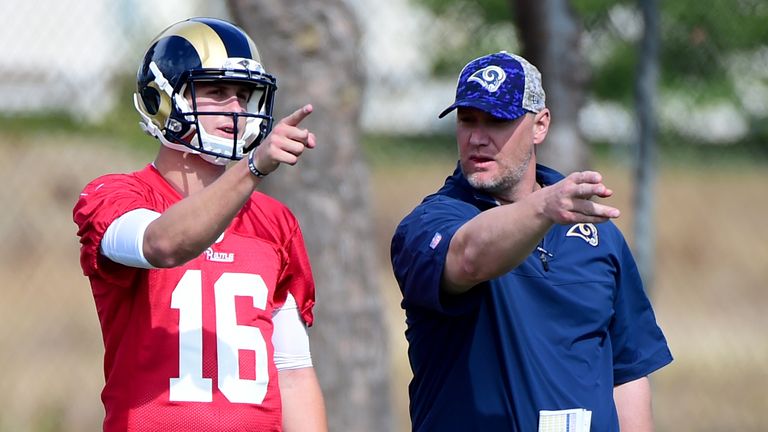
It's a big year ahead for the Rams, who moved up the 2016 NFL draft board to claim quarterback Jared Goff with the first overall pick. Despite running back Todd Gurley winning offensive player of the year, the Rams finished bottom of the league in total offense in 2015.
The franchise will be hoping Goff can overcome initial struggles and impress their new (and old) LA fanbase, leading them to their first playoff appearance since 2004.